Why are there 5 Colors in Magic: The Gathering?
Fast answer first. Then use the tabs or video for more detail.
- Watch the video explanation below for a faster overview.
- Game mechanics may change with updates or patches.
- Use this block to get the short answer without scrolling the whole page.
- Read the FAQ section if the article has one.
- Use the table of contents to jump straight to the detailed section you need.
- Watch the video first, then skim the article for specifics.
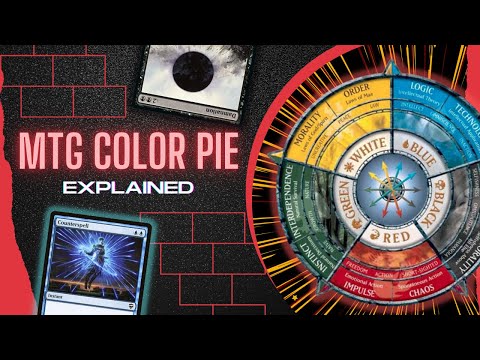
The simple answer is: Magic: The Gathering uses a five-color system to represent the diverse philosophies, strategies, and types of magic available to players. These five colors — white, blue, black, red, and green — form the foundation of the game’s mechanics, card design, and overall gameplay experience. Each color embodies a unique approach to conflict and problem-solving, creating a rich and balanced ecosystem where different styles can thrive and interact. These five colors allow for a vast array of strategies and deck archetypes, giving players plenty to explore.
The Genesis of the Color Pie
Richard Garfield, the creator of Magic: The Gathering, established the five-color system as a way to create distinct identities within the game. Instead of simply having generic “magic” cards, the color system allowed for a nuanced approach, where each color has its own strengths, weaknesses, and thematic focus. This system has been crucial to the longevity and popularity of the game. It encourages players to experiment with various color combinations and strategies, leading to endless possibilities.
Understanding Each Color’s Philosophy
Each of the five colors in Magic: The Gathering represents a specific philosophy and approach to magic:
- White: Embodies order, structure, and community. White magic is often focused on protecting, healing, and creating a cohesive society. Its cards often involve control, life gain, and synergistic creature strategies. It seeks justice and fairness above all.
- Blue: Focuses on knowledge, intellect, and manipulation. Blue magic is the color of control, card advantage, and deception. Its cards involve drawing cards, countering spells, and manipulating the board state. It is driven by the pursuit of understanding and perfection.
- Black: Represents ambition, power, and self-interest. Black magic often involves sacrificing resources for short-term gains, with a focus on destroying creatures, discarding cards, and reanimating the dead. It is characterized by ruthlessness and a willingness to do anything to achieve its goals.
- Red: Is about passion, chaos, and raw emotion. Red magic is all about aggressive strategies, direct damage, and disruption. It often involves creatures with haste, burn spells, and land destruction. It seeks freedom and excitement.
- Green: Stresses growth, nature, and instinct. Green magic focuses on creature strength, ramp (accelerating mana production), and the power of the natural world. It features large creatures, mana acceleration, and cards that enhance the creatures it controls. It is driven by the natural cycle of life and growth.
The Interplay of Colors
The true brilliance of the five-color system lies in how these colors interact with each other. Colors adjacent on the color wheel (white-blue, blue-black, black-red, red-green, and green-white) are considered allied colors and often share complementary strategies and themes. For example, blue and white often form controlling decks, while red and green often form aggressive, creature-based decks. Colors opposite each other on the color wheel (white-black, blue-red, and green-red) are considered enemy colors and generally have contrasting approaches, leading to interesting challenges and opportunities when they are combined.
Color Combinations and Strategies
The five-color system allows for a variety of deck building options. Players can build decks that are monocolored, using only a single color; dual-colored, combining two allied or enemy colors; or even multicolored, using three, four, or all five colors. This leads to a huge range of strategic choices and possibilities. Each combination allows for unique play styles, and a large part of the game is dedicated to finding the most synergistic and powerful card pairings within the existing framework.
FAQs: Deep Diving into Magic’s Color System
Here are some frequently asked questions (FAQs) to further illuminate the intricacies of Magic’s five-color system:
- What are the 5 colors in Magic: The Gathering? The five colors in Magic: The Gathering are: white, blue, black, red, and green.
- What is the 6th Magic: The Gathering color? While there has been speculation about a sixth color, there is no official sixth color in Magic: The Gathering. The idea of a purple color was part of a prank article and was never implemented.
- What determines the color of a card in Magic: The Gathering? The color of a card is determined by the mana symbols in its mana cost and any color indicators or color-setting abilities that are on the card. Reminder text is ignored when determining color identity.
- What are the color symbols in Magic: The Gathering? The color mana symbols are as follows: {W} for white, {U} for blue, {B} for black, {R} for red, and {G} for green.
- What is the most used color in Magic: The Gathering? While it is subjective, blue is often considered one of the most popular and historically influential colors due to its control and card manipulation abilities.
- What is the best color in Magic: The Gathering? Historically, blue has been considered one of the strongest colors due to its control and card draw capabilities. However, the “best” color depends on the format, metagame, and player preferences.
- Why do cards have different colors? Color serves as a means to differentiate card types based on suit and is crucial for identifying them during games. In addition, the unique color combinations enhance visual recognition and categorization of cards.
- What is the strongest color in cards? The answer is subjective and depends on context, but blue is often cited as the most powerful. It is a consistently powerful force.
- Why are some Magic cards white? Historically, white borders were used to designate reprinted cards, contrasting with the black borders of first printings.
- What color is rare in Magic? The color of a card’s set symbol indicates its rarity: black for common, silver for uncommon, gold for rare, and orange/bronze for mythic rare.
- Why is purple the color of Magic? In a general sense, purple has historically been associated with magic, mystery, spirituality, and creativity. This is why, conceptually, it has been linked with the idea of a sixth color.
- What are the schools of Magic Colors? Different types of magic are associated with various colors, for example, Abjuration: Blue, Evocation: Red, Illusion: Purple and Necromancy: Green.
- What color is mana? There are five colors of mana which are white, blue, black, red, and green. Additionally there is colorless mana.
- What is the weakest color in magic? Generally, white is considered to be the weakest color due to its historical struggles with card advantage.
- What is the easiest color to play in magic? Green is often considered the easiest for beginners, due to its straightforward strategy of playing creatures and attacking. Red can also be good for teaching the basics of instants and sorceries.
Conclusion
The five-color system is the backbone of Magic: The Gathering, providing a rich and diverse gameplay experience. Each color has its own distinct identity and strategic niche. The interplay between them allows for infinite deckbuilding possibilities and engaging gameplay. Understanding the nuances of each color and how they interact is key to mastering the game and fully appreciating its depth and complexity. This system continues to be a cornerstone of the game’s enduring appeal.