Why Aren’t My Trees Growing in Animal Crossing: New Horizons?
Fast answer first. Then use the tabs or video for more detail.
- Watch the video explanation below for a faster overview.
- Game mechanics may change with updates or patches.
- Use this block to get the short answer without scrolling the whole page.
- Read the FAQ section if the article has one.
- Use the table of contents to jump straight to the detailed section you need.
- Watch the video first, then skim the article for specifics.
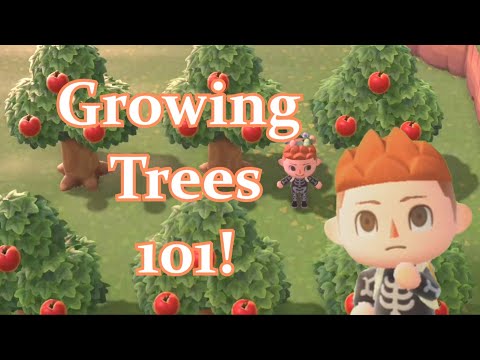
Are your saplings refusing to sprout into majestic trees in Animal Crossing: New Horizons? It’s a common frustration for many island residents, but the good news is, there are clear reasons why your green aspirations might be hitting a snag. The primary reason your trees aren’t growing boils down to incorrect placement and spatial restrictions.
Specifically, trees in Animal Crossing: New Horizons require a one-grid-square buffer zone around them to successfully grow. This means that each tree needs an empty space directly adjacent to it in every direction (north, south, east, west, and diagonally). If another tree, a building, a cliff, a body of water, or even some furniture is blocking that space, the sapling simply won’t develop. Essentially, you need to think of it as a tree’s personal bubble; it needs that space to flourish. Understanding and addressing these spatial requirements is key to getting your island’s landscaping underway.
Understanding Tree Growth Mechanics in Animal Crossing
Space is Key
The game uses a grid system, and each tree, whether it’s a fruit tree, hardwood tree, or cedar tree, occupies a single square on this grid. To ensure successful growth, you must leave at least one empty square around the initial sapling. It’s not enough to have open space further away; the grid squares immediately next to the sapling have to be clear.
Obstacles Hinder Growth
As mentioned, anything can be an obstacle if it’s occupying an adjacent square. This includes:
- Other trees: Even if they are small saplings, nearby trees can inhibit growth.
- Buildings: Houses, the museum, shops, and any other structure cannot be in the immediate surroundings.
- Cliffs: A cliff edge too close will prevent growth on the opposite side.
- Water: Ponds, rivers, and the ocean can all block sapling growth.
- Furniture: Even small items of furniture left outdoors can prevent tree growth.
Stunted Growth
Another mechanic to note is that you can purposefully stunt a tree’s growth by planting a piece of fruit right behind a young sapling. This creates a smaller tree, which some players use for design purposes. However, if your intention is for your tree to grow to its full size, this is definitely something you need to avoid.
Tree Types and Their Unique Requirements
Standard Trees
Hardwood trees (oak and pine) and fruit trees all grow using the same spacing rules. These can be planted anywhere there is open land that meets the one-grid-square buffer.
Coconut Trees
Coconut trees are a little different. They must be planted on sand. You can either plant them along your island’s beaches, or use the island designer tools to create artificial patches of sand elsewhere on the island. Like other trees, they still require one free grid square in all directions.
Bamboo
Like other trees, bamboo must adhere to the one grid spacing rule.
Frequently Asked Questions About Tree Growth in Animal Crossing: New Horizons
Here are 15 FAQs that provide more insights into how trees grow in the game:
1. How do I know if there’s enough space for a tree to grow?
Simply ensure that each grid space directly adjacent to the sapling is empty. Visually, this means that if you were to place furniture on the ground in those squares, they would not overlap with the space occupied by the sapling.
2. Can flowers prevent tree growth?
No, flowers do not prevent tree growth. Flowers can be placed in the squares adjacent to trees, without any detrimental effect. So, feel free to decorate your orchard with your favorite blooms.
3. Do I need to water my trees?
No, you do not need to water trees in Animal Crossing: New Horizons. Once a sapling is planted in a suitable location, it will grow on its own. Watering won’t speed up the process either.
4. How long does it take for a tree to grow?
Saplings take approximately three days to grow to their full size.
5. Can I move a tree after I plant it?
Yes, you can move trees after you plant them, but only before they reach their final growth stage. You can dig up a newly planted sapling and relocate it to a better spot. Once fully grown, you must cut down a tree with your axe, dig up the stump, and then plant a new sapling at a new location.
6. Do cut down trees grow back?
No, cut-down trees do not grow back in Animal Crossing: New Horizons. They leave behind stumps that you have to dig up if you want to remove them entirely.
7. Is there a limit to how many trees I can have?
Yes, there is a tree limit of 220 on your island. This includes all types of trees: hardwood, cedar, fruit trees, bamboo and coconut trees.
8. How do I grow stunted trees?
To grow a stunted tree, plant a piece of fruit immediately behind the tree sapling. This will stop the tree’s growth at its current stage.
9. Why aren’t my money trees growing?
Money trees function the same way as other trees, in terms of spacing. However, you need to find a glowing spot on the ground, bury a bag of bells, and a money tree will begin to grow. You can’t bury more than one bag of bells in the same place each day.
10. How many bells should I bury to get the most profit from my money tree?
For the highest profit return and greater certainty, you should bury 10,000 bells in the glowing spot. This is guaranteed to yield three 10,000-bell bags. Burying more than that may yield more, but it is not guaranteed to do so.
11. Do money trees grow back their bags of bells?
No, money trees will only produce bags of bells one time. After you shake the money bags off, they become regular trees.
12. How long does it take for fruit to grow back?
Fruit will usually take around three days to grow back on a tree after you’ve shaken it off. Non-native fruits can sometimes take a bit longer.
13. What do “perfect” fruit look like?
Perfect fruit in ACNH have a shimmering surface and sell for a higher price. However, this kind of fruit is no longer available in the game.
14. Can I replant picked flowers?
Yes, you can replant picked flowers. Simply dig them up with a shovel, and they will be added to your inventory, ready for replanting.
15. How do I get non-native fruits?
You can get non-native fruits through various means, including: visiting other players’ islands, going on mystery island tours, using a boat tour with Kapp’n, receiving them in the mail from your mother, or getting them from other characters such as villagers or through random encounters with NPCs.
By understanding the spatial rules and utilizing these tips, you’ll be well on your way to creating the lush, green island of your dreams in Animal Crossing: New Horizons! Happy planting!