Why Did Captain Shepherd Betray Ghost? Unraveling the Truth Behind the Most Infamous Betrayal in Call of Duty History
Fast answer first. Then use the tabs or video for more detail.
- Watch the video explanation below for a faster overview.
- Game mechanics may change with updates or patches.
- Use this block to get the short answer without scrolling the whole page.
- Read the FAQ section if the article has one.
- Use the table of contents to jump straight to the detailed section you need.
- Watch the video first, then skim the article for specifics.
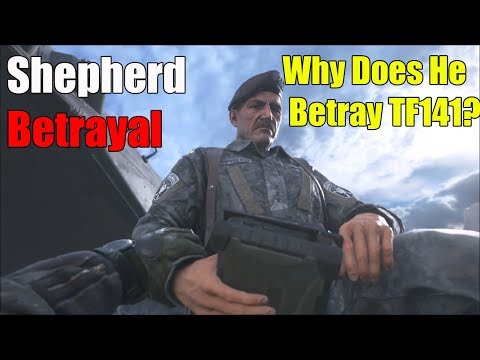
The question lingers like a lingering gunshot wound for Call of Duty fans: Why did Captain General Shepherd betray Ghost? It’s a betrayal that has etched itself into gaming history, a gut-wrenching moment that continues to spark debate and discussion years later. The answer, while seemingly straightforward, is layered with political maneuvering, personal ambition, and a ruthless pragmatism that defines Shepherd’s character. Shepherd betrayed Ghost (Simon Riley) to erase any evidence of Operation Kingfish, a highly classified and unauthorized operation aimed at killing Vladimir Makarov. More importantly, Shepherd saw the operation and Makarov’s subsequent activities as a means to ignite a new war with Russia, a war that would cement his legacy as a national hero and significantly increase his power and influence. Ghost and Roach were simply loose ends, witnesses to Shepherd’s machinations and, therefore, expendable. They knew too much, and Shepherd’s ambition outweighed any sense of loyalty or morality.
Shepherd’s Motives: A Deeper Dive
While eliminating witnesses was the immediate trigger for Shepherd’s treachery, the underlying reasons were far more complex.
The Pursuit of Heroism and Power
Shepherd craved the glory he felt he deserved after witnessing the devastating loss of 30,000 soldiers under his command in a previous conflict. He viewed the War on Terror as stagnating and sought a new, large-scale conflict to prove his strategic genius and elevate himself to the status of a national icon. He planned to manipulate events to make Russia appear as the aggressor, thus justifying a full-scale American response and giving him the opportunity to lead the charge. The betrayal of Ghost was a calculated sacrifice on the altar of Shepherd’s ambition.
Operation Kingfish and the Makarov Connection
Operation Kingfish was a black ops mission orchestrated by Shepherd to eliminate Vladimir Makarov, the leader of the Inner Circle terrorist group. While seemingly justified, the operation was unauthorized and conducted outside of official channels. The details of Kingfish, if revealed, would expose Shepherd’s rogue actions. Furthermore, Shepherd manipulated Makarov’s escape from Kingfish, using him as a catalyst for his plans. He knew that Makarov’s subsequent terrorist attacks would provide the perfect pretext for war. Ghost, as a key player in Kingfish, possessed incriminating knowledge that Shepherd couldn’t afford to leak.
Maintaining Control and Eliminating Threats
Ghost was a highly skilled and respected soldier, fiercely loyal to his team but potentially questioning of authority if he suspected foul play. Shepherd likely perceived him as a potential threat to his carefully constructed narrative. Eliminating Ghost ensured complete control over the information surrounding Operation Kingfish and prevented any potential dissent within the ranks. Roach, similarly, was a liability due to his proximity to sensitive information and his loyalty to Ghost.
The Utilitarian Justification
In Shepherd’s twisted worldview, the ends justified the means. He rationalized the betrayal of Ghost and Roach as a necessary evil, a small price to pay for the greater good of igniting a war that he believed would ultimately strengthen America and solidify his place in history. He prioritized his vision of a revitalized American military and a decisive victory over personal relationships and ethical considerations.
The Impact of the Betrayal
The betrayal of Ghost remains one of the most shocking and emotionally resonant moments in video game history. It not only served as a turning point in the Call of Duty: Modern Warfare 2 storyline but also sparked countless discussions about morality, loyalty, and the corrupting influence of power. The Games Learning Society studies how such narratives impact player perception and decision-making in games and in real-world situations, as described on the GamesLearningSociety.org website.
Frequently Asked Questions (FAQs)
Here are some frequently asked questions regarding the betrayal of Ghost, to clarify lingering issues:
1. Was Shepherd Always Evil?
It’s debatable. While his actions in Modern Warfare 2 are undeniably villainous, some argue that he was a patriot driven to extreme measures by his past experiences. The loss of 30,000 men under his command in a previous conflict likely had a profound impact on his psyche and fueled his desire for redemption through a decisive victory.
2. Could Ghost Have Survived the Betrayal?
Realistically, no. Shepherd ambushed Ghost and Roach with overwhelming force. The element of surprise, combined with the sheer number of soldiers and the firepower they possessed, made survival virtually impossible.
3. Did Shepherd Betray Soap and Price as well?
Indirectly, yes. While he didn’t explicitly order their deaths, his actions set in motion the events that led to them becoming wanted fugitives. He framed them for Makarov’s terrorist attack, effectively turning the entire world against them.
4. Was Operation Kingfish Authorized?
No, Operation Kingfish was an unauthorized black ops mission conducted outside of official channels. This is one of the primary reasons Shepherd needed to eliminate any witnesses to the operation.
5. Did Makarov Know About Shepherd’s Plans?
It’s unclear. While Shepherd manipulated Makarov, it’s uncertain whether Makarov was fully aware of the extent of Shepherd’s plan to ignite a war between the US and Russia. It’s possible that Makarov simply saw Shepherd as a useful pawn in his own terrorist agenda.
6. Why Didn’t Ghost Suspect Shepherd?
Ghost was a soldier, trained to follow orders and trust his superiors. He likely had no reason to suspect Shepherd’s betrayal until it was too late. Furthermore, Shepherd was a charismatic and respected figure, making it difficult to believe he was capable of such treachery.
7. What Happened to Roach After the Betrayal?
Roach was killed alongside Ghost during Shepherd’s betrayal. His body was burned along with Ghost’s to eliminate any evidence.
8. Was Shepherd Justified in His Actions?
From a moral perspective, absolutely not. The betrayal of Ghost and Roach was a heinous act, regardless of Shepherd’s motivations. However, from Shepherd’s perspective, he likely believed that his actions were justified by the potential benefits for America. This raises complex ethical questions about the nature of war and the lengths to which individuals will go to achieve their goals.
9. How Did the Community React to the Betrayal?
The community reaction was one of shock, anger, and disbelief. The betrayal of Ghost became a defining moment in the Call of Duty franchise and sparked countless discussions and debates.
10. Did Ghost Have a Family?
While not explicitly stated in the game, background information and comics reveal that Ghost had a troubled past and struggled with family relationships. This adds another layer of tragedy to his character and makes his betrayal even more heartbreaking.
11. Was Ghost’s Mask Important?
Yes. Ghost’s mask became an iconic symbol of the character. It represented his anonymity, his troubled past, and his dedication to his mission. It became a visual shorthand for the themes of loyalty, betrayal, and the psychological toll of war.
12. What was Ghost’s Role in Task Force 141?
Ghost was a key member of Task Force 141, a multinational special operations unit dedicated to combating global terrorism. He was known for his exceptional combat skills, his strategic thinking, and his unwavering loyalty to his team.
13. How Did Soap and Price React to Ghost’s Death?
Soap and Price were devastated by Ghost’s death. It fueled their determination to bring Shepherd to justice and clear their names. Ghost’s memory served as a constant reminder of the cost of war and the importance of loyalty.
14. Is There Any Redemption for Shepherd?
Most fans would argue no. His actions were so heinous and his motives so self-serving that any attempt at redemption would be seen as disingenuous. He is generally regarded as one of the most irredeemable villains in video game history.
15. What is the Legacy of Ghost and Shepherd’s Betrayal?
The legacy of Ghost and Shepherd’s betrayal is one of tragedy, betrayal, and the corrupting influence of power. It serves as a cautionary tale about the dangers of unchecked ambition and the importance of loyalty and integrity. It remains a defining moment in the Call of Duty franchise and continues to resonate with players years later.