The Usurped Throne: Why Gwyn Banished the Nameless King
Fast answer first. Then use the tabs or video for more detail.
- Watch the video explanation below for a faster overview.
- Game mechanics may change with updates or patches.
- Use this block to get the short answer without scrolling the whole page.
- Read the FAQ section if the article has one.
- Use the table of contents to jump straight to the detailed section you need.
- Watch the video first, then skim the article for specifics.
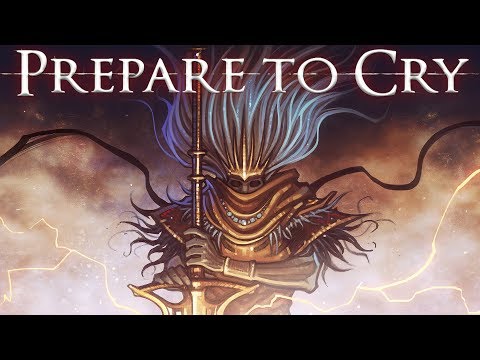
Gwyn, Lord of Sunlight, banished his firstborn son, the being now known as the Nameless King, due to the latter’s profound act of betrayal: siding with the Everlasting Dragons, the very beings Gwyn led the war against to usher in the Age of Fire. This act of allegiance towards the ancient dragons was considered a grave offense, a direct challenge to Gwyn’s authority and the foundation of his reign. The Nameless King’s actions threatened the very stability of Gwyn’s meticulously constructed world, a world built upon the ashes of the dragon’s dominion. The King’s actions were not simply a matter of personal preference; it was a complete rejection of Gwyn’s legacy and the sacrifices made to establish the Age of Fire.
The Weight of Betrayal: Understanding Gwyn’s Decision
Gwyn’s decision to banish the Nameless King wasn’t simply an act of parental anger. It was a calculated move, intended to preserve the Age of Fire and maintain the established order. To fully understand Gwyn’s actions, we must delve into the context of the world of Dark Souls. The Age of Fire was born from the victory over the Everlasting Dragons. Gwyn, along with his loyal knights, seized the power that would define his rule. The firstborn’s allegiance to the dragons was a direct challenge to this foundation and could have triggered another war and the end of the Age of Fire.
The banishment was a demonstrative act against any potential dissent. It sent a clear message that any allegiance to the dragons, or any challenge to Gwyn’s authority, would be met with severe consequences. The removal of the Nameless King’s name from the annals of history was not merely symbolic; it was an attempt to erase any memory of his rebellion, preventing his actions from inspiring others to question Gwyn’s reign.
The Legacy of the Nameless King: A God Forged in Exile
The Nameless King, stripped of his name and title, became a figure of legend, dwelling in the secluded Archdragon Peak, where he continued his pursuit of strength and wisdom, honing his skills alongside the Storm Drake. In exile, he did not wallow in defeat; rather, he transcended his former status, embracing the power of the storm and the ancient wisdom of the dragons. His choice to remain true to his convictions, even in the face of his father’s wrath, cemented his status as a powerful and enigmatic figure.
Ornstein’s Pilgrimage
The lore suggests that Dragonslayer Ornstein, one of Gwyn’s Four Knights, sought out the Nameless King after his banishment, perhaps seeking to understand his motivations or perhaps seeking reconciliation. This explains the presence of Ornstein’s armor near the Nameless King’s arena, suggesting a final, fateful encounter.
The Complex Morality of Dark Souls
The story of Gwyn and the Nameless King highlights the morally ambiguous nature of the Dark Souls universe. Gwyn, often viewed as the hero who ushered in the Age of Fire, is also portrayed as a figure clinging desperately to power, even at the cost of perpetuating a cycle of sacrifice. The Nameless King, branded a traitor, is also a figure of defiance, choosing his own path even when it meant defying his father and the established order. The GamesLearningSociety.org might view this narrative as a complex exploration of authority, loyalty, and the consequences of choices.
The player is left to grapple with the nuances of their actions, and the consequences of disrupting the status quo. The story of Gwyn and the Nameless King serves as a constant reminder that there are no easy answers, and that even the most powerful figures are flawed and driven by their own motivations.
Frequently Asked Questions (FAQs)
Is the Nameless King more powerful than Gwyn?
It’s a complex debate. Lore suggests the Nameless King possessed immense power, inherited from his birthright and honed through his time with the dragons. Whether he surpasses Gwyn in his prime is debatable, but in the state the player encounters Gwyn at the end of Dark Souls, it’s likely the Nameless King is far more powerful.
Why did Ornstein go after the Nameless King?
Ornstein, fiercely loyal to Gwyn, likely sought out the Nameless King either to bring him back into the fold or to understand his reasons for betraying his father. Some theories propose he went to learn from him and embraced the path of the dragon.
Is Nameless King Gwyn’s firstborn?
Yes, all signs point to the Nameless King being Gwyn’s firstborn son. This is supported by item descriptions and lore snippets scattered throughout the Dark Souls series.
Is Gwyn good or bad?
Gwyn is a complex character, not easily categorized as purely good or bad. He made sacrifices to prolong the Age of Fire, but his actions also condemned humanity to a cycle of suffering. He’s more of a tragic figure driven by fear and a desire to maintain his power.
What sin did Gwyn commit?
Gwyn’s “sin” is often referred to as the First Linking of the Flame, or the First Sin. This act, while intended to prolong the Age of Fire, ultimately bound humanity to a cycle of sacrifice and prolonged the inevitable Age of Dark.
What is Gwyn scared of?
Gwyn trembled at the prospect of the Dark, fearing the rise of humanity and the Dark Lord who would one day emerge. This fear drove him to desperately cling to the Age of Fire.
Is Nameless King a good guy?
The Nameless King is another morally ambiguous character. He betrayed his father, but he did so out of loyalty to the dragons and a belief in a different path. He can’t be easily labeled as good or bad.
What was Gwyn’s first sin?
This is the same as “What sin did Gwyn commit?”. It refers to his choice to link the First Flame, perpetuating the cycle.
Is Solaire Gwyn’s son?
This theory has been debunked. While Solaire is a devoted follower of the Sun and, by extension, Gwyn, he is not Gwyn’s son.
Is Solaire the Nameless King?
No, Solaire is not the Nameless King.
Why does Ornstein get bigger?
Some “gods” can grow in size by absorbing souls, and it’s evident in the fight with Ornstein and Smough when Ornstein absorbs Smough.
How many people have beaten the Nameless King?
The Nameless King is consistently one of the least defeated bosses in Dark Souls III, showcasing his difficulty.
What is Gwyn weak to?
Ironically, Gwyn is weak to Fire, despite wielding a flaming sword and linking the First Flame. This could symbolize his fading power and the eventual triumph of the Dark.
Who was the strongest of Gwyn’s Knights?
Artorias is often considered the strongest of Gwyn’s Four Knights in close combat.
Did Gwyn link the flame?
Yes, Gwyn linked the First Flame in an attempt to prolong the Age of Fire. This act is often referred to as the First Linking of the Flame or the First Sin. The Games Learning Society might find the recurring motif of choice and consequence a valuable point for discussion.