Why Do Monks Shave Their Heads?
Fast answer first. Then use the tabs or video for more detail.
- Watch the video explanation below for a faster overview.
- Game mechanics may change with updates or patches.
- Use this block to get the short answer without scrolling the whole page.
- Read the FAQ section if the article has one.
- Use the table of contents to jump straight to the detailed section you need.
- Watch the video first, then skim the article for specifics.
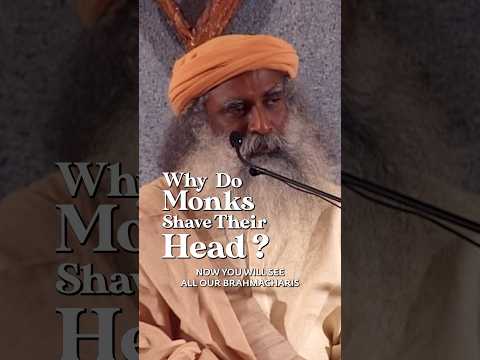
The practice of shaving the head, often referred to as tonsure, is a powerful and ancient tradition observed by monks in various religions, most notably in Buddhism. The primary reason monks shave their heads is to symbolize renunciation of worldly ego, vanity, and fashion. It’s a visual declaration of their commitment to a spiritual path, a detachment from physical appearance, and a dedication to inner growth rather than external adornment. By removing their hair, a feature often associated with personal identity and attractiveness, monks actively choose to relinquish these attachments and focus on their spiritual journey. This act is not merely cosmetic; it’s a profound step towards spiritual purification and humility.
The Significance of Shaved Heads in Buddhism
Pabbajja: Going Forth
In Buddhism, the shaving of the head (and face) is a key part of the Pabbajja, which translates to “going forth.” This ceremony marks the moment a person leaves their home and worldly life to embrace the life of a Buddhist renunciate, often joining an established monastic community. It signifies a complete break from past attachments and a wholehearted dedication to the Dharma (Buddhist teachings). Shaving the head is a paramount step in the process of becoming a monk, signifying a new beginning focused on spiritual practice.
Denouncing Vanity
Hair is often associated with vanity and personal expression in many cultures. By shaving their heads, monks consciously reject this notion, adopting a simple, unadorned appearance. It’s a deliberate act to detach themselves from physical attractiveness and the desire for admiration. This is particularly emphasized in the Vinaya-pitaka, a collection of Buddhist monastic rules, which includes guidelines to prevent vanity from taking root. The tonsure is a tangible representation of this principle.
The Khandhaka Rules
The Buddhist rules of ordination, as laid out in the Vinaya-pitaka, specifically the Khandhaka section, dictate that hair should be shaved at least every two months, or when the hair grows to the length of two finger-widths. This ensures a consistent appearance and reinforces the commitment to renunciation. It’s not a one-time act but an ongoing practice that serves as a constant reminder of their vows.
Symbolic Meanings Beyond Renunciation
Strength and Discipline
While primarily a symbol of renunciation, the shaved head also carries other cultural meanings. It’s often associated with strength, vitality, and vigor, which is why it is seen in military and athletic contexts. This symbolism can be interpreted in the context of monkhood, representing the inner strength and disciplined mindset required on the spiritual path. The discipline involved in maintaining a shaved head is part of the overall monastic discipline.
Solidarity and Community
The uniformity of shaved heads creates a sense of solidarity and community amongst monks. It visually erases individuality, emphasizing their shared commitment to spiritual growth within the monastic order. This visual uniformity fosters a sense of unity and equality amongst the members, promoting a harmonious living environment.
Simplicity and Humility
The stark simplicity of a shaved head symbolizes the humble and austere lifestyle adopted by monks. They choose a life free from material possessions and superficial concerns, dedicated solely to spiritual practice. The shaved head serves as a daily reminder to maintain humility and avoid ego.
Shaving of Eyebrows
Some Buddhist traditions also include the shaving of the eyebrows, further emphasizing the renunciation of worldly attachments and a commitment to a simple and unadorned existence. This is another step taken to eliminate any lingering attachment to physical appearance and self-image.
Related Frequently Asked Questions (FAQs)
1. Are monks required to shave their head?
Yes, Buddhist monks and nuns are required to shave their heads as part of their monastic vows. This is not a practice for lay-Buddhists, who are not bound by these restrictions as long as they adhere to Buddha’s teachings.
2. How often do Buddhist monks shave their head?
According to the Vinaya-pitaka, Buddhist monks are required to shave their heads at least every two months, or whenever their hair grows to the length of two finger-widths.
3. Do female monks shave their heads?
Yes, similar to their male counterparts, female Buddhist nuns shave their heads as part of their monastic ordination. This is a universal practice across most Buddhist schools, regardless of gender.
4. Why do monks have no hair?
The absence of hair symbolizes a monk’s commitment to renouncing worldly vanity and ego. It’s a visible representation of their separation from material attachments.
5. What is a tonsure?
Tonsure is the act of shaving all or part of the scalp, often as a religious practice or symbol of renunciation, particularly for monks, devotees, or mystics.
6. Can a female be a monk?
Yes, females can be monks (specifically called nuns or bhikkhunis). While historically, women have faced more barriers to ordination, many Buddhist traditions now support the full ordination of women.
7. Why are Buddhist monks celibate?
Celibacy for monks is a practice that aims to detach from worldly desires and attachments, which are seen as hindrances to spiritual progress. By avoiding sexual desires and romantic relationships, monks can dedicate their energy to their spiritual pursuits.
8. Can Buddhist monks marry?
Historically, monks were not allowed to marry. However, in some modern Buddhist traditions, especially in some parts of Japan after the Meiji era, some monks are allowed to marry. This is not the case for all Buddhist traditions.
9. Why are monks so strong?
Monks, particularly Shaolin monks, focus on physical and mental training. Shaolin techniques often include rigorous exercises to develop strength, discipline, and focus, but strength is not the primary focus of all Buddhist monks.
10. Can monks have kids?
Monks are not allowed to get married or have children. They leave their families to dedicate themselves entirely to monastic life.
11. What is a female Buddhist called?
A female Buddhist monk is known as a bhikkhuni (nun). Lay female Buddhists are called Upāsikā.
12. Why do monks wear orange robes?
Orange robes are a traditional color worn by monks because it is considered sacred in many Eastern religions. In Hinduism and Buddhism, the color represents fire and purity.
13. Why do monks shave their eyebrows?
Similar to shaving their heads, shaving eyebrows is another practice signifying renunciation of worldly desires and vanity. It’s a further step to abandon any physical attachment.
14. Why are monks silent?
Silence is a key aspect of monastic life. It’s a practice to cultivate inner peace, mindfulness, and detachment from unnecessary communication. Limited conversations are usually part of monastic life.
15. Can monks drink alcohol?
Abstinence from alcohol is generally a practice in Buddhism, especially for monks and nuns, in order to maintain clarity and avoid actions driven by altered states of mind.
The shaved head is more than just a hairstyle for monks; it’s a powerful symbol of their dedication to a spiritual path and their rejection of worldly desires. It serves as a constant reminder of their vows and a visual declaration of their commitment to inner growth. This act, steeped in tradition, continues to play a central role in the monastic life of Buddhist monks and nuns around the world.