The Ingenious Trapdoor: Why Spiders Build Hidden Homes
Fast answer first. Then use the tabs or video for more detail.
- Watch the video explanation below for a faster overview.
- Game mechanics may change with updates or patches.
- Use this block to get the short answer without scrolling the whole page.
- Read the FAQ section if the article has one.
- Use the table of contents to jump straight to the detailed section you need.
- Watch the video first, then skim the article for specifics.
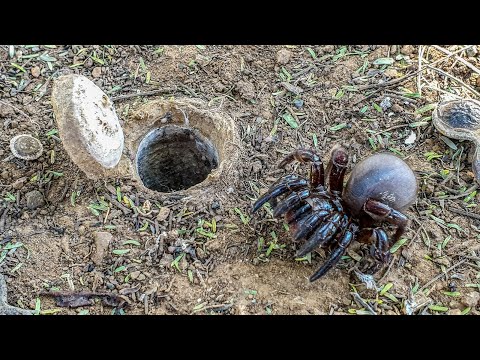
Trapdoor spiders create their namesake trapdoors primarily as a sophisticated ambush predation strategy. These ingenious constructions provide them with a secure, camouflaged refuge from predators while simultaneously functioning as the perfect launchpad for capturing unsuspecting prey. The trapdoor isn’t just a door; it’s an integral part of the spider’s hunting toolkit, essential for its survival in a world teeming with dangers and competition.
The Master Strategists of the Arachnid World
Trapdoor spiders, belonging to various families like Ctenizidae, Cyrtaucheniidae, and Idiopidae, are masters of disguise and patience. They eschew the web-building strategies of their cousins, opting instead for a more proactive, albeit sedentary, hunting style. Their burrows, often lined with silk and sealed with a hinged door made of soil, vegetation, and silk, are more than just homes; they are meticulously crafted hunting blinds.
The Benefits of Burrowing
Several key factors drive the trapdoor spider’s commitment to this unique lifestyle:
- Predator Avoidance: The burrow provides a safe haven from numerous predators, including birds, bandicoots, centipedes, scorpions, parasitic wasps, and flies. A well-concealed trapdoor is virtually invisible, offering near-perfect protection.
- Stable Microclimate: The underground environment offers a more stable temperature and humidity than the surface world. This is crucial for the spider’s survival, particularly in harsh climates.
- Ambush Predation: The primary advantage is the element of surprise. The spider waits just beneath the trapdoor, sensing vibrations of approaching prey through silk trip lines laid around the entrance. When an unsuspecting insect or arthropod wanders too close, the spider bursts forth with incredible speed, seizing its meal.
- Resource Conservation: This “sit-and-wait” strategy conserves energy. Instead of actively hunting, the spider expends minimal energy waiting for prey to come to it. This is especially important for spiders that can live for many years, sometimes up to two decades.
The Art of Trapdoor Construction
The construction of a trapdoor is a marvel of natural engineering. The spider uses its chelicerae (jaws) equipped with digging rakes (rastella) to loosen soil. They then roll the loosened earth into a ball and use their strong, spined hind legs to throw it out of the developing burrow. The burrow itself is often lined with silk, which helps to stabilize the walls and prevent collapse.
The trapdoor itself is a blend of soil, vegetation, and silk. The spider meticulously weaves these materials together, creating a door that perfectly matches its surroundings. The hinge, made of silk, allows the door to open and close rapidly. Some species create a “wafer” door, which is thin and easily camouflaged, while others construct a thicker, “cork” door that provides additional protection.
FAQs: Delving Deeper into the World of Trapdoor Spiders
Here are some frequently asked questions to further explore the fascinating world of trapdoor spiders:
- Are trapdoor spiders dangerous to humans? Trapdoor spiders are generally non-aggressive and harmless to humans. Their bite may sting, but the venom is of low toxicity.
- How long do trapdoor spiders live? They have a long lifespan, typically between 5 and 20 years. It takes them several years to reach maturity.
- What do trapdoor spiders eat? Their diet consists primarily of crawling insects and other arthropods, including beetles, cockroaches, crickets, slaters, and even other spiders. They may also consume small vertebrates.
- Where are trapdoor spiders found? They are found in various parts of the world, including Australia, Africa, South America, and North America. In Australia, they are common in eastern and southern regions.
- How do trapdoor spiders build their burrows? They use their chelicerae and rastella to dig, and their hind legs to remove soil. They line the burrow with silk for stability.
- Do all trapdoor spiders build hinged trapdoors? Not all trapdoor spiders make a hinged door, but all dig a burrow. Some create simple open burrows without a door.
- What is the purpose of the silk trip lines around the burrow entrance? These lines act as early warning systems, alerting the spider to the presence of potential prey.
- How do trapdoor spiders find a mate? Females typically stay in or near their burrows, while males leave their burrows once mature to search for a mate.
- What are the predators of trapdoor spiders? Their predators include birds, bandicoots, centipedes, scorpions, parasitic wasps, and flies.
- What is the largest trapdoor spider species? The giant trapdoor spider, Euoplos dignitas, discovered in Queensland, Australia, is one of the largest known species.
- Are trapdoor spiders intelligent? They exhibit complex hunting techniques, indicating a degree of cognitive ability beyond simple instinct. Their burrow construction and ambush strategy showcase sophisticated behavior.
- Can trapdoor spiders climb glass? Some species, like brush-footed trapdoors, can climb smooth vertical surfaces, including glass.
- Do trapdoor spiders have teeth? They have powerful jaws and large fangs (chelicerae) that move up and down, allowing them to stab their prey.
- How many eggs do trapdoor spiders lay? After mating, the female lays a batch of several hundred eggs. She cares for and feeds the spiderlings over the first winter.
- What is the most venomous spider in the world? The Brazilian Wandering Spider, Phoneutria fera and Phoneutria nigriventer, are considered the most venomous spiders in the world. This is not a trapdoor spider.
The Evolutionary Success of a Hidden Lifestyle
The trapdoor spider’s lifestyle is a testament to the power of adaptation. By combining stealth, patience, and skillful engineering, these spiders have carved out a successful niche in a competitive world. Their trapdoors are not just simple entrances; they are the key to survival and the foundation of a fascinating and enduring evolutionary strategy. Learning about these fascinating creatures can also be fun through engaging games and interactive activities. Be sure to visit the Games Learning Society at GamesLearningSociety.org to discover innovative approaches to education and entertainment.