Why Does Fallout Use Old Songs?
Fast answer first. Then use the tabs or video for more detail.
- Watch the video explanation below for a faster overview.
- Game mechanics may change with updates or patches.
- Use this block to get the short answer without scrolling the whole page.
- Read the FAQ section if the article has one.
- Use the table of contents to jump straight to the detailed section you need.
- Watch the video first, then skim the article for specifics.
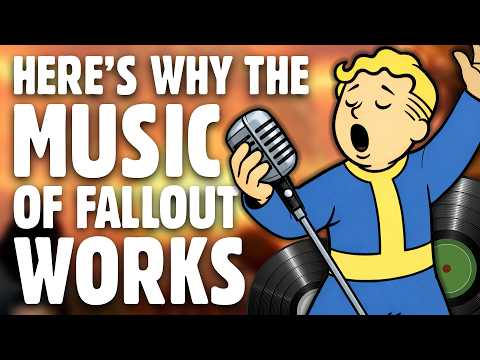
The Fallout series is renowned for its immersive world, compelling stories, and unique aesthetic. A crucial element of this distinct identity is its heavy reliance on music from the 1940s and 1950s. This isn’t simply a stylistic choice; it’s a deliberate artistic decision deeply intertwined with the game’s themes, setting, and overall narrative. Fallout uses old songs to reinforce its atompunk retrofuturistic setting, a world where the future envisioned by mid-20th century America collided with the harsh realities of nuclear apocalypse. The music serves as a constant reminder of the world that was, a nostalgic ghost haunting the post-nuclear wasteland. It enhances the sense of alternate history, where technological progress and cultural evolution took drastically different paths after World War II. The songs aren’t just background noise; they are narrative devices, contributing significantly to the game’s atmosphere, thematic depth, and player engagement. It’s more than just liking oldies; it’s about crafting a believable and engaging world.
The Power of Atompunk and Nostalgia
The term “atompunk” describes a retrofuturistic aesthetic heavily influenced by the post-war culture of the 1950s. This era was characterized by both optimistic visions of technological progress and a palpable fear of nuclear annihilation. Fallout perfectly captures this duality. The gleaming chrome of retro-futuristic robots and the sleek designs of pre-war consumer goods are juxtaposed with the decaying ruins of civilization and the constant threat of mutated creatures.
The old songs amplify this contrast. They evoke a sense of nostalgia for a simpler time, a world of sock hops and soda fountains, but this idyllic vision is shattered by the stark reality of the wasteland. This dissonance creates a powerful emotional impact, drawing players into the game’s world and making them feel the loss of what was. The music becomes a symbol of a bygone era, a reminder of the human cost of the Great War.
Alternate History and Divergent Timelines
Fallout isn’t set in our future; it’s set in an alternate future, one where history diverged significantly in the years following World War II. In the Fallout universe, the technological advancements of the mid-20th century led to a drastically different trajectory than our own. Transistors and microchips never fully replaced vacuum tubes, and technological innovation focused on atomic power and robotics rather than the digital revolution we experienced.
This point of divergence is crucial to understanding the game’s musical choices. The cultural landscape in Fallout essentially froze around the 1950s, influencing everything from fashion and architecture to music. The 1940s and 1950s hits aren’t just a stylistic flourish; they are a reflection of the cultural stagnation that occurred in this alternate timeline. The music underscores the idea that the world of Fallout is not simply a post-apocalyptic wasteland; it is a world where time has effectively stopped, trapped in a warped version of the mid-20th century.
Narrative Impact and Emotional Resonance
The old songs in Fallout aren’t just background music; they serve as narrative devices, adding layers of depth and meaning to the game’s world. Diamond City Radio, the most popular radio station in Fallout 4, plays a curated selection of these songs, providing a constant soundtrack to the player’s adventures.
These songs can evoke a range of emotions, from nostalgia and longing to fear and despair. Hearing a cheerful tune from the 1950s while battling mutated creatures in a ruined city creates a jarring juxtaposition that highlights the tragedy of the post-apocalyptic world. The music can also provide emotional resonance during key moments in the game, underscoring the player’s choices and actions. The songs become deeply associated with specific locations, characters, and events, creating a powerful and lasting connection between the player and the game world.
FAQs: Delving Deeper into Fallout’s Musical Landscape
1. Are all the songs in Fallout 4 real?
Yes, the vast majority of songs featured on Diamond City Radio in Fallout 4 are real songs from the 1930s to 1960s. There are a few original songs performed by the in-game character Magnolia, but the bulk of the soundtrack consists of licensed tracks from that era.
2. Why doesn’t Fallout have modern music?
The absence of modern music is a key aspect of Fallout’s alternate history. The game posits a timeline where cultural and technological development diverged in the mid-20th century. The world is trapped in its mid-century vision.
3. What is Fallout style music called?
While there isn’t a specific genre solely defined by Fallout, the music prominently features Americana, along with elements of swing, jazz, blues, and early rock and roll.
4. What’s the most modern song in Fallout?
Among the licensed tracks, the most recent song is often cited as “Blue Moon” released in 1954 by Frank Sinatra.
5. Is Fallout based on the 70s?
No, while the series is set in the 21st, 22nd, and 23rd centuries, its atompunk retrofuturistic aesthetic draws heavily from the post-war culture of the 1950s United States.
6. Does Fallout New Vegas use Fallout 1 music?
Yes, Fallout: New Vegas includes some of the original ambient tracks from Fallout and Fallout 2, composed by Mark Morgan. This was integrated by Audio director Scott Lawlor.
7. Why does Fallout 4 have a 50s theme?
Fallout 4, like the other games in the series, uses a 1950s theme to depict the alternate future imagined by Americans during that era.
8. What punk genre is Fallout?
Fallout aligns with the atompunk sub-genre, exploring an alternate version of the past with advanced technology beyond what was actually available at the time.
9. What year is Fallout aesthetic?
The series is set in the 21st, 22nd, and 23rd centuries, but it is deeply inspired by the post-war culture of 1950s United States.
10. What is the song at the end of Fallout?
The song at the end of the movie The Fallout is “While You Sleep” by Maisy Stella & Lennon Stella.
11. What year is Fallout 4 set?
Fallout 4 is set in the year 2287, 210 years after the Great War.
12. When did the bombs drop in Fallout?
The bombs dropped on October 23, 2077, marking the beginning of the nuclear holocaust in the Fallout universe.
13. What happened to the USSR in Fallout 4?
The Soviet Union existed in the Fallout universe, composed of sixteen Soviet republics.
14. What inspired Fallout?
Fallout is primarily inspired by the culture and fears of the 1950s United States, which is characterized by atompunk and retrofuturism.
15. How does music enhance learning experience?
Music enhances the learning experience and is a vital part of game design. You can find more about how games are used to help people learn on the Games Learning Society website at https://www.gameslearningsociety.org/.
Music as a Time Capsule
In essence, the old songs in Fallout serve as more than just a stylistic flourish; they are integral to the game’s identity, thematic depth, and narrative impact. They evoke nostalgia, reinforce the atompunk aesthetic, highlight the alternate history setting, and create a powerful emotional connection between the player and the game world. The music is a time capsule, preserving a vision of the past and present in the grim reality of the nuclear future. It’s a major reason for Fallout’s staying power.