Why Does Gurranq Go Crazy in Elden Ring? The Lore Behind the Beast Clergyman’s Fury
Fast answer first. Then use the tabs or video for more detail.
- Watch the video explanation below for a faster overview.
- Game mechanics may change with updates or patches.
- Use this block to get the short answer without scrolling the whole page.
- Read the FAQ section if the article has one.
- Use the table of contents to jump straight to the detailed section you need.
- Watch the video first, then skim the article for specifics.
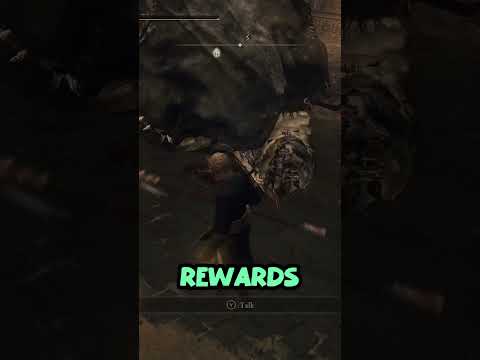
Gurranq, the Beast Clergyman residing in the Bestial Sanctum of Caelid, is a vital NPC in Elden Ring, offering powerful incantations in exchange for Deathroot. However, many players are caught off guard when this seemingly benevolent character suddenly turns hostile. The simple answer to why Gurranq goes crazy is that his hunger for Deathroot intensifies to a point where it overwhelms his sanity. Each Deathroot you feed him deepens his dependence and unlocks new powers for you, but it also pushes him closer to the brink. After providing him with a certain amount of Deathroot (typically around four or five), his primal instincts take over, and he attacks the player in a fit of ravenous rage. This is not a glitch or a bug; it’s a scripted event integral to his questline and backstory, deeply rooted in the game’s complex lore. The key takeaway is that Deathroot is a corrupting influence, and Gurranq, or rather, the being he truly is, Maliketh, the Black Blade, is fundamentally tied to it.
The Maliketh Connection: Understanding Gurranq’s True Identity
To truly understand Gurranq’s descent into madness, one must grasp his connection to Maliketh. Maliketh is a demigod, a shadow-bound beast of Queen Marika, and the holder of the Rune of Death. He was entrusted with sealing this powerful rune, the very force capable of killing gods, within his own flesh. But the Night of the Black Knives, an event where assassins stole a fragment of the Rune of Death and used it to slay Godwyn the Golden, resulted in the spread of Deathroot across the Lands Between.
Gurranq is, in fact, Maliketh, attempting to suppress the influence of the Rune of Death within him by consuming the physical manifestations of its power: Deathroot. This act is a desperate attempt to contain the very force he swore to guard. However, instead of purifying him, the Deathroot acts as a drug, feeding his hunger and driving him to madness. His dialogue after receiving a few Deathroot hints at this inner turmoil, speaking of a hunger that can never truly be satisfied.
The Cycle of Consumption and Corruption
The gameplay mechanic of feeding Deathroot to Gurranq is a symbolic representation of this internal struggle. Each Deathroot provides a temporary respite, a brief moment of control, but it ultimately exacerbates the underlying problem. The attack that occurs after the fourth or fifth Deathroot signifies the Rune of Death’s influence overpowering Maliketh’s will.
You, as the Tarnished, must then subdue him, reminding him of his duty and allowing him to regain control, at least temporarily. This cycle repeats until you have delivered all nine Deathroot, culminating in Gurranq realizing that his hunger will never be quenched and departing to Crumbling Farum Azula, where he fully embraces his identity as Maliketh and becomes a formidable boss. Even after defeating Maliketh, Gurranq remains in the Bestial Sanctum, allowing the player to finish the quest, emphasizing the disjointed nature of the character’s existence within the narrative and gameplay. This is a concession to gameplay, allowing players to complete the quest line.
Why the Deathroot Matters: Implications for the Lore
The presence of Deathroot and Gurranq’s insatiable hunger for it are crucial to understanding the wider lore of Elden Ring. Deathroot is a physical manifestation of the stolen Rune of Death, spreading and corrupting the Lands Between. Gurranq/Maliketh’s actions reflect the desperate measures taken to control this corruption, even at the cost of one’s own sanity.
His quest serves as a microcosm of the greater conflict in the game – the struggle to control and contain forces that threaten to unravel the very fabric of reality. The fact that his methods ultimately fail highlights the futility of trying to contain the inevitable consequences of tampering with such fundamental powers. The Games Learning Society often discusses such intricate narratives within games and their implications for player engagement; find more at GamesLearningSociety.org.
Frequently Asked Questions (FAQs) About Gurranq and Deathroot
1. What exactly is Deathroot?
Deathroot is a special item in Elden Ring found in areas associated with Those Who Live in Death and bosses like Tibia Mariner. It’s a physical manifestation of the Rune of Death’s power, spread across the Lands Between following the Night of the Black Knives.
2. How many Deathroots are there in Elden Ring?
There are a total of nine Deathroots scattered throughout the Lands Between. Finding them all is essential to complete Gurranq’s questline.
3. Where can I find Deathroot?
Deathroot can be found by defeating certain bosses and exploring specific locations, primarily catacombs and graveyards. Some notable locations include Summonwater Village (Tibia Mariner), Deathtouched Catacombs, and the Black Knife Catacombs. Refer to a guide for the exact locations of all nine.
4. What rewards do I get for giving Deathroot to Gurranq?
For each Deathroot you give to Gurranq, he rewards you with powerful Beast Incantations and the Clawmark Seal, which boosts the effectiveness of these incantations. He also gives runes and eventually an Ancient Dragon Smithing Stone upon completing the quest.
5. Does Gurranq disappear after killing Maliketh?
Gameplay-wise, Gurranq typically remains at the Bestial Sanctum even after you defeat Maliketh. This allows you to complete his questline and receive the final reward. However, if you complete the quest before defeating Maliketh, Gurranq will disappear, making the Maliketh fight the last time you see him.
6. Is it possible to avoid Gurranq’s aggression?
No, it’s not possible to completely avoid Gurranq’s hostile episode. It’s a scripted event that triggers after giving him a certain number of Deathroots.
7. How much damage does it take to calm Gurranq down?
The amount of damage required to calm Gurranq is generally around 1000 HP. Focus on dealing consistent damage until he stops attacking and collapses.
8. What happens if I kill Gurranq?
If you kill Gurranq, he drops the Beastclaw Seal and a few Beast Blood items. However, this ends his questline prematurely, preventing you from obtaining the later incantations and the Ancient Dragon Smithing Stone. It’s generally not recommended to kill him unless you have no intention of completing his quest.
9. Is Gurranq a difficult NPC to fight?
Gurranq can be surprisingly challenging due to his aggressive attack patterns and the speed of his attacks. His beastly movements make him unpredictable, so be prepared to dodge and counter-attack strategically.
10. Does the order in which I give Gurranq Deathroot matter?
The order in which you give Gurranq Deathroot does not affect the rewards or the progression of his questline. What matters is the total number of Deathroots you’ve given him.
11. Does Gurranq’s questline affect the main storyline of Elden Ring?
No, Gurranq’s questline is largely independent of the main storyline. Completing it doesn’t directly influence the ending you receive, but it does provide valuable items and lore insights.
12. How does Gurranq know that I have Deathroot?
Gurranq is drawn to the presence of Deathroot, likely due to his connection to the Rune of Death. This is why he immediately recognizes the Deathroot when you approach him and requests it.
13. Can I complete Gurranq’s questline after defeating Maliketh?
Yes, you can complete Gurranq’s questline even after defeating Maliketh. Gurranq remains in the Bestial Sanctum regardless of whether you’ve fought Maliketh, allowing you to deliver the remaining Deathroots.
14. What is the lore significance of Gurranq eating Deathroot?
Gurranq’s consumption of Deathroot is a symbolic act of attempting to contain the influence of the Rune of Death. As Maliketh, he sees it as his duty to control this destructive power, even if it means sacrificing his own sanity. It’s a desperate and ultimately futile attempt to prevent the spread of death and corruption.
15. Are there any alternative ways to satisfy Gurranq’s hunger besides Deathroot?
No, there are no alternative ways to satisfy Gurranq’s hunger. He is solely driven by his need for Deathroot, which is directly linked to his nature as Maliketh and the Rune of Death he contains.