The Enduring Mystery: Why is a Yo-Yo Called a Yo-Yo?
Fast answer first. Then use the tabs or video for more detail.
- Watch the video explanation below for a faster overview.
- Game mechanics may change with updates or patches.
- Use this block to get the short answer without scrolling the whole page.
- Read the FAQ section if the article has one.
- Use the table of contents to jump straight to the detailed section you need.
- Watch the video first, then skim the article for specifics.
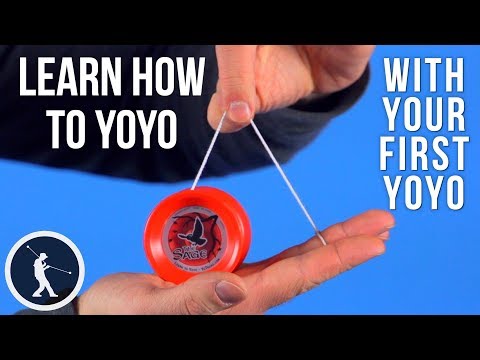
The answer is beautifully simple: the word “yo-yo” comes from the Tagalog language of the Philippines, and it roughly translates to “come come” or “come back.” It’s a descriptive name, perfectly capturing the toy’s signature up-and-down motion. While the yo-yo’s history stretches back centuries and spans continents, it was the Filipino connection that gave the toy its now-iconic moniker.
The Journey of a Name: Tracing the Yo-Yo’s Origins
The story of the yo-yo’s name is intertwined with its journey from ancient origins to global phenomenon. While early forms of the toy existed in Greece and China, it was in the Philippines that the yo-yo as we know it began to take shape. The indigenous populations of the Philippines had been using similar objects for centuries, not just as toys, but potentially as weapons. These early yo-yos were often larger and more substantial than modern versions.
The crucial moment in the naming saga arrived in the 1920s when Pedro Flores, a Filipino immigrant in the United States, began manufacturing and selling the toy. He trademarked the name “yo-yo,” solidifying its association with the Tagalog language. It’s important to understand that Flores didn’t invent the yo-yo, but he did popularize it and give it the name we recognize today.
Enter Donald Duncan, an American businessman, who recognized the yo-yo’s potential. Duncan acquired Flores’ trademark and business, propelling the yo-yo into mainstream American culture and, eventually, the world. Duncan’s marketing prowess played a significant role in establishing the yo-yo as a household name. His company’s demonstrations and competitions fueled the yo-yo craze of the mid-20th century.
More Than Just a Name: The Cultural Significance
The name “yo-yo” isn’t just a label; it’s a cultural touchstone, reflecting the toy’s origins and evolution. It reminds us that even seemingly simple objects can have rich and complex histories, connecting us to different cultures and traditions. The word “yo-yo” evokes memories of childhood, skill, and the sheer joy of mastering a simple yet challenging toy. It also highlights the influence of Filipino culture on American entertainment and toy history.
For those interested in the intersection of games, culture, and learning, organizations like the Games Learning Society offer valuable resources and insights. You can explore their website at https://www.gameslearningsociety.org/ for more information. They promote the exploration of how games and play can influence learning.
Frequently Asked Questions (FAQs) About the Yo-Yo
1. Is “Yo-Yo” the Original Name of the Toy?
No, “yo-yo” isn’t the original name in all cultures. While variations of the toy existed in ancient Greece and China, they likely had different names in their respective languages. “Yo-yo” as a specific name is attributed to the Tagalog language and its adoption by Pedro Flores in the United States.
2. Did Pedro Flores Invent the Yo-Yo?
No, Pedro Flores did not invent the yo-yo. He popularized it in the United States and trademarked the name, which is Tagalog for “come come.” He built a business around manufacturing and selling the toy, which was later acquired by Donald Duncan.
3. What Does “Yo-Yo” Mean in Tagalog?
In Tagalog, “yo-yo” roughly translates to “come come” or “come back.” This describes the action of the toy as it spins down the string and returns to the hand.
4. Where Did Yo-Yos First Originate?
The exact origin is debated. Evidence suggests that toys resembling yo-yos existed in ancient Greece around 440 BC and even earlier in China. However, the modern yo-yo’s development and naming are closely tied to the Philippines.
5. Were Yo-Yos Ever Used as Weapons?
There are accounts suggesting that early versions of the yo-yo in the Philippines were used as weapons. These would have been larger, heavier, and attached to longer, thicker ropes. However, the idea of the modern yo-yo being used as a weapon is largely considered a marketing myth.
6. What’s the Difference Between a Yo-Yo and a Diabolo?
While both are skill toys involving spinning objects and string, they are different. A yo-yo has a string attached to a central axle, causing it to return to the hand. A diabolo, often called a Chinese yo-yo, consists of two cups connected by an axle, spun using two handsticks and a string, requiring constant manipulation to keep it spinning.
7. When Did the Yo-Yo Become Popular in the United States?
The yo-yo gained popularity in the United States in the late 1920s and 1930s, thanks to the efforts of Pedro Flores and, later, Donald Duncan. Duncan’s marketing strategies, including demonstrations and contests, fueled a nationwide yo-yo craze.
8. What Materials Were Early Yo-Yos Made Of?
Early yo-yos were often made of wood. Later, materials like metal and plastic were used. The choice of material affected the yo-yo’s weight, balance, and performance.
9. What is Yo-Yo Slang For?
In slang, “yo-yo” can be used to describe a stupid, foolish, or incompetent person. This usage is unrelated to the toy’s origins or function.
10. Who Popularized the Slang “Yo”?
The slang interjection “Yo” is commonly associated with North American English. It was popularized by the Italian-American community in Philadelphia, Pennsylvania, in the 1940s.
11. What is a modern YoYo made out of?
Modern yo-yos can be made from a variety of materials, including plastic, metal (aluminum, titanium), wood, and composites. Each material offers different performance characteristics in terms of weight, durability, and spin.
12. How do yoyos work?
A yo-yo works by converting potential energy (when the yo-yo is at rest in your hand) into kinetic energy (when it is spinning). When you release the yo-yo, gravity pulls it down, and the string unwinds, causing the yo-yo to spin. At the end of the string, the yo-yo’s momentum can either bring it back up your hand (responsive yo-yo) or keep it spinning at the end of the string (unresponsive yo-yo).
13. What is the oldest yo-yo?
The oldest representation of a yo-yo can be traced back to ancient Greece around 440 BC, depicted in paintings of children playing with disks made from wood, terra cotta, and metal.
14. Who is Yo-Yo Rodriguez?
Yo-Yo Rodriguez is a fictional character in the Marvel Cinematic Universe (MCU), known for her superhuman speed. The character’s name is likely a playful reference to the toy’s back-and-forth motion.
15. What is a “sleeper” in yo-yo terms?
In yo-yo terminology, a “sleeper” refers to when the yo-yo spins at the end of the string without returning to the hand. This is a fundamental trick for many advanced yo-yo maneuvers.
The story of the yo-yo is a testament to the power of cultural exchange and the enduring appeal of simple toys. The next time you pick up a yo-yo, remember its journey from the Philippines to the world, carried by a descriptive name that perfectly captures its playful motion. Also, remember that sites like GamesLearningSociety.org continue to expand on the concepts of play as it relates to learning and history!