Why is my USB Suddenly Not Recognized?
Fast answer first. Then use the tabs or video for more detail.
- Watch the video explanation below for a faster overview.
- Game mechanics may change with updates or patches.
- Use this block to get the short answer without scrolling the whole page.
- Read the FAQ section if the article has one.
- Use the table of contents to jump straight to the detailed section you need.
- Watch the video first, then skim the article for specifics.
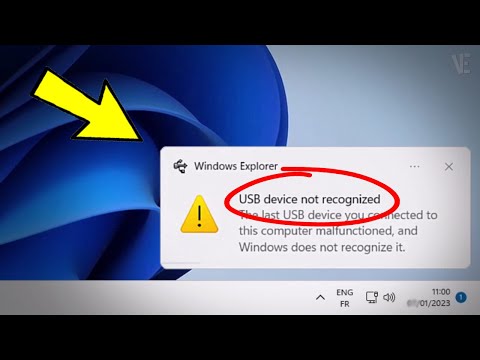
The sudden failure of your computer to recognize a USB device, whether it’s a flash drive, external hard drive, or other peripheral, is a frustratingly common problem. There isn’t one single cause, but rather a range of potential culprits that need to be investigated. The issue boils down to a breakdown in communication between your computer’s operating system and the USB device. This breakdown can stem from hardware failures, software glitches, driver issues, power problems, or even something as simple as a dirty USB port.
Common Reasons for USB Recognition Failures
Here’s a breakdown of the most common reasons why your USB device might suddenly be unrecognized:
-
Driver Issues: This is a very frequent cause. Outdated, corrupted, or missing drivers can prevent your computer from correctly identifying and interacting with the USB device. The driver acts as the translator between the hardware and the operating system.
-
Hardware Failure: The USB device itself could be damaged. This could be internal damage to the drive’s circuitry, a broken connector, or physical damage caused by impact or misuse. Equally, the USB port on your computer could be faulty.
-
Power Supply Problems: USB devices, especially external hard drives, require sufficient power to operate. If your computer’s power supply is inadequate or the USB port is not providing enough power, the device might not be recognized. This is more common with older computers or laptops running on low battery.
-
File System Errors: The file system on the USB drive (e.g., FAT32, NTFS, exFAT) could be corrupted. This can happen due to improper removal of the drive, power outages during file transfers, or malware infections.
-
Operating System Glitches: Sometimes, the issue lies with the operating system itself. Temporary glitches or software conflicts can prevent the computer from recognizing USB devices.
-
BIOS/UEFI Settings: In rare cases, the BIOS/UEFI settings on your motherboard might be preventing the USB port from functioning correctly. This could be due to disabled USB ports or incorrect boot order settings.
-
USB Selective Suspend Settings: Windows has a feature called USB selective suspend, designed to conserve power. However, it can sometimes inadvertently disable USB ports, causing devices to be unrecognized.
-
Hidden Devices: The USB device might be recognized but hidden in Device Manager. This can happen if the device has been previously installed but is no longer properly connected.
-
Malware Infection: Although less common, malware can interfere with USB device recognition. Some types of malware are designed to block or corrupt USB storage devices.
-
Incompatible USB Standard: Older computers might not fully support newer USB standards like USB 3.0 or USB 3.1. This can lead to recognition problems, particularly with devices that require higher bandwidth.
Troubleshooting Steps to Resolve the Issue
When your USB device is not recognized, follow these steps to diagnose and fix the problem:
-
Try a Different USB Port: This is the simplest and often most effective first step. A faulty USB port on your computer could be the culprit. Try all available ports, including those on the front and back of your computer.
-
Test on Another Computer: Connect the USB device to another computer to see if it’s recognized. If it’s not recognized on any computer, the USB device itself is likely the problem.
-
Restart Your Computer: A simple restart can often resolve temporary software glitches that might be interfering with USB recognition.
-
Check Device Manager:
- Open Device Manager (search for it in the Windows search bar).
- Look for any devices with a yellow exclamation mark or question mark, especially under “Universal Serial Bus controllers” or “Other devices.”
- Right-click on the problematic device and select “Update driver.” Choose “Search automatically for drivers.” If this doesn’t work, try “Browse my computer for drivers” and manually install the driver if you have it.
- If there’s no problematic device listed, go to View and “Show hidden devices.” The drive might be there but greyed out.
-
Uninstall and Reinstall the USB Driver:
- In Device Manager, right-click on the unrecognized USB device.
- Select “Uninstall device.”
- Disconnect the USB device.
- Restart your computer.
- Reconnect the USB device. Windows will automatically reinstall the driver.
-
Check Disk Management:
- Open Disk Management (search for it in the Windows search bar).
- See if the USB drive is listed. It might not have a drive letter assigned.
- If it’s listed but doesn’t have a drive letter, right-click on the drive and select “Change Drive Letter and Paths…” Assign a drive letter that is not already in use.
-
Run Hardware and Devices Troubleshooter:
- Go to Settings > Update & Security > Troubleshoot.
- Select “Hardware and Devices” and run the troubleshooter.
-
Disable USB Selective Suspend:
- Go to Control Panel > Hardware and Sound > Power Options > Edit Plan Settings.
- Click “Change advanced power settings.”
- Expand “USB settings” and “USB selective suspend setting.”
- Set both “On battery” and “Plugged in” to “Disabled.”
-
Update Your BIOS/UEFI: This is an advanced step and should only be attempted if you are comfortable with updating your computer’s BIOS/UEFI. Incorrectly updating the BIOS can cause serious problems. Refer to your motherboard manufacturer’s website for instructions.
-
Check for Malware: Run a full system scan with your antivirus software to check for malware infections that might be interfering with USB recognition.
-
Format the USB Drive (Last Resort): This will erase all data on the drive! If none of the above steps work, and the drive is recognized on another computer, you can try formatting it. Right-click on the drive in File Explorer (if it’s recognized there on another machine) or Disk Management and select “Format…” Choose a file system (FAT32 for compatibility, NTFS for larger files) and perform a quick format. Remember, this will delete all data on the drive.
Frequently Asked Questions (FAQs)
Here are some frequently asked questions related to USB recognition issues:
1. Why is my USB showing up as “Unknown Device” in Device Manager?
This usually indicates a driver problem. Your computer is recognizing that something is connected, but it can’t identify what it is because the necessary driver is missing or corrupted. Try updating or reinstalling the driver through Device Manager.
2. Can a faulty USB cable cause recognition problems?
Yes, absolutely. A damaged or low-quality USB cable can prevent proper communication between the device and the computer. Try using a different, known-good USB cable.
3. My external hard drive requires more power than a USB port can provide. What can I do?
Use a USB Y-cable (which splits the power draw across two USB ports) or a powered USB hub (which has its own power adapter) to provide sufficient power to the drive.
4. Why is my USB 3.0 drive not working on my older computer?
Older computers might not have USB 3.0 ports, or the USB 2.0 ports might not provide enough power for the drive. Try connecting the drive to a powered USB hub or using a USB 2.0 cable if the device supports it. USB 3.0 devices are generally backward compatible, but power can still be an issue.
5. How do I safely remove a USB drive to prevent file system corruption?
Always use the “Safely Remove Hardware and Eject Media” icon in the system tray before disconnecting the USB drive. This ensures that all data transfers are complete and prevents data corruption.
6. What is a “port reset” and how can it help?
A port reset involves disabling and re-enabling the USB port through Device Manager. This can sometimes resolve temporary communication errors. Right-click on the USB Root Hub or the specific USB port in Device Manager and select “Disable device, then Enable device” after a moment.
7. My USB drive is making a clicking sound. What does that mean?
A clicking sound from a USB drive, especially an external hard drive, often indicates a mechanical failure within the drive. It’s a sign that the drive is likely failing and you should back up your data immediately.
8. Can formatting a USB drive fix recognition issues?
Yes, formatting can fix file system errors that might be preventing the drive from being recognized. However, formatting will erase all data on the drive, so only use it as a last resort and after backing up any important data (if possible).
9. What file system should I use for my USB drive?
- FAT32: Compatible with most operating systems, but limited to files smaller than 4GB.
- NTFS: Windows’ native file system, supports larger files and better security features.
- exFAT: Ideal for large USB drives used with both Windows and macOS, supports files larger than 4GB and offers good compatibility.
10. How do I check the health of my USB drive?
You can use disk checking utilities built into your operating system (e.g., chkdsk in Windows) or third-party software to scan the drive for errors and assess its overall health.
11. Can a virus prevent my USB from being recognized?
Yes, some viruses are designed to block or corrupt USB drives. Run a full system scan with your antivirus software to check for malware.
12. What does “write protection” mean and how do I remove it from my USB drive?
Write protection prevents you from writing data to the USB drive. It can be enabled by a physical switch on the drive, through software settings (using the diskpart command in Windows), or if the drive is failing. Ensure the physical switch (if present) is unlocked. Use diskpart carefully, or replace the drive if it’s failing.
13. My USB drive is recognized, but I can’t access the files. What’s wrong?
This could be due to file system errors, permission issues, or malware. Run a disk check, verify file permissions, and scan for malware.
14. Why does my USB drive work on one computer but not another?
This suggests a compatibility issue, driver problem, or power issue on the computer where it’s not working. Ensure the drivers are up to date, the USB ports are functioning correctly, and the computer meets the minimum system requirements for the drive.
15. Are there any software tools that can help diagnose and fix USB issues?
Yes, there are several diagnostic tools available, including USBDeview (which provides detailed information about connected USB devices), TestDisk (for recovering lost partitions and repairing file systems), and CrystalDiskInfo (for monitoring the health of hard drives and SSDs, including USB-connected ones).