Why is Night Vision Green? Unveiling the Science Behind the Iconic Hue
Fast answer first. Then use the tabs or video for more detail.
- Watch the video explanation below for a faster overview.
- Game mechanics may change with updates or patches.
- Use this block to get the short answer without scrolling the whole page.
- Read the FAQ section if the article has one.
- Use the table of contents to jump straight to the detailed section you need.
- Watch the video first, then skim the article for specifics.
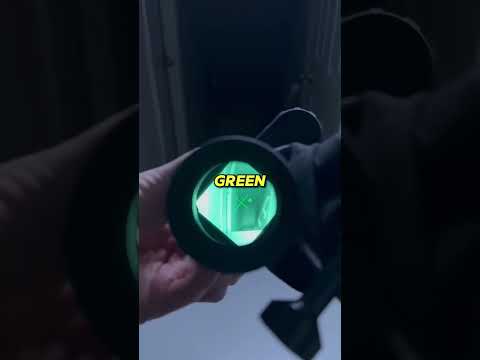
The characteristic green glow of night vision devices is perhaps one of the most recognizable visual signatures of modern technology. But the reason why night vision is green isn’t just a stylistic choice – it’s deeply rooted in the science of human vision and the technology of image intensification. Simply put, night vision is green because the phosphor screen within the device, which converts amplified light into a visible image, is primarily made of a green phosphor. This specific material is chosen due to its unique ability to efficiently convert electrons into visible light within a spectral range where the human eye is most sensitive. This maximizes the amount of detail that the human eye can perceive in low light environments.
The Science of Image Intensification and Phosphors
To fully understand why night vision is green, it’s essential to understand how these devices work. Night vision goggles (NVGs) typically use a technology called image intensification. This process works by:
- Collecting Ambient Light: Light, in the form of photons, enters the device through an objective lens.
- Photon Conversion to Electrons: These photons then strike a photocathode, which converts the light into electrons.
- Electron Multiplication: These electrons pass through a microchannel plate, where they are multiplied exponentially.
- Electron Conversion back to Visible Light: Finally, these multiplied electrons hit a phosphor screen, causing it to emit light, creating the image you see.
The key lies in the composition of the phosphor screen. It’s often made of a substance that emits light when struck by electrons. Green phosphors, specifically, have historically proven to be incredibly efficient in this conversion process.
The Role of Human Visual Perception
The decision to use green phosphor is also strongly influenced by human visual perception. The human eye has two types of photoreceptor cells: rods and cones. Rods are highly sensitive to light and are crucial for night vision, but they don’t distinguish color. Cones, on the other hand, are responsible for color vision and are most active in bright light.
We are most sensitive to the green portion of the visible spectrum. This means that our eyes can differentiate more shades of green than any other color. This allows night vision devices using green phosphor to provide a highly detailed and clear picture, even in extremely low-light conditions. The enhanced ability to discern nuances in shades of green aids in identifying objects and perceiving depth and detail better than other colors.
Why Not Other Colors?
If maximizing vision in low light is the goal, why not use colors that are known to be vibrant, such as red or blue? While some alternatives are being explored, the reasons for sticking with green are compelling:
- Red Light and Rhodopsin: Red light is known to break down rhodopsin more slowly, a pigment crucial for night vision. This would make it a better choice for preserving night vision, however, it is less efficient at penetrating fog, smoke and other atmospheric disturbances.
- Blue Light and Eye Strain: Blue light, while being highly visible, can cause eye strain and disrupt sleep patterns. It can also significantly reduce existing night vision capabilities, making it a bad fit for a device designed for low-light scenarios.
- Practicality and Efficiency: Ultimately, the practicality and efficiency of green phosphor have made it the standard for decades. It offers a good balance between visibility, ease of interpretation, and reduced eye strain.
FAQs About Night Vision
1. Why isn’t night vision red since it preserves night vision better?
While red light does preserve rhodopsin better, meaning less night vision is lost, green penetrates atmospheric disturbances better and shows more detail. It’s preferred for clarity and distance vision, as well as reading instruments or maps in low-light.
2. Is white night vision better than green?
Studies suggest both green and white phosphor screens offer effective levels of vision. White phosphor displays provide a greyscale image, engaging a greater portion of your eye’s receptors. The choice between the two often depends on specific needs and budget.
3. Does night vision have to be green?
No, night vision doesn’t have to be green. White phosphor night vision also works effectively. However, green is a standard due to phosphor efficiencies.
4. What is the best color for night vision?
From a purely preservational aspect, red is best, as it reduces the loss of rhodopsin. However, from an operational clarity standpoint, green is superior for detail and distance vision.
5. What is the hardest color to see at night?
The color that is hardest to see at night is red. The cones recognize red, sending a message to the brain, but in low-light conditions, red isn’t as easily perceived as green.
6. What type of night vision is green?
The type of night vision with the green hue is image intensification night vision. This type amplifies available ambient light.
7. What’s the difference between green and white night vision?
Green night vision uses green phosphor, providing the classic green image, while white night vision utilizes white phosphor, displaying a greyscale image. The greyscale can offer greater visual information to the brain.
8. Why is some night vision green and some black and white?
The difference is due to the phosphor used in the device. Green phosphor creates the traditional green image; white phosphor creates the black and white image, which also has a slight blueish tint.
9. Can humans see red-green?
Normally, we cannot perceive reddish green. However, under special circumstances, people can see these “forbidden colors,” suggesting the brain’s color processing is more flexible than previously believed.
10. Can night vision be any color?
Night vision can utilize other colors, but green is the most efficient for recreating detail. It maximizes the sensitivity of human vision in low light. Technologies using sensitive cameras that amplify visible light instead of infrared can create other colors.
11. Why is night vision green and not blue?
The green color is caused by the green phosphor used in the image intensifier tube. Green is easier on the eyes than other colors, reducing fatigue. Blue can disrupt sleep patterns and reduce night vision capabilities.
12. Why do humans see green best?
We see green easily due to the way light is interpreted by our eyes. Our eyes translate light waves into colors and are most sensitive to the green spectrum.
13. What colors can humans not see?
Beyond the visible spectrum of red and violet, humans cannot see infrared and ultraviolet light.
14. Do multicolor night vision goggles exist?
No, NVG equipment cannot produce multi-color representation of a scene. Images are typically monochrome, using a single phosphor color like green, white, or amber.
15. Why do the military use red light?
The military uses red light to minimize light reflection as red is less likely to cause glare. This reduces the chance of detection by opposing forces. It also helps in preserving night vision.