Why is “No Russian” So Controversial?
Fast answer first. Then use the tabs or video for more detail.
- Watch the video explanation below for a faster overview.
- Game mechanics may change with updates or patches.
- Use this block to get the short answer without scrolling the whole page.
- Read the FAQ section if the article has one.
- Use the table of contents to jump straight to the detailed section you need.
- Watch the video first, then skim the article for specifics.
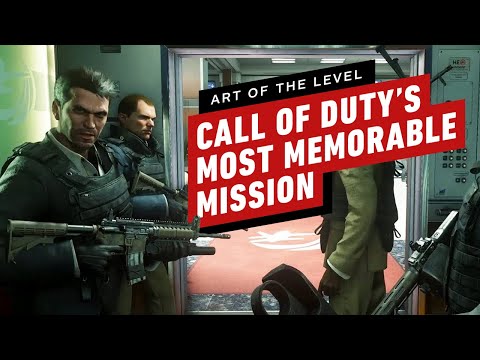
The “No Russian” mission from Call of Duty: Modern Warfare 2 (2009) remains one of the most controversial moments in video game history, even over a decade after its release. Its infamy stems from its unflinching depiction of a mass shooting of civilians at a Moscow airport, with the player not just witnessing but actively participating in the atrocity. This level pushed the boundaries of what was considered acceptable in interactive entertainment, sparking intense debate about violence, player agency, and the responsibility of developers. It wasn’t just that the violence was extreme; it was that the player was put in the role of a terrorist, complicit in the cold-blooded murder of innocent people. This was seen by many as crossing a moral line, blurring the distinction between entertainment and glorification of violence, and raising serious concerns about the potential impact on players. The raw, unscripted nature of the violence, coupled with the player’s direct involvement, made “No Russian” a flashpoint for discussion about media ethics and the evolving landscape of video game storytelling. It continues to be a case study in the complexities and challenges of using interactive mediums to portray sensitive and controversial topics.
The Core of the Controversy
The controversy surrounding “No Russian” can be broken down into several key factors. First and foremost is the graphic and gratuitous violence. Players are not merely spectators but active participants in a terrorist attack. This active role is a critical component of the controversy, as it compels players to carry out the executions rather than simply watch them unfold. Unlike passive media, the interactive nature of video games places agency in the player’s hands. This raised serious ethical questions about the potential desensitization to violence, particularly in impressionable audiences.
Secondly, the lack of narrative context for some players at the initial gameplay contributed to the outrage. While the mission is part of a larger plot to frame the United States and instigate conflict between Russia and the West, some gamers were unaware of this at first, experiencing the mission simply as a random act of mass violence perpetrated against innocent civilians. This led many to feel that the game was trivializing acts of terrorism.
Finally, the timing of the game’s release, with the frequency of real-life mass shootings becoming an increasing concern, heightened the sensitivity around “No Russian.” Many argued that the mission was insensitive and potentially harmful, given the potential for imitation or glorification of such events.
Impact and Aftermath
The impact of “No Russian” was immediate and profound. Media outlets worldwide covered the controversy extensively. Some countries and regions outright censored or removed the mission altogether. Activision, the game’s publisher, removed the level entirely from Russian versions of the game due to the country’s lack of a formal rating system. This decision emphasized the widespread concern and varied cultural interpretations of such intense content. Even within the gaming community, opinions were divided. Some players appreciated the mission’s boldness and its willingness to push boundaries, while others found it deeply disturbing and ultimately unnecessary.
The legacy of “No Russian” is that it forever changed how developers approach controversial topics in video games. It highlighted the need for caution when depicting extreme violence and raised crucial questions about player agency and the responsibility of developers. The mission also serves as a case study of how cultural sensitivity and context play a critical role in the reception of controversial content.
Frequently Asked Questions (FAQs)
1. What is the “No Russian” mission about?
The “No Russian” mission is a level in Call of Duty: Modern Warfare 2 where the player, acting as an undercover CIA operative, participates in a terrorist attack at Zakhaev International Airport in Moscow. The mission’s purpose is to allow a terrorist group led by Vladimir Makarov to carry out the massacre, framing the United States for the atrocity.
2. Who was behind the creation of the “No Russian” mission?
The “No Russian” mission was created by Mohammad Alavi and his colleagues at Infinity Ward. Alavi was a designer at the company, and he openly discussed the challenges of pushing narrative and boundaries with the mission.
3. Why does Makarov say “Remember, no Russian?”
Vladimir Makarov says “Remember, no Russian” as a reminder to his team to not speak any Russian during the attack. The purpose of this was to allow the attack to be attributed to an American group instead of Russia itself, escalating tensions and creating chaos.
4. How did the developers justify the “No Russian” mission?
Developer Mohammad Alavi explained that the “No Russian” mission served a key narrative purpose by establishing Makarov as a truly vile villain. He felt that the strong reaction, whether negative or positive, was a success from a storytelling perspective.
5. Was the mission censored in any versions of the game?
Yes, due to its graphic content, “No Russian” was censored in some international versions of Call of Duty: Modern Warfare 2. The level was entirely removed from Russian versions of the game.
6. Is the level realistic?
While the plot is considered absurd by some, the attack itself is seen as realistic. It highlights how soft targets can be vulnerable to terrorist attacks. This element of realism is what made the level so disturbing to some players.
7. What is the connection between “No Russian” and real-life attacks?
While no direct link has ever been confirmed, “No Russian” has been connected in some online commentary to premeditated attacks. The mission was linked to some discussions, which demonstrated the game’s ability to leave a lasting impression on those who played it.
8. Why did Netflix remove Russian content?
Netflix removed Russian content and halted future productions in response to Russia’s invasion of Ukraine. They also declined to adhere to Russian regulations that required them to carry news channels. This removal, while unrelated to the “No Russian” mission, reflects a broader sensitivity towards Russian content given global politics.
9. What year does Modern Warfare 2 take place?
The 2022 reboot of Modern Warfare 2 is a continuation of the 2019 Modern Warfare reboot, with the campaign taking place in late 2022. The original Modern Warfare 2 which features the No Russian level, however, was released in 2009 and is set within the game’s own timeline.
10. What is the relationship between Soap and Ghost?
In the original MW2, Soap was higher-ranking than Ghost, being his Captain, while Ghost was his Lieutenant. In the 2022 reboot, Ghost retains his Lieutenant rank, while Soap is a Sergeant. Despite the shift in hierarchy, they still maintain respect for each other.
11. Why did Captain Price nuke America?
In a move to assist US forces against the Russian invasion, Captain Price launched a nuclear ICBM that detonated in the upper atmosphere above Washington D.C., effectively destroying the International Space Station. This action was a controversial but necessary tactic in the game’s narrative.
12. Who is the main antagonist in Modern Warfare 2?
The main antagonist in the original Call of Duty: Modern Warfare 2 is General Hershel Von Shepherd III, also known as General Shepherd.
13. Why does Makarov hate Price?
Makarov held a grudge against Price and Soap because he believed they were responsible for the death of Imran Zakhaev. Newspaper clippings within his safe house showed photos of Bravo Six (Gaz, Griggs, Price, and Soap) which he had attributed to Imran’s death.
14. What does “С нами Бог” mean?
“С нами Бог” is a Russian phrase that translates to “God is with us” in English. Makarov says this before launching the attack in the “No Russian” mission.
15. How many kisses do Russians give when greeting?
Women in Russia generally kiss people three times on alternating cheeks, starting on the left. Male friends may hug each other or give a pat on the back. It’s considered a superstition to not shake hands or kiss when greeting someone on a doorstep.