Unveiling the Mystery: Why is Petra Called the “Lost City?”
Fast answer first. Then use the tabs or video for more detail.
- Watch the video explanation below for a faster overview.
- Game mechanics may change with updates or patches.
- Use this block to get the short answer without scrolling the whole page.
- Read the FAQ section if the article has one.
- Use the table of contents to jump straight to the detailed section you need.
- Watch the video first, then skim the article for specifics.
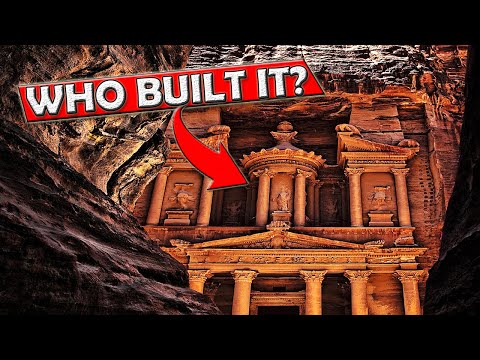
Petra earns the moniker “Lost City” because, despite its former prominence as a thriving metropolis and crucial trade hub in antiquity, it was virtually unknown to the Western world after the 14th century AD. Knowledge of its existence faded, its location became obscured by the sands of time and the shifting political landscape, and it remained largely hidden until its rediscovery in 1812 by Swiss explorer Johann Ludwig Burckhardt.
A City Shrouded in Time: Petra’s Story
The Rise of Petra
The story of Petra is one of remarkable ingenuity and resilience. Initially occupied by the Edomites around 1200 BCE, the area was later seized and transformed by the Nabataeans, an Arab tribe who made it the capital of their kingdom. The Nabataeans were master engineers and traders. They carved magnificent structures directly into the sandstone cliffs and developed a sophisticated water management system that allowed the city to flourish in the arid desert environment. Petra’s strategic location at the crossroads of major trade routes, connecting Egypt, Syria, Arabia, and the Mediterranean, contributed significantly to its wealth and influence.
The Decline and Disappearance
Several factors contributed to Petra’s decline and subsequent “loss.” The shifting of trade routes northward and towards the sea gradually diminished Petra’s economic importance. A devastating earthquake in 363 AD severely damaged the city’s infrastructure, including its crucial water-supply system. While the city persisted for several centuries under Roman and Byzantine rule, its significance waned. By the 7th century AD, only a small population remained.
Rediscovery and Rebirth
After its abandonment, Petra faded into obscurity. While local Bedouin tribes knew of its existence, the city remained hidden from Western eyes for centuries. Johann Ludwig Burckhardt’s “rediscovery” in 1812 brought Petra back to the attention of the world. Disguised as a Muslim pilgrim, Burckhardt managed to gain access to the site and spread word of the incredible “lost city” hidden in the Jordanian desert. Today, Petra is a UNESCO World Heritage Site and one of the New Seven Wonders of the World, attracting visitors from around the globe.
The Enduring Allure of Petra
What makes Petra so special? Its Outstanding Universal Value lies in the vast extent of its elaborate tomb and temple architecture, the religious high places, and the remnant channels, tunnels, and diversion dams, combined with a vast network of cisterns and reservoirs that controlled and conserved seasonal rains. The intricate carvings, the vibrant colors of the sandstone, and the sheer scale of the city carved into the rock leave a lasting impression on all who visit. Furthermore, the mystery surrounding its abandonment and “rediscovery” only adds to its allure. Petra is a testament to human ingenuity, artistic achievement, and the ephemeral nature of civilizations. The Games Learning Society has many resources relating to education and history. You can find their website at https://www.gameslearningsociety.org/.
Frequently Asked Questions (FAQs) about Petra
1. What does the name “Petra” mean?
The name “Petra” comes from the Greek word “petros,” which means “rock” or “stone.” It aptly describes the city carved into the sandstone cliffs.
2. Is Petra mentioned in the Bible?
Yes, Petra is believed to correspond to the biblical city of Sela, mentioned in the Old Testament. It also lies along the route Moses is said to have taken during the Exodus.
3. What did Petra look like when it was inhabited?
Ancient Petra was a thriving metropolis, complete with lush gardens, ornate houses, bustling markets filled with exotic goods, and a sophisticated water system.
4. Do people still live in Petra?
While most of the ancient city is uninhabited, some Bedouin communities still reside in the surrounding area, maintaining a traditional nomadic way of life.
5. Is Petra one of the Seven Wonders of the World?
Yes, Petra is recognized as one of the New Seven Wonders of the World, a testament to its historical and architectural significance.
6. Can you go inside the Treasury (Al-Khazneh) at Petra?
Unfortunately, you cannot go inside the Treasury. Access was restricted to protect the delicate structure from damage caused by noise and human impact.
7. What is inside Petra?
Petra contains a vast array of structures, including temples, tombs, houses, and public buildings. The Royal Tombs are particularly impressive.
8. What happened to the people who lived in Petra?
The inhabitants gradually moved to nearby fertile areas as the city’s water system deteriorated and trade routes shifted.
9. Who rediscovered Petra?
Swiss traveler Johann Ludwig Burckhardt is credited with rediscovering Petra in 1812, bringing it back to the attention of the Western world.
10. Was the Holy Grail found in Petra?
The idea that the Holy Grail is in Petra is a popular myth, fueled in part by the movie “Indiana Jones and the Last Crusade.” However, no evidence supports this claim.
11. Did Moses visit Petra?
Yes, during the Exodus, Moses and the Israelites passed through the area near Petra. Local tradition identifies a spring near Petra as the place where Moses struck a rock and brought forth water.
12. Can you stay overnight in Petra?
While camping inside the main Petra site is generally not allowed, you can book Bedouin cave stays in the surrounding area. These stays often include traditional meals and cultural experiences.
13. Why can’t you go inside the Treasury?
Access to the interior of the Treasury was restricted to protect the structure from damage. Shouting and noise inside can create echoes that can potentially damage the ceiling.
14. What religion did the people of Petra practice?
The Nabataeans practiced a polytheistic religion, worshipping a variety of Arab gods and goddesses, including Dushara, Al-‘Uzza, Allat, and Manat.
15. What have archaeologists found in Petra?
Archaeologists have discovered spectacular structures carved into cliffs, elaborate sculptures, intricate pottery, jewelry, and evidence of the Nabataeans’ advanced water management system. Still, only an estimated 5% of the entire city has been uncovered so far. Further research is ongoing.