Why Was the PS4 More Powerful Than the Xbox One? A Deep Dive
Fast answer first. Then use the tabs or video for more detail.
- Watch the video explanation below for a faster overview.
- Game mechanics may change with updates or patches.
- Use this block to get the short answer without scrolling the whole page.
- Read the FAQ section if the article has one.
- Use the table of contents to jump straight to the detailed section you need.
- Watch the video first, then skim the article for specifics.
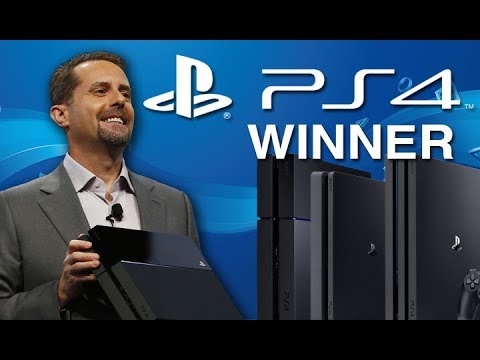
The simple answer: the PlayStation 4 (PS4) possessed a more potent and efficiently utilized graphics processing unit (GPU) than the original Xbox One. This translated to a demonstrable advantage in rendering games at higher resolutions – often achieving the coveted 1080p standard – with potentially smoother frame rates. While both consoles employed similar core architectures, Sony extracted more performance from its hardware, leading to a visually superior experience for many games. The difference, though not always massive, was noticeable and contributed significantly to the PS4’s early dominance in the console generation.
The Technical Breakdown
The PS4 and Xbox One both launched in late 2013, ushering in a new era of console gaming. Both employed AMD Jaguar octa-core CPUs and AMD Radeon GPUs, but their implementations differed significantly.
-
GPU Power: The PS4’s GPU boasted 1.84 Teraflops of computing power, whereas the Xbox One’s GPU was clocked at 1.31 Teraflops. That’s a notable difference, giving the PS4 a significant lead in graphics processing capabilities. This raw power allowed the PS4 to handle more complex visual effects, higher polygon counts, and – most importantly – higher resolutions.
-
Memory Bandwidth: The PS4 featured 8GB of GDDR5 RAM, a faster and more efficient memory type than the Xbox One’s 8GB of DDR3 RAM. GDDR5 provided significantly higher memory bandwidth (176 GB/s vs. 68.3 GB/s), meaning the PS4 could transfer data to and from the GPU more quickly. This reduced bottlenecks and allowed the console to process more information, resulting in improved performance and visuals.
-
ESRAM Controversy (Xbox One): The Xbox One attempted to compensate for its weaker GPU and slower RAM with a small amount of embedded static RAM (ESRAM). This was intended to act as a high-speed buffer for frequently accessed data. However, developers found ESRAM challenging to work with, and it didn’t provide the performance boost Microsoft hoped for. In many cases, it actually hindered performance because of the added complexity of managing it effectively.
-
Software Optimization: While hardware is crucial, software optimization is equally important. Sony’s developers and first-party studios seemed to grasp the PS4’s architecture more quickly, resulting in better-optimized games that leveraged the console’s strengths. This early advantage further solidified the PS4’s reputation for delivering superior performance.
The Real-World Impact
The differences in hardware translated into tangible benefits for gamers. Many third-party titles ran at a crisp 1080p resolution on the PS4, while the Xbox One often struggled, outputting at a lower 900p or even 720p. While both consoles generally targeted 30 or 60 frames per second (fps), the PS4 often maintained those frame rates more consistently, especially during graphically intensive scenes.
This visual disparity wasn’t always glaringly obvious, especially on smaller screens. However, on larger TVs, the difference became much more apparent, with the PS4 offering a sharper, cleaner, and more detailed image. This perceived visual superiority contributed significantly to the PS4’s perception as the more powerful and desirable console.
Beyond the Numbers: Perceptions and Momentum
The PS4’s early advantage wasn’t solely about raw power. Perception played a significant role. Sony’s marketing emphasized the PS4’s gaming focus, lower price point at launch, and superior performance. This created a narrative that the PS4 was the “gamer’s console,” attracting a larger audience from the outset.
Furthermore, the PS4’s initial success created a positive feedback loop. More sales led to more developer support, which in turn resulted in more high-quality games, further driving sales. This momentum proved difficult for the Xbox One to overcome, despite Microsoft’s later efforts to improve the console’s performance and offer compelling services like Xbox Game Pass.
While the Xbox One X, released in 2017, became significantly more powerful than the PS4 Pro, it was a mid-generation refresh and didn’t fundamentally alter the narrative established early in the console cycle. The PS4 had already cemented its position as the leading console in the market.
Conclusion: A Combination of Factors
The PS4’s superiority over the Xbox One in terms of power was not due to one single factor, but a combination of elements: a more powerful and efficient GPU, faster memory, better software optimization, and a strategic marketing campaign. These factors coalesced to create a console that consistently delivered a better visual experience, solidifying its position as the dominant player in the eighth generation of console gaming. The result was a perception, largely supported by benchmarks and visual analysis, that the PlayStation 4 offered a more powerful gaming experience compared to the Xbox One.
Frequently Asked Questions (FAQs)
1. Was the Xbox One always less powerful than the PS4?
Yes, from a purely technical standpoint. The PS4 consistently had a more powerful GPU and faster memory, giving it a performance advantage from launch. Although Microsoft made efforts to improve the Xbox One’s performance through software updates and the ESRAM buffer, it never fully closed the gap.
2. Did the Xbox One S improve performance compared to the original Xbox One?
The Xbox One S did offer a minor performance boost due to a slight clock speed increase in the GPU, but the difference was negligible in most games. The main improvements focused on design, 4K Blu-ray playback, and HDR support, not a significant power increase.
3. What about the Xbox One X? Was that more powerful than the PS4 Pro?
Absolutely. The Xbox One X was significantly more powerful than the PS4 Pro. It boasted a much stronger GPU (6 Teraflops vs. 4.2 Teraflops) and more RAM (12GB vs. 8GB), enabling it to run games at native 4K resolution with higher graphical settings. However, it was released later in the generation and at a higher price point.
4. What is the difference between Teraflops?
Teraflops (TFLOPS) is a measure of a computer’s raw processing power, specifically how many trillions of floating-point operations it can perform per second. In the context of consoles, a higher Teraflop count generally indicates a more powerful GPU, capable of handling more complex graphics and calculations. It’s not the only factor determining performance, but a key indicator.
5. Did all games run better on PS4 than Xbox One?
Not necessarily. Some developers might have optimized their games more effectively for one console over the other, or the differences in performance might have been minimal in certain titles. However, across a wide range of games, the PS4 generally exhibited a performance advantage.
6. Was the PS4 Pro significantly more powerful than the original PS4?
Yes, the PS4 Pro was a mid-generation upgrade that offered a significant performance boost. Its GPU was more than twice as powerful as the original PS4’s, enabling it to run games at higher resolutions (including 4K) and with improved visual fidelity.
7. Did the PS4 Pro run games in native 4K?
The PS4 Pro supported 4K gaming, but not all games ran at native 4K. Some games used techniques like checkerboard rendering or upscaling to achieve a 4K-like image. However, even these techniques provided a noticeable improvement over the original PS4’s 1080p output.
8. Was the memory bandwidth difference between PS4 and Xbox One noticeable?
Yes, the faster GDDR5 memory in the PS4 allowed it to move data more quickly, which reduced bottlenecks and improved overall performance. This difference was especially noticeable in games with complex textures and effects.
9. Did exclusive games play a role in the PS4’s success?
Undeniably. The PS4 boasted a strong lineup of exclusive games, including titles like God of War, The Last of Us Part II, Spider-Man, and Horizon Zero Dawn. These critically acclaimed games attracted a large audience and further solidified the PS4’s position as a top gaming platform. Xbox had great exclusives but PS4’s exclusives were a huge success.
10. How did Xbox Game Pass affect the console war?
Xbox Game Pass is a subscription service that offers access to a large library of games for a monthly fee. This service, while not directly impacting the console’s inherent power, was a huge win for Microsoft and improved the value proposition. Its incredible popularity gave Xbox an edge. It didn’t level the playing field in terms of raw power, but it made the Xbox ecosystem much more attractive, offering excellent value to consumers.
11. Which console has the best exclusives in 2023?
According to the article, most people will likely be in agreement that the Nintendo Switch has the best console exclusives in 2023.
12. What is the best-selling video game console of all time?
The PlayStation 2 is the best-selling video game console of all time with over 158 million units sold worldwide.
13. What made the PS4 the best console ever?
PS4 arguably has the best stable of exclusive games in the business, especially if you’re interested in the more grown-up, narrative-based titles that can be hard to find on Nintendo Switch.
14. Which gaming console is more popular?
The PlayStation is the Leading Gaming Platform
15. Where can I learn more about game design and development?
You can explore educational resources and community engagement opportunities at the Games Learning Society website: https://www.gameslearningsociety.org/.