Unraveling the Mystery: Why is Sephiroth Immortal?
Fast answer first. Then use the tabs or video for more detail.
- Watch the video explanation below for a faster overview.
- Game mechanics may change with updates or patches.
- Use this block to get the short answer without scrolling the whole page.
- Read the FAQ section if the article has one.
- Use the table of contents to jump straight to the detailed section you need.
- Watch the video first, then skim the article for specifics.
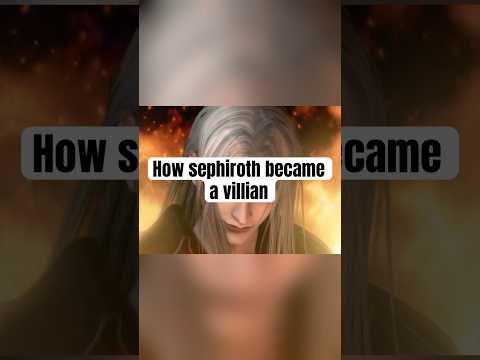
Sephiroth’s immortality in the Final Fantasy VII universe is a complex tapestry woven from Jenova cells, the Lifestream, and his own unyielding willpower. He isn’t immortal in the traditional sense of being invulnerable. Rather, even when his physical form is destroyed, his essence persists and finds ways to manifest again. This is primarily due to the infusion of Jenova cells into his body before birth, granting him a unique connection to the Lifestream – the planet’s spiritual energy. This connection, coupled with his immense power and determination, allows him to reform, manipulate events, and exert influence even beyond the grave, making him a recurring and terrifying threat. This makes him technically immortal; he can be eliminated, but between his willpower and the Lifestream, he won’t be eliminated for long.
The Genesis of Immortality: Jenova’s Influence
Sephiroth’s journey towards immortality begins with the Jenova Project, a scientific endeavor spearheaded by Professor Hojo. He was the first human infused with Jenova cells, paving the way for further experiments, including those performed on Cloud. This infusion before his birth is the cornerstone of his extraordinary abilities.
Jenova Cells and the Lifestream Connection
Jenova cells possess the unique ability to mimic and assimilate. In Sephiroth’s case, they granted him superhuman strength, speed, and intelligence. More importantly, they forged a deep connection between him and the Lifestream. When Sephiroth is seemingly defeated at the Nibelheim Reactor, his physical body plummets into the Lifestream. But instead of dissolving completely, his consciousness, fueled by his willpower and Jenova cells, merges with the planet’s spiritual energy. This allows him to exert influence over the Lifestream, and, eventually, to reconstruct himself.
The Power of Will and Reunion
Sephiroth’s immense willpower plays a crucial role in his continued existence. It is his driving force within the Lifestream, enabling him to resist complete dissolution. He can manipulate the Lifestream to achieve his goals. The Reunion Theory, a core concept in Final Fantasy VII, also contributes to his immortality. Jenova cells instinctively draw together, seeking to reunite. Sephiroth exploits this, using individuals carrying Jenova cells (like Cloud) as anchors to pull himself back into a corporeal form.
Challenging the Notion of True Death
Sephiroth’s continued reappearances challenge the conventional understanding of death. He transcends the limitations of physical existence, becoming a symbol of persistent evil. This ties into deeper thematic elements explored in Final Fantasy VII, such as the nature of memory, identity, and the enduring impact of trauma.
Manifestations and Rebirth
After the initial Nibelheim incident, Sephiroth manifests in various forms: as illusions, as physical bodies controlled by Jenova cells, and ultimately, through the reconstitution of his own physical form. These manifestations demonstrate his power to manipulate reality and control those connected to Jenova. The final battle with Sephiroth is not a definitive end but a temporary setback, as his spirit continues to linger within the Lifestream, always posing a potential threat.
The Role of Cloud and the Cycle of Revenge
Sephiroth’s existence is inextricably linked to Cloud. He uses Cloud’s fragmented memories and Jenova cells to further his plans. Cloud is not merely an enemy but a tool, a puppet in Sephiroth’s grand scheme. This cycle of revenge and manipulation ensures Sephiroth’s continued relevance and existence within the Final Fantasy VII narrative. As explored on GamesLearningSociety.org, these deep narratives can have a significant effect on those who follow the game.
Sephiroth FAQs: Unveiling More Secrets
Here are some frequently asked questions about Sephiroth.
1. What makes Sephiroth so powerful?
Sephiroth’s power stems from being the first human infused with Jenova cells before birth. This granted him superhuman abilities like enhanced strength, speed, and intelligence and a unique connection to the Lifestream.
2. Why does Sephiroth say “I will never be a memory?”
This quote signifies Sephiroth’s determination to transcend mortality. He seeks to become more than just a historical figure. He wants to become a lasting presence, a god-like entity, and a force that continues to influence the world. Also, it illustrates that Sephiroth lives rent free in Cloud’s head and wills himself to continue existing partially to haunt Cloud.
3. Why does Sephiroth hate Cloud so much?
Sephiroth views Cloud as an insignificant being who dared to challenge him. He sees Cloud as a reminder that even ordinary individuals can pose a threat to his plans.
4. What made Sephiroth evil?
After learning about Jenova’s true nature, Sephiroth became disillusioned and developed a lust for power. He abandoned the Planet’s cause. He aims to harm it in his pursuit of godhood.
5. Why does Sephiroth hate humans?
Sephiroth believes himself to be a survivor of the Ancients. He harbors a vendetta against mankind, aiming to become a god and control the Planet.
6. Is Sephiroth a good guy or a bad guy?
Sephiroth is the main antagonist of Final Fantasy VII. He has a tragic background that motivates his actions. He is not simply evil for the sake of it.
7. Is Cloud in love with Sephiroth?
No. Their relationship is based on revenge and manipulation. Cloud hates Sephiroth for destroying his home and harming those he cares about.
8. Why is Cloud afraid of Sephiroth?
Cloud’s fear stems from the trauma of Nibelheim and Sephiroth’s overwhelming power. Cloud’s true history recontextualizes the vendetta for both characters.
9. Why does Cloud hallucinate Sephiroth?
The hallucinations are a result of Sephiroth’s influence through the Jenova cells injected into Cloud. He uses Cloud as a pawn to further his goals.
10. What is Sephiroth’s weakness?
Sephiroth has no specific weaknesses, but he has resistances to many status ailments and elemental attacks. See Games Learning Society for game strategy.
11. Who can beat Sephiroth?
While many characters could potentially defeat Sephiroth, Ghaleon is one of the strongest, with magic and physical skill capable of beating Sephiroth on all fronts.
12. What did Sephiroth mean by “7 seconds till the end?”
This likely refers to a moment of decision or change for Cloud, possibly related to Zack’s death. He means Cloud has seven seconds of time he can change. Cloud changes Zack’s death.
13. What does Cloud think of Sephiroth?
Cloud hates Sephiroth because he represents Cloud’s past failures and weaknesses. This nearly cost the life of Tifa, the person who motivated him to join SOLDIER.
14. Is Aerith related to Sephiroth?
During development, Aerith was supposed to be Sephiroth’s sister as both designs resembled each other. But, they were made former lovers with Aerith remembering Sephiroth when meeting Cloud as both are ex-SOLDIERS. Aerith’s first love was changed to Zack Fair.
15. Why does Sephiroth call Cloud a puppet?
Sephiroth manipulates Cloud, using the Jenova cells in his body to control his actions and guide him towards fulfilling Sephiroth’s plans.