Why is Stalemate Bad? Understanding the Nuances of a Chess Draw
Fast answer first. Then use the tabs or video for more detail.
- Watch the video explanation below for a faster overview.
- Game mechanics may change with updates or patches.
- Use this block to get the short answer without scrolling the whole page.
- Read the FAQ section if the article has one.
- Use the table of contents to jump straight to the detailed section you need.
- Watch the video first, then skim the article for specifics.
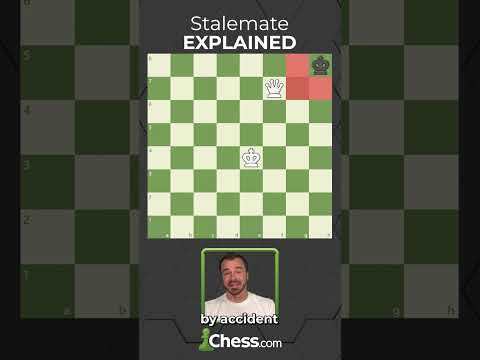
Stalemate is generally considered “bad” because it denies a player a deserved victory. In a chess game where one player has a clear material advantage and is on the verge of checkmating their opponent, a stalemate allows the losing player to escape with a draw, effectively nullifying the winning player’s strategic efforts and superior position. While a draw is a fair outcome when both players have played evenly, a stalemate often feels unjust when it arises from a significant imbalance in the game. This leads to frustration for the player who “should” have won, and the feeling that the stalemate rule is somehow flawed, even though it is a vital part of chess strategy.
Deep Dive into the Stalemate Concept
Chess, at its core, is a game of calculated aggression and strategic defense. The objective is to checkmate the opponent’s king, rendering it defenseless and unable to escape capture. But what happens when a player, despite not being in check, has no legal moves to make? This is where the concept of stalemate comes into play.
Stalemate is a draw that occurs when the player whose turn it is to move:
- Is not in check.
- Has no legal moves available for any of their pieces.
The king is trapped, but not threatened. No pawn can move, and no other piece can maneuver without placing the king in check. In this situation, the game is declared a draw, awarding each player half a point.
While stalemate can be a saving grace for a player in a losing position, it can be incredibly frustrating for a player who has skillfully built a winning advantage.
Why the Frustration? The Winning Player’s Perspective
The key to understanding why stalemate is often viewed negatively lies in the winning player’s perspective. Imagine meticulously planning your attack, sacrificing pieces to gain a positional advantage, and cornering your opponent’s king. You’re on the cusp of victory, only to realize that a careless move has left your opponent with no legal moves. The game ends in a draw, and all your hard work feels undone.
This sense of frustration stems from several factors:
- Loss of Reward: The winning player feels cheated out of a well-deserved victory. They have outplayed their opponent strategically and tactically, only to have their efforts negated by a technicality.
- Missed Opportunity: A stalemate represents a missed opportunity to gain a full point in a tournament or a decisive win in a casual game.
- Sense of Injustice: It can feel unfair that a player in a clearly inferior position can escape with a draw simply by being trapped.
Stalemate as a Defensive Tool: The Losing Player’s Perspective
From the losing player’s perspective, stalemate can be a valuable defensive tool. When facing a crushing defeat, the ability to force a stalemate can snatch a draw from the jaws of defeat. This requires a deep understanding of endgame principles and a keen eye for tactical possibilities.
Stalemate opportunities often arise in endgames when the defending player is low on material and their king is restricted in movement. By carefully maneuvering their remaining pieces, the defending player can create a position where their king is not in check, but has no legal squares to move to.
The Importance of Endgame Awareness
This highlights the importance of endgame awareness in chess. Knowing the common stalemate patterns and understanding how to create them can be the difference between losing and drawing a game.
FAQs About Stalemate in Chess
Here are some frequently asked questions to further clarify the nuances of stalemate in chess:
1. Is stalemate bad sportsmanship?
No, forcing a stalemate is not bad sportsmanship. It is a legitimate tactic in chess and a valuable resource for players in losing positions. In tournament play, aiming for a stalemate when facing defeat is a perfectly acceptable strategy.
2. Why isn’t stalemate considered a win?
Stalemate is not a win because the player whose turn it is to move is not under attack (not in check). Checkmate requires the king to be both unable to move and under threat of capture. The absence of this threat is what differentiates stalemate from checkmate.
3. Is it rude to force a stalemate?
It is absolutely not rude to force a stalemate. It’s a strategic maneuver that showcases a player’s resourcefulness and knowledge of endgame tactics.
4. Why is stalemate fair?
The fairness of stalemate is a matter of perspective. From a purely logical standpoint, it is fair because it adheres to the rules of chess. The Games Learning Society recognizes that chess rules provide a framework for balanced competition. The stalemate rule is designed to reward accuracy and awareness of the board. The player who allowed the stalemate situation to arise may be seen as having lacked precision. The chess rules are a reflection of mathematics and in the absence of perfect play, these rules serve the goal of providing fairness to the players.
5. Is it better to stalemate than lose?
Yes! A stalemate is a draw, worth half a point in a tournament. Losing earns you zero points. Therefore, stalemating is significantly better than losing.
6. What does a stalemate lack compared to checkmate?
Stalemate lacks the crucial element of the king being under attack. In checkmate, the king is both unable to move and under direct threat of capture. In stalemate, the king is only unable to move.
7. Is stalemate worse than checkmate?
From the perspective of the player being stalemated, it is better than checkmate because it results in a draw instead of a loss. From the perspective of the player delivering the stalemate instead of checkmate, it is worse, as they miss the win.
8. How do you evade a stalemate situation?
The key to evading stalemate is to constantly monitor the opponent’s king’s mobility. Ensure that the king always has a safe square to move to and avoid blocking all of its potential escape routes. If you have a winning advantage, prioritize checkmating the king over simply restricting its movement.
9. Is 50 moves without a capture a stalemate?
No. The 50-move rule is a separate rule that allows either player to claim a draw if 50 consecutive moves have been made by each side without a pawn move or a capture.
10. What is an illegal move in chess?
An illegal move includes: moving the King to a square attacked by the opponent, failing to protect a King in check, and moving a piece in a way that violates its movement rules.
11. What is the threefold repetition rule?
The threefold repetition rule states that if the exact same position occurs three times in a game, either player can claim a draw. Some chess platforms, like Chess.com, automatically declare a draw upon the third repetition.
12. Is it bad etiquette to force a draw in chess by repetition?
No, it is not bad etiquette to force a draw by repetition. It’s a legitimate strategic tool used to salvage a draw from a potentially lost position.
13. What is Zugzwang?
Zugzwang is a situation where any legal move a player makes will worsen their position.
14. Can a king check a king?
No, a king cannot directly check the opposing king, as this would place itself in check.
15. Do you lose in chess if only your king is left?
No, having only your king remaining does not automatically result in a loss. However, you can never deliver checkmate with just a king and can be stalemated if you have no legal moves.
Conclusion: Stalemate – A Necessary Evil?
While stalemate can be frustrating for the player on the winning side, it is an essential part of chess. It adds complexity and strategic depth to the game, forcing players to be precise and avoid carelessness, even when victory seems assured. While it is a saving grace for the losing side, it highlights the importance of calculating the risks and rewards of trapping pieces and positions on the board. Mastering the ability to recognize and either force or avoid stalemate situations is a crucial skill for any serious chess player.
The beauty of chess lies in its intricate rules and the myriad of possibilities they create. Understanding stalemate and its implications is key to becoming a more proficient and strategic player. Remember, a keen understanding of chess principles, and a relentless pursuit of excellence can provide players with a wealth of opportunities for growth and development.