Why is There Water in Calderas?
Fast answer first. Then use the tabs or video for more detail.
- Watch the video explanation below for a faster overview.
- Game mechanics may change with updates or patches.
- Use this block to get the short answer without scrolling the whole page.
- Read the FAQ section if the article has one.
- Use the table of contents to jump straight to the detailed section you need.
- Watch the video first, then skim the article for specifics.
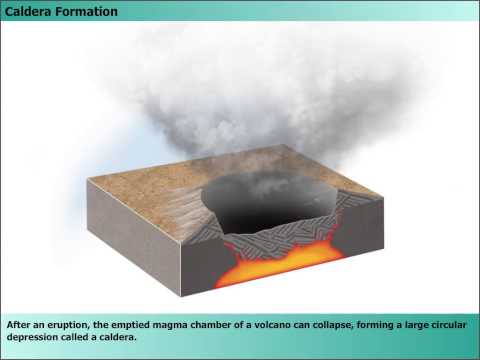
The presence of water in calderas is a fascinating phenomenon stemming from the unique geological processes that form these dramatic landforms. In short, calderas often fill with water because they are essentially large, bowl-shaped depressions that readily collect precipitation, groundwater, and melted ice. These depressions are created by the collapse of land after a significant volcanic eruption, making them ideal for water accumulation. The specific type of water and its characteristics, however, can vary greatly depending on the caldera’s location and the nature of its volcanic activity.
How Calderas Form and Create Depressions for Water
The Collapse Mechanism
The formation of a caldera is directly linked to the emptying of a magma chamber beneath the Earth’s surface. When a large amount of magma erupts, either in a single massive event or over several smaller ones, the support that the magma provided to the overlying ground disappears. This leads to the collapse of the land surface, creating a large, often circular or oval-shaped, depression. This depression is the caldera. The size of calderas can vary significantly, ranging from just a kilometer to over 100 kilometers in diameter.
Water Ingress and Accumulation
Once the caldera depression forms, several sources of water can contribute to its filling. Precipitation, including rain and snow, readily accumulates in the bowl-shaped depression. Groundwater circulation also plays a significant role, often feeding the caldera from the surrounding areas. In volcanic regions, hydrothermal fluids – hot water heated by magma – can contribute to the water body, often resulting in warm and even highly acidic crater lakes. Additionally, melted ice from glaciers and snow can further add to the water accumulation.
Equilibrium of Water Levels
The water level in a caldera lake continues to rise until an equilibrium is reached between the rate of incoming water and the rate of outgoing water. Outgoing water can be through surface outflow, seepage into the ground, and evaporation. The specific balance between these factors determines the final water level of the caldera lake.
Factors Influencing Caldera Lake Characteristics
Fresh vs. Acidic Waters
The type of water found in a caldera lake depends heavily on the underlying volcanic activity. Calderas with minimal volcanic activity or located in areas with ample freshwater sources tend to host freshwater lakes. In contrast, calderas with active hydrothermal systems often contain acidic lakes due to the high concentration of volcanic gases and minerals dissolving into the water. The presence of these acids can make the water unsuitable for most forms of life.
Depth and Size
Caldera lakes can vary greatly in depth and size. Some may be relatively shallow, while others, like the Santorini Caldera, can plummet to depths of 400 meters or more, making them too deep for ships to anchor. The size of the lake also depends on the size of the original caldera and the amount of water it collects.
Unique Environments
The combination of a unique geological setting, water source, and hydrothermal activity can create special and sometimes extreme environments within caldera lakes. These lakes can have unique ecosystems adapted to high temperatures, acidity, or specific mineral compositions.
Frequently Asked Questions (FAQs) About Caldera Lakes
H3 What is the difference between a crater lake and a caldera lake?
A crater lake forms in a volcanic crater, which is typically a smaller depression at the summit of a volcano, while a caldera lake forms in a much larger depression called a caldera that is the result of the collapse of a volcano’s magma chamber. Calderas are usually many times larger than craters.
H3 What type of water is typically found in a caldera?
Calderas can hold various types of water depending on the surrounding environment and volcanic activity. Some contain fresh water from precipitation and groundwater, while others are acidic due to hydrothermal fluids. Some may even contain water that is both warm and high in mineral content.
H3 How deep can a caldera lake be?
The depth of a caldera lake varies significantly. Some caldera lakes are shallow, while others can be exceptionally deep. For instance, the Santorini Caldera reaches a depth of about 400 meters.
H3 Can you swim in a caldera lake?
Swimming in a caldera lake is possible, but it often depends on the water conditions. Some caldera lakes have warm waters, sometimes heated by geothermal activity, while others may be too acidic or have unfavorable conditions. Some might have slimy bottoms, and overall the experience can be both hot and cool depending on the location within the lake.
H3 What is the largest caldera on Earth?
The largest known caldera on Earth is the Apolaki Caldera, located within the Benham Rise in the Philippines, with a diameter of about 150 kilometers. It is a submarine caldera.
H3 Are calderas always filled with water?
No, not all calderas fill with water. The presence of water depends on several factors, including the availability of precipitation, groundwater, and the presence of hydrothermal systems. Some calderas may remain dry or only have ephemeral pools.
H3 What is a supervolcano, and how does it relate to calderas?
A supervolcano is a volcanic center that has had an eruption of magnitude 8 on the Volcano Explosivity Index (VEI). These massive eruptions often form calderas, large collapse depressions, due to the sheer scale of material erupted and subsequent ground subsidence.
H3 What are some famous examples of caldera lakes?
Some famous examples of caldera lakes include Crater Lake in Oregon, USA, and the lakes within the Santorini Caldera in Greece. Lake Toba in Sumatra, Indonesia, is another notable example within a large caldera.
H3 Can calderas be sites of geothermal activity?
Yes, calderas are commonly sites of geothermal activity, which refers to the heat generated from within the Earth. This can manifest as hot springs, fumaroles, and other features. This also contributes to heating the water within a caldera.
H3 Are there any inhabited calderas?
Yes, there are inhabited calderas. Pululahua, in Ecuador, is one of only two known inhabited calderas, and it’s also a cultivated caldera.
H3 What is ignimbrite and what role does it play in caldera formation?
Ignimbrite is a type of volcanic rock formed from ash flows. It often fills calderas that are formed by eruptions of silica-rich magmas. These deposits can create flat floors within the caldera.
H3 Is Yellowstone a caldera?
Yes, Yellowstone is a large volcanic caldera, formed by past supervolcanic eruptions. The area of its collapse, known as the Yellowstone Caldera, covers a vast 1,500 square miles.
H3 What would happen if a supervolcano like Yellowstone erupted?
A supervolcano eruption at a site like Yellowstone would have worldwide impacts. This could include falling ash and changes to global climate that could last for years to decades. Regional and global disruption is expected.
H3 How are calderas different from volcanic cones?
Volcanic cones are formed by the buildup of lava and ash, usually around a central vent. In contrast, calderas are formed by the collapse of land due to the emptying of a magma chamber, creating a large depression.
H3 Are calderas active volcanoes?
While the formation of a caldera is associated with volcanic activity, many calderas are now dormant. Some, however, retain signs of volcanic activity such as hot springs and fumaroles. Some have ongoing, albeit generally small, eruptions.