Why is Tiamat a Fiend?
Fast answer first. Then use the tabs or video for more detail.
- Watch the video explanation below for a faster overview.
- Game mechanics may change with updates or patches.
- Use this block to get the short answer without scrolling the whole page.
- Read the FAQ section if the article has one.
- Use the table of contents to jump straight to the detailed section you need.
- Watch the video first, then skim the article for specifics.
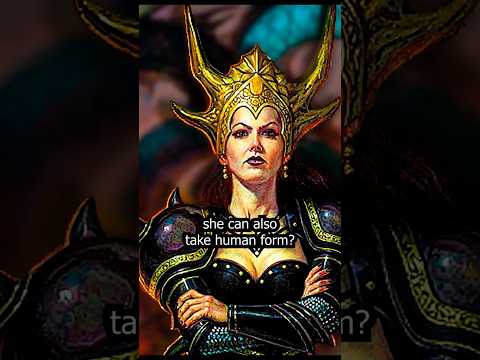
Tiamat’s designation as a fiend, specifically a devil, in Dungeons & Dragons lore stems from a confluence of factors that go beyond merely being an evil dragon goddess. While she embodies many traditionally “evil” traits, her infernal status is cemented by her pact with Asmodeus, the Lord of the Nine Hells, and her active role in the power struggles within the infernal hierarchy. This association and alignment places her firmly within the fiendish cosmology, irrespective of her divine origins or draconic nature. She’s not just a goddess of evil dragons; she’s a key player in the cosmic conflict between good and evil as defined by the Nine Hells. She actively chose to be an important part of the diabolic hierarchy, which is the basis for her role as fiend.
Deeper Dive into Tiamat’s Fiendish Nature
The core of Tiamat’s fiendish designation lies in her alliance with Asmodeus. While the specific details vary across different D&D settings, the underlying principle remains consistent: Tiamat entered into a pact, agreement, or a master-servant relationship with the supreme archdevil, Asmodeus.
The Asmodeus Connection
- Infernal Pact: This agreement essentially binds her to the Nine Hells, granting her power and influence within the infernal realms in exchange for her allegiance and service to Asmodeus. It’s a Faustian bargain of cosmic proportions.
- Hierarchy of Hell: This pact places Tiamat within the strict hierarchy of the Nine Hells. She occupies a powerful position, commanding legions of devils and influencing infernal politics, but is still ultimately subservient to Asmodeus.
- Cosmic Alignment: Her association with Asmodeus shifts her alignment and essence away from that of a typical deity, which is celestial in nature, and towards that of a devil, which is inherently fiendish.
Draconic Goddess vs. Infernal Archfiend
It’s important to differentiate between Tiamat’s inherent divinity and her adopted fiendish nature.
- Goddess of Chromatic Dragons: Tiamat, as the goddess of evil chromatic dragons, holds dominion over a specific aspect of the material plane, which is a role typically associated with deities.
- Archfiend of the Nine Hells: However, her pact with Asmodeus transforms her into an archfiend, a powerful devil commanding legions within the Nine Hells. This duality defines her complex character.
- Source of Power: While her initial power stems from her status as a dragon goddess, her continued influence and authority are bolstered by her connection to the Nine Hells and the power granted to her by Asmodeus.
The Consequences of Her Choice
Tiamat’s decision to align herself with Asmodeus has profound consequences:
- Reduced Divine Status: Some D&D settings, like the Unther region of Faerûn, depict Tiamat as having her divine power diminished due to her fiendish associations. Her diminished worshipers were not enough to sustain her divine status and she was reduced from deity to archfiend.
- Enmity with Good-Aligned Deities: Her alignment with evil and the Nine Hells solidifies her position as an enemy of good-aligned deities such as Bahamut, Torm, and Heironeous. This creates a constant state of conflict between her forces and those of good.
- The Nature of Evil: Tiamat’s portrayal emphasizes the multifaceted nature of evil. She is not simply a destructive force but a cunning strategist, a power-hungry tyrant, and a master manipulator, all traits associated with devils.
By embracing her role as an archfiend, Tiamat actively participates in the infernal schemes and cosmic power struggles that define the Nine Hells, solidifying her place among the most formidable fiends in the D&D multiverse.
Frequently Asked Questions (FAQs) About Tiamat as a Fiend
1. How does Tiamat’s pact with Asmodeus affect her relationship with her dragon followers?
While Tiamat remains the goddess of chromatic dragons, her pact with Asmodeus introduces a level of complexity to her relationship with her followers. Some dragons may fully embrace her infernal allegiance, while others might view it with suspicion or even disdain, focusing solely on her draconic aspects. The specifics would depend on the setting and the individual dragon’s alignment and values.
2. Is Tiamat a devil or a demon? What’s the difference?
Tiamat is specifically classified as a devil, not a demon. Devils and demons are both fiends, but they represent different philosophies and hierarchies. Devils are lawful evil, adhering to strict rules and hierarchies, while demons are chaotic evil, reveling in destruction and anarchy. Tiamat’s pact with Asmodeus firmly places her within the lawful evil structure of the Nine Hells, making her a devil.
3. Can Tiamat leave the Nine Hells freely?
In most D&D settings, Tiamat is restricted from leaving the Nine Hells without being summoned. Her pact with Asmodeus binds her to that plane of existence, and she requires specific rituals or powerful magic to manifest on other planes. This limitation adds another layer of complexity to her plans and schemes.
4. What are Tiamat’s goals within the Nine Hells?
Tiamat’s goals within the Nine Hells are typically centered around increasing her own power and influence. She might seek to usurp Asmodeus’s position as the ruler of the Nine Hells, or at least secure a more prominent role within the infernal hierarchy. She also often uses the resources of the Nine Hells to further her goals on the Material Plane, such as expanding the influence of chromatic dragons and spreading evil and chaos.
5. How does Tiamat’s five heads relate to her fiendish nature?
Tiamat’s five heads, each representing a different color of chromatic dragon, symbolize her dominion over all aspects of evil dragonkind. Her connection to the Nine Hells doesn’t negate this aspect of her identity; rather, it amplifies it. Each head embodies not only the power of its respective dragon type but also the cunning and ruthlessness associated with devils.
6. Is Tiamat’s status as a fiend consistent across all D&D settings?
While the core concept of Tiamat as a goddess of evil dragons remains consistent across most D&D settings, the specifics of her relationship with the Nine Hells and her status as a fiend can vary. In some settings, her connection to Asmodeus might be more pronounced, while in others it might be more subtle. DMs are encouraged to adapt Tiamat’s lore to fit the specific needs of their campaign.
7. What is the relationship between Tiamat and other archdevils?
Tiamat’s relationship with other archdevils is typically one of rivalry and competition. She is constantly vying for power and influence within the Nine Hells, and she often clashes with other archdevils who have their own ambitions. These conflicts can lead to complex political machinations and power struggles that add depth to the lore of the Nine Hells.
8. Does Tiamat have any allies among the deities?
Due to her evil alignment and association with the Nine Hells, Tiamat has very few allies among the deities. Most good-aligned and neutral deities view her as an enemy. However, she might occasionally form alliances with other evil deities who share similar goals or who can offer her some advantage.
9. How can adventurers defeat Tiamat?
Defeating Tiamat is an incredibly difficult task, requiring careful planning, powerful magic, and a bit of luck. Adventurers might need to gather powerful artifacts, forge alliances with good-aligned deities, and exploit Tiamat’s weaknesses to have any chance of success. Even then, defeating Tiamat on the Material Plane might only banish her back to the Nine Hells, where she can regenerate and plot her revenge.
10. What role does Tiamat play in the Blood War?
The Blood War is the eternal conflict between devils and demons. While Tiamat is primarily focused on her own goals, she is still a participant in the Blood War as a servant of Asmodeus. She might command legions of devils in battles against demons, or she might use the chaos of the Blood War to further her own ambitions within the Nine Hells.
11. How does Tiamat’s primal nature relate to her fiendish identity?
Tiamat’s primal nature, stemming from Mesopotamian mythology as a goddess of the sea and chaos, adds another layer of depth to her fiendish identity. Her association with primordial chaos resonates with the destructive and manipulative nature of devils, highlighting the inherent evil that underlies her divine origins.
12. If Tiamat dies, does she truly die?
The death of a deity in D&D is a complex topic. If Tiamat is killed on the Material Plane, her essence typically returns to her home plane, the Nine Hells, where she can slowly reform. Killing her permanently requires striking a blow to her very essence, which is usually only possible within her own domain or with the aid of powerful artifacts or divine intervention.
13. Why does Galactus, from Marvel, fear Tiamat the Dreaming Celestial?
The reference to Galactus fearing Tiamat the Dreaming Celestial (from Marvel Comics) highlights the sheer cosmic power that certain beings can possess across different fictional universes. While this Tiamat is separate from the D&D Tiamat, the comparison underscores the potential for beings of immense power to inspire fear, even in entities as powerful as Galactus.
14. Is Tiamat’s daughter Demetria canon?
The existence of Tiamat’s daughter, Demetria, is not generally considered part of the core D&D canon. This information is usually created within the DM’s universe. However, DMs are free to incorporate such elements into their campaigns as they see fit, adding depth and complexity to Tiamat’s character and motivations.
15. How can I use Tiamat’s fiendish nature in my D&D campaign?
You can use Tiamat’s fiendish nature to create compelling storylines and challenges for your players. They might encounter her cultists attempting to summon her from the Nine Hells, or they might find themselves embroiled in the political machinations of the archdevils. Exploring the conflict between Tiamat’s divine and fiendish aspects can also provide opportunities for moral dilemmas and character development.
Understanding Tiamat’s fiendish nature provides a deeper appreciation for her complex role in the D&D multiverse, enhancing the storytelling potential for both players and Dungeon Masters alike. For more information about how games and narratives impact learning, consider exploring resources provided by organizations like the Games Learning Society and on GamesLearningSociety.org.