Why is Venti a Child? Unpacking the Anemo Archon’s Form in Genshin Impact
Fast answer first. Then use the tabs or video for more detail.
- Watch the video explanation below for a faster overview.
- Game mechanics may change with updates or patches.
- Use this block to get the short answer without scrolling the whole page.
- Read the FAQ section if the article has one.
- Use the table of contents to jump straight to the detailed section you need.
- Watch the video first, then skim the article for specifics.
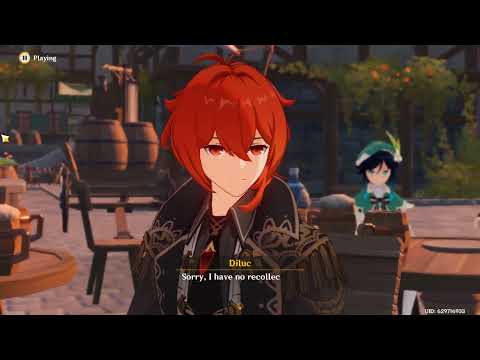
Venti, the beloved Anemo Archon from Genshin Impact, often appears as a young boy. The simple answer is that Venti chose this form to honor his fallen friend, a nameless bard who played a crucial role in the liberation of Mondstadt. This friend, who resembles the Venti we know, perished during the Archon War. Venti, deeply moved by his friend’s courage and ideals of freedom, adopted his likeness as a tribute and a constant reminder of the values he represents. He consciously chooses to maintain this youthful appearance as a symbol and a living memorial.
The Significance of Venti’s Form
Venti’s child-like appearance isn’t just a whimsical design choice; it’s deeply intertwined with his lore and philosophy. As the God of Freedom, Venti believes in allowing Mondstadt to govern itself, intervening only when absolutely necessary. His unassuming form allows him to blend in with the populace, observe, and subtly guide without imposing his authority. A towering, imposing god would likely stifle the very freedom he champions.
Furthermore, Venti’s choice reflects a certain disinterest in power and grandeur. He actively avoids the trappings of divinity, preferring the simple joys of wine, music, and the company of mortals. A less intimidating form makes him more approachable and less likely to inspire fear or undue reverence. He desires connection, not worship. This desire to connect is reflected throughout his story and interaction with the Traveler.
His form also provides protection. He is one of the original seven Archons from 2,600 years ago. If he was in his original form he would be more easily targeted. As he is now people may underestimate him, because of his child-like appearance, he is a being of immense power.
The Bard’s Influence
The most compelling reason for Venti’s chosen appearance is the memory of his friend. The nameless bard represents the spirit of Mondstadt, a thirst for liberty, and a willingness to fight for it. By embodying his likeness, Venti keeps that spirit alive and ensures that Mondstadt never forgets the price of freedom. This form is a constant reminder to Venti himself of the ideals he swore to uphold.
The game shows the bond between Venti and his friend. It is this bond that explains why Venti can be a free spirit but can also take responsibility when needed. He does not take his power for granted and remember his purpose because of his chosen form.
Ethical Considerations
The fact that Venti exists in a child-like form raises questions about appropriate interactions and portrayals of the character. The source material touches on this, recognizing the potential discomfort associated with romanticizing or sexualizing a character who physically appears to be a minor. This is why many fans and the game’s narrative emphasize the importance of respecting Venti’s complex history and motivations, acknowledging his mental maturity, and avoiding any depictions that could be considered exploitative.
Venti’s Overall Character
Ultimately, Venti’s child-like form is a complex and multi-layered aspect of his character. It’s a symbol of freedom, a tribute to a fallen friend, a rejection of divine authority, and a reminder of the values he holds dear. Understanding the reasons behind his chosen appearance allows for a deeper appreciation of Venti as a character and his role in the rich and intricate world of Genshin Impact. Further explorations into character design, story, and ethical implications are essential in game studies and game development, and resources from the GamesLearningSociety.org provide invaluable insights into these areas.
Frequently Asked Questions (FAQs) About Venti
1. Is Venti a minor in Genshin Impact?
Physically, Venti appears to be a minor. However, he is an Archon over 2600 years old and possesses the mental maturity of an ancient being. This dichotomy raises ethical considerations, and it’s generally accepted that inappropriate depictions of the character should be avoided.
2. Why is Venti so old?
Venti is one of the original Seven Archons who participated in the Archon Wars 2000 years ago. Considering his involvement in ancient conflicts and his status as a god, he is estimated to be around 2600 years old.
3. Is Venti’s body a girl?
Venti is male. As an Archon, he has the ability to shapeshift, but he consistently presents as male. The game does not depict him as female or transgender.
4. Is Venti’s Vision fake?
Yes, Venti’s Vision is considered a fake. It’s a contraption he uses to mimic the appearance of a Vision, allowing him to blend in with humans and still utilize his Anemo powers. His true power comes from being the Anemo Archon.
5. What is Venti’s real name?
Venti is also known as Barbatos, the Anemo Archon. Venti is the name he uses while inhabiting his current mortal vessel.
6. Why does Venti hide his identity?
Venti and Zhongli conceal their godly identities to live among humans without undue influence or reverence. This secrecy allows them to observe and guide their respective regions subtly, respecting the freedom and autonomy of their people.
7. What race is Venti?
Venti, as Barbatos, is a god. In his current form, he inhabits a mortal vessel that resembles a young boy. So, while he doesn’t belong to a specific human race, he presents as humanoid.
8. Do Xiao and Venti know each other?
Yes, Xiao and Venti know each other. Venti, with his musical prowess, soothed Xiao during a troubled state in his past. Xiao is grateful for this intervention, although he may not outwardly express it.
9. What is Venti’s spirit name?
Venti’s Archon name and spirit name is Barbatos. This name connects him to the Anemo element and his role as the God of Freedom.
10. Is Venti a fake Archon?
Venti is not a fake Archon. He is one of the original Seven, though he once played pranks and forged a treaty with the Geo Archon, Morax (Zhongli).
11. Is Venti allergic to Diona?
Yes, it has been revealed that Venti is allergic to cats, and this allergy is triggered when he is near Diona, who has cat-like features.
12. Why is Venti weak?
Venti isn’t inherently weak. He intentionally refrains from exerting absolute control over Mondstadt, believing in freedom and self-governance. This hands-off approach may give the impression of weakness, but his actual power remains substantial.
13. Is Xiao’s vision fake?
While it’s speculated that the physical Vision Xiao carries is fake, his anemo power is believed to originate from a purple diamond on his forehead.
14. Is Venti a demon?
Venti’s Archon name, Barbatos, is derived from a demon name. However, within the context of Genshin Impact, he is portrayed as a benevolent god who champions freedom. The inspiration is a loose one.
15. Does Venti hate Celestia?
Yes, Venti dislikes Celestia. His reasons aren’t explicitly stated, but it’s implied that his belief in freedom clashes with the hierarchical and potentially authoritarian nature of Celestia.