The Enduring Impact of “No Russian”: Why It Remains a Watershed Moment in Gaming
Fast answer first. Then use the tabs or video for more detail.
- Watch the video explanation below for a faster overview.
- Game mechanics may change with updates or patches.
- Use this block to get the short answer without scrolling the whole page.
- Read the FAQ section if the article has one.
- Use the table of contents to jump straight to the detailed section you need.
- Watch the video first, then skim the article for specifics.
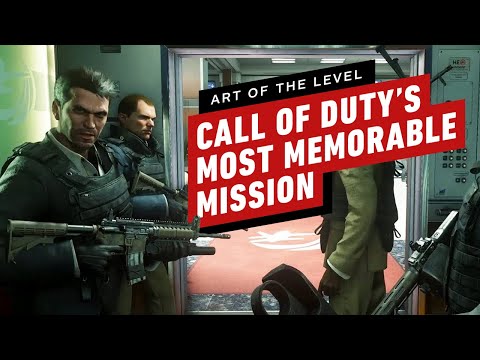
“No Russian,” the infamous level from Call of Duty: Modern Warfare 2, remains important for several reasons. Its controversial depiction of a mass shooting at a civilian airport forced the gaming industry and broader society to confront the medium’s capacity for depicting graphic violence and its potential impact. It served as a pivotal narrative device, effectively establishing the villain Makarov as a ruthless antagonist and providing a motive for the subsequent conflict between the United States and Russia within the game’s storyline. Furthermore, it sparked a debate about player agency, the boundaries of entertainment, and the responsibility of developers in portraying sensitive subjects. “No Russian” remains a significant, albeit disturbing, example of the power of video games to evoke strong emotions and provoke critical discussion.
The Anatomy of Controversy
The controversy surrounding “No Russian” stemmed from its uncompromising portrayal of a terrorist attack. Players were thrust into the role of an undercover CIA agent, Joseph Allen, participating in a massacre at Zakhaev International Airport alongside Makarov and his men. The graphic depiction of civilian deaths, coupled with the player’s forced participation (although the player could choose not to shoot), ignited a firestorm of debate about the appropriateness of such content in a video game.
Narrative Necessity vs. Exploitation
One central argument revolves around whether the level’s graphic violence was narratively justified. Supporters argue that “No Russian” was crucial for establishing Makarov’s villainy and setting the stage for the game’s international conflict. The level aimed to make players feel emotionally connected to the bad guy, as the level designer Mohammad Alavi stated. Others countered that the depiction was gratuitous and exploitative, serving only to shock and titillate without adding meaningful depth to the narrative.
The Illusion of Choice
Another point of contention was the player’s agency. While players could choose not to actively participate in the shooting, they were still forced to witness the carnage and were implicitly complicit in the act. This raised questions about the nature of choice in video games and whether the illusion of agency could mitigate the ethical concerns surrounding violent content.
The Lasting Legacy
Despite the controversy, “No Russian” has undeniably left a lasting legacy on the gaming landscape. It forced developers to consider the potential consequences of their creative choices and the impact of their games on players and society. It also sparked a broader discussion about the representation of violence in media and the responsibilities of creators in portraying sensitive subjects.
Shifting Perspectives on Violence in Games
In the years since “Modern Warfare 2’s” release, the gaming industry has continued to grapple with the issue of violence. While graphic content remains prevalent in many games, there has been a growing awareness of the need for responsible representation and the importance of providing players with options to mitigate potentially disturbing content.
The Games Learning Society (GamesLearningSociety.org) explores the educational and social impact of games, shedding light on the complexities of game design and player experience.
Modern Warfare 3 and the Echoes of “No Russian”
The decision to revisit “No Russian” in the rebooted Modern Warfare 3 underscores its enduring significance. By reimagining the infamous level, the developers are acknowledging its impact and inviting players to re-engage with its complex themes and moral dilemmas. The potential for even greater controversy, particularly if the new iteration involves a plane hijacking scenario, highlights the ongoing sensitivity surrounding this subject matter.
A Reflection of the Times?
The re-emergence of “No Russian” in a contemporary context raises questions about the role of video games in reflecting and responding to real-world events. In a world grappling with terrorism, political polarization, and social unrest, the depiction of violence in games carries even greater weight.
Frequently Asked Questions (FAQs) about “No Russian”
1. What was the point of No Russian?
The level served three main purposes: to establish Makarov as a ruthless villain, provide a motive for war between Russia and the U.S., and create a memorable and engaging experience for the player.
2. Why is No Russian so controversial?
Its controversial depiction of a mass shooting at a civilian airport forced the gaming industry and broader society to confront the medium’s capacity for depicting graphic violence and its potential impact.
3. How many people were killed in No Russian?
A total of 243 people were killed during the Zakhaev International Airport massacre.
4. Why was Joseph Allen in No Russian?
Joseph Allen was an undercover CIA agent sent to infiltrate Makarov’s inner circle.
5. Why did Makarov say “No Russian”?
To make it appear as though the attack was orchestrated by Americans, thereby inciting war between the U.S. and Russia.
6. Why didn’t Allen shoot Makarov?
Allen’s mission was to gather intelligence on Makarov’s activities, not to assassinate him.
7. Why did Makarov shoot Yuri?
Yuri attempted to stop the massacre by alerting the FSB, but Makarov discovered his betrayal.
8. Who was the spy in No Russian?
Joseph Allen was the undercover CIA agent in the level.
9. What was Makarov’s goal?
Makarov’s goal was to trigger a full-scale war between the United States and Russia.
10. How did Makarov know Allen was American?
General Shepherd betrayed Allen by revealing his true identity to Makarov.
11. Will Makarov be in MW3?
Yes, Vladimir Makarov returns in the rebooted Modern Warfare 3.
12. Is No Russian based on a true story?
No, the designer, Mohammad Alavi, stated that it was not based on any real massacre, but it drew inspiration from news articles and films.
13. Why did Shepherd choose Allen?
Shepherd wanted a disposable, easily-identifiable American soldier to participate in the attack, furthering his plan to incite war.
14. What happens if you shoot Makarov in “One Shot, One Kill?”
Shooting Makarov in the mission “One Shot, One Kill” gives you the Time Paradox Achievement.
15. Why did Makarov become evil?
Makarov became corrupted after being awarded power by his mentor, Imran Zakhaev. Zakhaev ordered Khaled Al-Asad to detonate a nuclear warhead which levelled an entire city that killed both Al-Asad’s soldiers and 30,000 U.S. Marines, the latter of which caused General Shepherd to lose his mind.