The Untold Story: Why the PS Vita Faded Away
Fast answer first. Then use the tabs or video for more detail.
- Watch the video explanation below for a faster overview.
- Game mechanics may change with updates or patches.
- Use this block to get the short answer without scrolling the whole page.
- Read the FAQ section if the article has one.
- Use the table of contents to jump straight to the detailed section you need.
- Watch the video first, then skim the article for specifics.
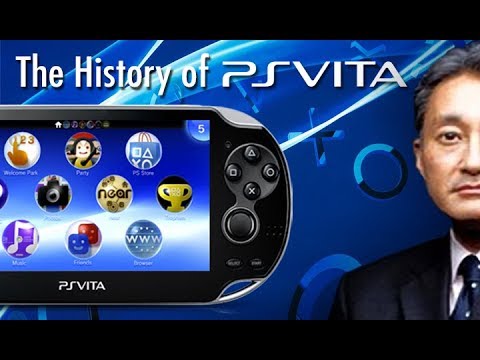
The PlayStation Vita, Sony’s ambitious successor to the PSP, was discontinued primarily due to a confluence of factors including high production costs, lack of substantial third-party support, the rise of mobile gaming, and Sony’s shifting strategic focus. While it boasted impressive hardware for its time, these challenges ultimately led to its premature demise, leaving a legacy of unrealized potential.
The Perfect Storm of Failure: Deconstructing the PS Vita’s Demise
The PS Vita, released in Japan in December 2011 and in North America and Europe in February 2012, arrived with a fanfare. It sported a vibrant OLED screen (in the original model), dual analog sticks, a powerful processor, and innovative features like a rear touchpad. It was, on paper, a handheld powerhouse ready to challenge Nintendo’s dominance in the portable gaming space. However, a perfect storm of problems brewed, slowly but surely suffocating its chances of long-term success.
1. The Price of Power: High Production Costs and Expensive Proprietary Memory
One of the most significant hurdles the PS Vita faced was its high production cost. To pack so much technology into a relatively small device meant a hefty price tag for consumers. This higher price point made it less competitive compared to both the Nintendo 3DS and the rapidly emerging smartphone gaming market.
Compounding this issue was the infamous proprietary memory card. Unlike the PSP, which could use widely available Memory Stick PRO Duo cards, the Vita required specialized, and significantly more expensive, memory cards. This created a considerable barrier to entry for consumers, as they were essentially forced to spend extra money to store games and other content.
2. The Third-Party Exodus: Lack of Developer Support
Perhaps the deadliest blow to the PS Vita was the lack of sustained third-party support. While the launch lineup featured some promising titles, the flow of major third-party games quickly dwindled. Several factors contributed to this:
- Development Costs: The Vita’s powerful hardware, while impressive, made game development more complex and expensive. Smaller studios struggled to justify the investment, especially considering the console’s relatively small user base.
- Sales Figures: The Vita’s sales never reached the levels Sony had hoped for. This lack of commercial success discouraged third-party developers from committing resources to the platform. Many publishers simply saw a better return on investment by focusing on more popular consoles or mobile platforms.
- Sony’s Focus Shift: As the PlayStation 4 gained momentum, Sony’s attention increasingly shifted away from the Vita. This lack of visible support from the platform holder further alienated third-party developers.
3. The Mobile Gaming Revolution: A Shifting Landscape
The PS Vita launched at a time when mobile gaming was rapidly gaining popularity. Smartphones and tablets were becoming increasingly powerful, and app stores offered a vast library of cheap and accessible games. This presented a significant challenge to the traditional handheld market.
While the Vita offered a more premium gaming experience with dedicated controls and more complex games, many casual gamers found the convenience and affordability of mobile gaming more appealing. This eroded the Vita’s potential audience, further contributing to its struggles.
4. Marketing Missteps and Confused Messaging
Sony’s marketing strategy for the PS Vita was often criticized for being unclear and unfocused. The console’s core message struggled to resonate with potential buyers, especially in the face of Nintendo’s strong brand recognition and the simplicity of mobile gaming.
The lack of compelling killer applications also hurt the Vita’s marketing efforts. While it had some excellent games, it lacked the system-selling titles that could drive significant hardware sales, such as those seen on Nintendo’s platforms.
5. Remote Play: A Feature, Not a Focus
While Remote Play, the ability to stream PS4 games to the Vita, was a unique and potentially appealing feature, it was never fully embraced by Sony. It was often touted as a secondary function rather than a core selling point. This limited its impact on the Vita’s overall appeal. Sony’s new handheld console is just a streaming device.
6. Lack of PS2 Backward Compatibility
Gamers wanted the PS Vita to have the ability to play PS2 games. This was a feature that was desired by fans. They wanted a PS2 in the palm of their hands. It would have made the PS Vita more valuable and a success.
A Legacy of What Could Have Been
Despite its ultimate failure, the PS Vita remains a fondly remembered console for many dedicated gamers. Its powerful hardware, unique features, and niche library of games have earned it a cult following. The Vita’s legacy serves as a cautionary tale of the challenges of the handheld market in the face of mobile gaming and the importance of strong platform support. You can learn more about the evolution of gaming and its social impact at GamesLearningSociety.org.
Frequently Asked Questions (FAQs) About the PS Vita
1. When did Sony officially stop making the PS Vita?
Production of the PS Vita hardware officially ended on March 1, 2019.
2. Is the PS Vita still worth buying in 2023?
Yes, for retro gaming enthusiasts, the PS Vita remains a worthwhile investment. Its impressive library, including PSOne classics, PSP games, and Vita exclusives, offers a rich gaming experience.
3. Why did Sony abandon the Vita so quickly?
Sony’s focus shifted to the PlayStation 4 and the increasingly competitive mobile gaming market. This, combined with lower-than-expected sales, led to a reduced commitment to the Vita.
4. Is the PS Vita more powerful than the Nintendo Switch?
The Nintendo Switch generally has a slight edge in terms of processing power, although the Vita has an OLED screen (on the original model) which some users find to be higher quality.
5. How long does the PS Vita battery last?
The PS Vita battery typically lasts for 3 to 5 hours of gaming, 5 hours of video playback, and 9 hours of music playback in standby mode.
6. Can the PS Vita play PS2 games?
No, the PS Vita cannot directly play PS2 games. While some PS2 games have been ported to the PS3 and then made available for streaming via PlayStation Now (now part of PlayStation Plus Premium), there is no native PS2 emulation on the Vita.
7. Is the PSP or PS Vita better?
The PS Vita is generally considered superior to the PSP due to its more powerful hardware, dual analog sticks, and access to a wider range of games. Most PSP games are available for download on the Vita.
8. Will PlayStation ever make another handheld console?
Sony has released the PlayStation Portal, a handheld streaming device that can stream PS5 games over Wi-Fi. There is also speculation about the “Q Lite” handheld, designed to work with the Remote Play feature of the PlayStation 5.
9. Is the PS Vita’s OLED screen prone to burn-in?
Yes, OLED screens are susceptible to burn-in, but with reasonable use, the lifespan of the OLED screen should be sufficient for many years of enjoyment.
10. How many PS Vita models are there?
There are two main models: the PS Vita 1000 (the original) and the PS Vita 2000 (the Slim). The Slim version is lighter, has a longer battery life, and uses a MicroUSB charging port, while the original has an OLED screen and a proprietary charging port.
11. Can you still add funds to your PS Vita wallet in 2023?
Yes, you can still add funds to your PS Vita wallet. You can do this through the PlayStation Network store using a credit card, PlayStation Network card, or promotion code.
12. Can I play PS4 games on my PS Vita?
Yes, you can play many PS4 games on your PS Vita using Remote Play. This feature allows you to stream games from your PS4 to your Vita over a Wi-Fi connection.
13. Do all PS Vita models have Wi-Fi?
Yes, all PS Vita models have Wi-Fi connectivity. Some models also have 3G capabilities for connecting to mobile networks.
14. Does the PS Vita have Bluetooth?
Yes, the PS Vita has Bluetooth connectivity. This allows you to connect wireless headphones, speakers, and other Bluetooth devices.
15. Is the PS Vita better than the Nintendo 3DS?
This depends on your preferences. The Vita offers more powerful hardware and a wider range of indie and Japanese role-playing games, while the 3DS boasts a stronger library of first-party Nintendo titles.