Will an SD Card Make My Switch Faster? The Definitive Guide
Fast answer first. Then use the tabs or video for more detail.
- Watch the video explanation below for a faster overview.
- Game mechanics may change with updates or patches.
- Use this block to get the short answer without scrolling the whole page.
- Read the FAQ section if the article has one.
- Use the table of contents to jump straight to the detailed section you need.
- Watch the video first, then skim the article for specifics.
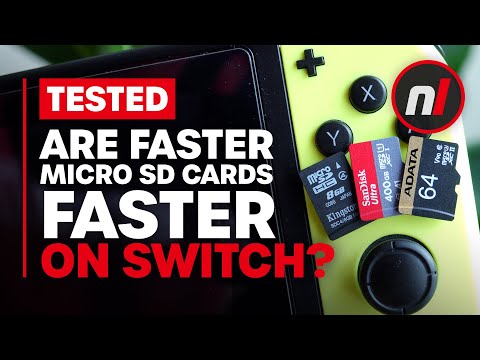
So, you’re wondering if popping an SD card into your Nintendo Switch will magically transform it into a speed demon? The short answer is: it’s complicated. An SD card won’t necessarily make your games run faster in terms of frame rates or graphical performance. However, it can significantly improve your loading times and provide you with more storage space, which indirectly enhances your overall gaming experience. Let’s dive deeper into the nuances of this vital piece of Switch technology and uncover everything you need to know.
Understanding the Switch’s Storage System
The Nintendo Switch, in its original and OLED models, comes with a limited amount of internal storage. The original Switch has 32GB, while the OLED model doubles that to 64GB. While that might seem like a decent amount, modern game sizes can quickly eat away at that space. Some AAA titles can easily exceed 10GB or even 20GB, leaving you with very little room for multiple downloaded games. This is where the SD card comes to the rescue.
Why an SD Card Matters
An SD card allows you to expand your Switch’s storage capacity, enabling you to download and store many more games. But here’s the key: not all SD cards are created equal. The speed of the SD card plays a crucial role in how quickly your games load and how smoothly data is transferred.
The Speed Factor: UHS-I is King
The Nintendo Switch supports UHS-I (Ultra High Speed Phase I) microSD cards. This is important because UHS-I cards have a maximum theoretical speed of 104MB/s. While newer UHS-II cards exist with significantly higher speeds, the Switch’s hardware cannot take advantage of those faster speeds. So, you don’t need to break the bank buying a UHS-II card; a good quality UHS-I card will deliver the best possible performance on your Switch.
Transfer Speeds: What to Look For
When choosing an SD card, pay attention to its transfer speed. Aim for a card with a transfer speed of 60-95 MB/sec or higher. While the Switch might not fully utilize speeds exceeding 104MB/s, a card closer to that maximum is ideal. A faster transfer speed means quicker loading times, which directly translates to less time staring at loading screens and more time playing your favorite games.
The SD Card Impact: More Than Just Storage
While an SD card won’t boost the Switch’s graphical capabilities or frame rates, it significantly impacts these aspects:
- Loading Times: Faster SD cards reduce loading times for games installed on the card.
- Storage Capacity: Allows you to store more downloaded games, demos, and other content.
- Game Updates and DLC: Provides ample space for game updates, downloadable content (DLC), and patches.
- Game Saves: While save data is typically stored on the Switch’s internal memory, having more storage overall contributes to a smoother system experience.
Debunking the Myths
Let’s address some common misconceptions surrounding SD cards and the Nintendo Switch:
- Myth: Any SD card will do.
- Reality: The speed and quality of the SD card matter. A slow or unreliable card can lead to longer loading times and potential data corruption.
- Myth: A larger SD card will make my games run better.
- Reality: Size alone doesn’t improve performance. It’s the transfer speed that impacts loading times.
- Myth: UHS-II cards will significantly improve performance on the Switch.
- Reality: The Switch only supports UHS-I, so you won’t see any benefit from using a UHS-II card.
- Myth: SD cards increase the Switch’s RAM.
- Reality: SD cards are for storage, not RAM. RAM (Random Access Memory) is a different type of memory that the Switch uses for running games and applications. SD cards do not increase RAM on the Nintendo Switch.
Choosing the Right SD Card
When selecting an SD card for your Switch, consider these factors:
- Capacity: How many games do you plan to download? 128GB is a good starting point for most users, but 256GB or 512GB might be preferable for avid gamers.
- Speed: Aim for a UHS-I card with a transfer speed of 60-95 MB/sec or higher. Look for cards labeled “Nintendo Switch Recommended.”
- Brand: Stick with reputable brands like SanDisk and Samsung for reliability and performance.
- Reviews: Read online reviews to get feedback from other Switch users.
Optimizing Your Switch’s Performance
Here are a few tips to ensure you’re getting the best possible performance from your Switch:
- Regularly Update Your System: Keep your Switch’s system software up to date to benefit from performance improvements and bug fixes.
- Manage Your Storage: Delete games you no longer play to free up space on both your internal storage and SD card.
- Minimize Background Apps: Close any unnecessary applications running in the background.
- Maintain a Strong Wi-Fi Connection: A stable Wi-Fi connection is crucial for downloading games and updates.
- Consider Physical Games: Physical games, while still using some storage for save data, can reduce the storage burden compared to digital downloads.
Remember that understanding how gaming impacts cognitive skills is a growing field, and choosing the right tools and strategies can greatly enhance your gaming experience. You can find more on this by researching at places like the Games Learning Society. At GamesLearningSociety.org, you can see various studies focused on the intersection of gaming, learning, and cognitive development.
FAQs: Your Nintendo Switch SD Card Questions Answered
1. What type of SD card does the Nintendo Switch use?
The Nintendo Switch uses microSD, microSDHC, and microSDXC cards that are UHS-I compatible.
2. What is the maximum SD card size supported by the Nintendo Switch?
The Nintendo Switch supports up to 2TB microSD cards.
3. How do I insert an SD card into my Nintendo Switch?
The SD card slot is located under the kickstand on the back of the Switch. Simply lift the kickstand and insert the SD card into the slot until it clicks into place.
4. How do I format an SD card for use with my Nintendo Switch?
The Switch will prompt you to format the SD card when you insert it for the first time. Follow the on-screen instructions. You can also format the card through the System Settings.
5. Can I move games from internal storage to an SD card?
Yes, you can move downloaded games and other data from the Switch’s internal storage to an SD card through the Data Management settings.
6. Will a faster SD card improve the frame rate of my games?
No, a faster SD card will not improve the frame rate of your games. It primarily affects loading times.
7. Is it safe to remove the SD card while the Switch is on?
No. It is imperative that you always turn off the console completely before removing or inserting an SD card. Removing the SD card while the console is running can cause data loss or corruption.
8. How many games can a 128GB SD card hold?
A 128GB SD card can typically hold around 15-18 Nintendo Switch games, depending on the size of the games.
9. Is a 256GB SD card enough for the Switch?
For most users with a moderate collection of digital games, 256GB is a solid choice. It provides ample space for various games, saved data, screenshots, and videos.
10. What happens if my SD card becomes full?
If your SD card is full, you will need to delete games or other content to free up space. You can also consider upgrading to a larger SD card.
11. Can I use multiple SD cards with my Nintendo Switch?
The Nintendo Switch only supports one SD card at a time. You will need to swap cards if you want to use different storage options.
12. How do I know if my SD card is failing?
Signs of a failing SD card include slow loading times, data corruption, and the Switch not recognizing the card.
13. Should I buy a used SD card for my Nintendo Switch?
It’s generally not recommended to buy a used SD card, as you can’t be sure of its condition or lifespan. It’s best to buy a new card from a reputable retailer.
14. Are all SanDisk SD cards good for the Switch?
Not all SanDisk SD cards are equal. Look for SanDisk Ultra or Extreme series cards with a UHS-I rating and a transfer speed of at least 60 MB/sec. There are also specific SanDisk cards labeled for Nintendo Switch use.
15. How does the SD card affect transferring my screenshots to the Switch?
The SD card is the destination for storing screenshots. A larger card allows you to store a greater number of screenshots. The read/write speed of the SD card will also affect how long it takes to transfer screenshots.