Will Kratos Go to Egypt? Exploring the Future of God of War
Fast answer first. Then use the tabs or video for more detail.
- Watch the video explanation below for a faster overview.
- Game mechanics may change with updates or patches.
- Use this block to get the short answer without scrolling the whole page.
- Read the FAQ section if the article has one.
- Use the table of contents to jump straight to the detailed section you need.
- Watch the video first, then skim the article for specifics.
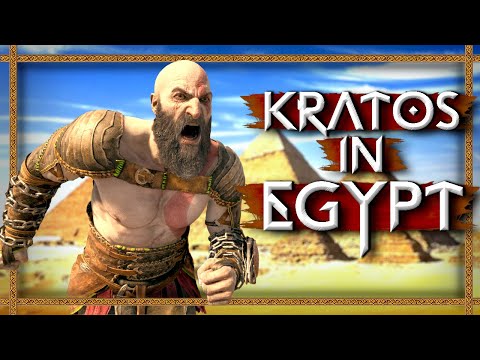
The question of whether Kratos, the Ghost of Sparta, will ever set foot in Egypt in a future God of War title is a complex one, shrouded in both intriguing possibilities and logistical hurdles. While not definitively confirmed, the answer leans towards a potential “yes,” though not in the immediate future or in the way many fans might initially expect. The exploration of Egyptian mythology within the God of War universe is tantalizing, given the series’ track record of reimagining pantheons and its demonstrated willingness to deviate from established canon. With the Norse saga concluded and the future open, the possibility of a detour to Egypt, either for Kratos himself or a new protagonist, remains a compelling prospect.
The Allure of Egyptian Mythology in God of War
Egypt: A Road Not Yet Taken
The God of War franchise has carved a niche for itself by tackling different mythologies with brutal grace and a compelling narrative. The series began with Greek mythology, then shifted to Norse mythology in the critically acclaimed 2018 reboot and Ragnarok. While the series is deeply rooted in these mythological worlds, the notion of exploring others has always lingered in the background.
As revealed by Cory Barlog, director of the 2018 God of War, the team seriously considered ancient Egypt as the setting for Kratos’ new journey. This tantalizing revelation immediately sparked the imaginations of fans, painting vivid pictures of Kratos battling gods like Ra, Osiris, and Anubis. Ultimately, the development team opted for Norse mythology. The isolated and unique nature of the Norse lands was more appealing for the vision that the creative team had for Kratos’ personal journey.
Evidence of Egyptian Influence
Even though Egypt hasn’t been a primary setting, the God of War universe has already brushed against its sands. The comic book series, God of War: Fallen God, sees Kratos wandering into Egypt following the events of God of War III. This storyline features Kratos trying to rid himself of the Blades of Chaos, only to be constantly haunted by them. During his exile, he encounters Thoth, the Egyptian god of knowledge and wisdom, marking the sole explicit appearance of an Egyptian deity in the God of War canon.
Analyzing the Future Possibilities
Kratos’ Journey: Where Next?
With the Norse saga complete, the burning question is, “What’s next for Kratos?” God of War Ragnarok certainly left Kratos’ story open, hinting at a future where he continues to help rebuild and find peace. However, the game also heavily focused on Atreus’ journey, specifically his quest to find the lost Giants.
This narrative focus has led many to believe that the next major installment in the series might center on Atreus, potentially in a spin-off title. Such a game could explore new mythologies through Atreus’ travels, opening the door for encounters with Egyptian deities or settings without necessarily uprooting Kratos.
Shifting Protagonist Focus
A shift in protagonist doesn’t preclude Kratos from appearing in a future Egyptian-themed God of War game, especially if it is framed as Atreus seeking his father’s help or guidance. While Kratos could be a mentor or supporting character, allowing a fresh perspective on the Egyptian pantheon.
However, it’s also possible that Kratos’ story continues in a separate game that has nothing to do with Egypt. Perhaps Santa Monica Studios will want to move on to a completely new protagonist and setting for a new game within the God of War universe. Only time will tell what the future holds for Kratos, Atreus, and the God of War franchise.
Potential Conflicts and Considerations
One of the main challenges in bringing God of War to Egypt is how it would uniquely distinguish itself from other depictions of Egyptian mythology in gaming. To stand out, Santa Monica Studio would need to offer a fresh interpretation, similar to how they redefined Norse mythology. This could mean focusing on lesser-known aspects of Egyptian lore, exploring complex themes, or introducing original characters.
Another concern would be balancing respect for the source material with the series’ signature violent and dramatic storytelling. The God of War games are known for their visceral combat and often brutal portrayals of gods. Applying this formula to Egyptian mythology would require careful consideration to avoid insensitive or disrespectful depictions.
Conclusion: The Sands of Time May Tell
While there’s no guarantee that Kratos will ever journey to Egypt, the potential is undeniable. Whether through Kratos himself, his son Atreus, or a completely new character, the exploration of Egyptian mythology offers a wealth of narrative and gameplay possibilities for the God of War franchise. The success of the Norse saga proves that Santa Monica Studio can successfully reinvent the series while staying true to its core identity. Only time will reveal whether the sands of Egypt will eventually bear the bloody footprints of a God of War.
Interested in more on how games are developed and received? Check out the Games Learning Society at GamesLearningSociety.org, where you can learn more about games, learning, and culture.
Frequently Asked Questions (FAQs)
1. Was God of War originally going to be set in Egypt?
Yes, Cory Barlog, the director of God of War (2018), revealed that ancient Egypt was a serious contender as the setting for the reboot. However, the team eventually chose Norse mythology due to the unique elements it could bring to Kratos’ story.
2. Does Kratos ever meet any Egyptian gods in the God of War series?
In the comic series God of War: Fallen God, Kratos encounters Thoth, the Egyptian god of knowledge. This is the only instance of Kratos interacting with an Egyptian deity within the established God of War canon.
3. Why wasn’t God of War ultimately set in Egypt?
Santa Monica Studio decided against Egypt because they felt that Norse mythology better aligned with the story they wanted to tell for Kratos’ new journey. The comparative isolation of Norway, as well as Norse Mythology’s uniqueness were cited as the reasons for this.
4. Could God of War return to Greek mythology?
While not impossible, a return to Greek mythology would present narrative challenges. Kratos essentially eradicated the Greek pantheon and left Greece in ruins. However, with his changed perspective, a return to help rebuild or atone for his past actions is a potential storyline.
5. What mythology is Kratos going to explore next?
Currently, there is no confirmed next mythology for Kratos. With God of War Ragnarok concluding the Norse saga, the future of the series is wide open, with Egypt being just one of many possibilities.
6. How old is Kratos in the current God of War games?
Based on estimated timelines, Kratos is believed to be over 1000 years old by the time of God of War (2018). This is due to his origins as a demigod and his long history within the Greek and Norse worlds.
7. What is after God of War Ragnarok?
The eighteenth chapter, Beyond Ragnarok, follows Kratos, Freya, and Mimir on their journey through the Nine Realms after the events of Ragnarok.
8. What is the strongest God in Egypt?
Amun-Ra is considered the strongest god in Egyptian mythology.
9. How tall is Kratos?
Kratos’ height varies slightly across different media. While early scripts listed him at 6 feet 6 inches, a Santa Monica Studio dev stated he’s about 7 feet 6 inches in the comic books and 6 feet 4 inches in the game.
10. Is Kratos stronger with age?
Yes, it is documented that Greek gods grow stronger with age. This is reflected in Kratos’ increased power and resilience in the newer God of War games.
11. How did Kratos become a god?
Kratos became the God of War after killing Ares, the original God of War. He was later revealed to be the son of Zeus, making him a demigod by birth.
12. What will the next God of War game be about?
Rumors suggest the next game may focus on Atreus and his search for the remaining Giants, potentially taking the story to new mythological settings.
13. Why did Kratos leave Greece?
Kratos fled Greece in an attempt to escape his past and the immense guilt and bloodlust that defined him. He sought to leave behind the destruction and death he caused in his homeland.
14. Is Kratos immortal?
As a demigod turned god, Kratos is virtually immortal. He is also cursed to never be able to die, as seen when he survived his suicide attempt with the Blade of Olympus.
15. Will Atreus ever get his own game?
Rumors indicate that a potential Atreus spin-off is under consideration, offering players the chance to explore new adventures and develop his character further.