Will My Pokémon Stop Obeying Me? The Ultimate Guide to Obedience in the Pokémon World
Fast answer first. Then use the tabs or video for more detail.
- Watch the video explanation below for a faster overview.
- Game mechanics may change with updates or patches.
- Use this block to get the short answer without scrolling the whole page.
- Read the FAQ section if the article has one.
- Use the table of contents to jump straight to the detailed section you need.
- Watch the video first, then skim the article for specifics.
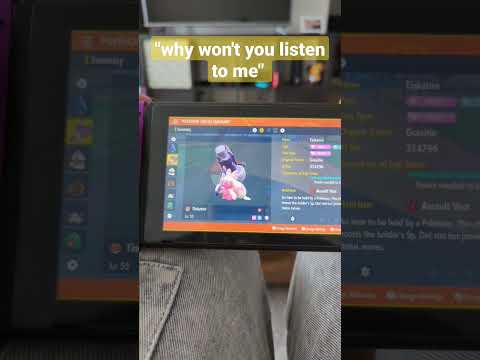
The short answer is yes, Pokémon can disobey you, but only under specific circumstances. Whether or not your Pokémon will listen to your commands depends primarily on two factors: whether you are the original trainer and the level of the Pokémon in relation to your progress in the game (specifically, the number of Gym Badges or similar milestones you’ve achieved). Pokémon you catch yourself will always obey, but traded Pokémon can become unruly if they outpace your progress as a trainer.
This article will delve into the intricacies of Pokémon obedience, exploring the mechanics behind it and offering solutions to common disobedience issues. We’ll also address frequently asked questions to ensure you have a comprehensive understanding of this crucial gameplay element.
Understanding the Obedience Mechanic
The obedience mechanic in Pokémon games is designed to encourage players to progress through the game in a structured manner. It prevents players from simply trading for powerful Pokémon early on and steamrolling the competition. Instead, it rewards players who earn their badges and develop their own team through dedicated training.
Original Trainer vs. Traded Pokémon
A Pokémon’s origin plays a significant role in its obedience. If you catch a Pokémon yourself or hatch it from an egg, it will always obey you, regardless of its level. This is because your Trainer ID and name are listed as the Original Trainer (OT). The game recognizes that you have raised this Pokémon from its early stages, fostering a bond that ensures loyalty.
However, traded Pokémon are a different story. These Pokémon have a different OT, signifying that someone else raised them initially. Their obedience is tied to your progress as a trainer, represented by the number of Gym Badges or equivalent achievements you’ve earned in the specific game.
The Badge and Level Connection
The number of Gym Badges you possess acts as a benchmark for your skill and experience as a Pokémon trainer. Each badge typically raises the level cap for obedient traded Pokémon. This means that if you have only one badge, traded Pokémon above a certain level (usually around level 20 or 25) may start to disobey your commands.
Disobedience can manifest in various ways:
- Ignoring commands: The Pokémon may simply refuse to use the move you selected.
- Loafing around: The Pokémon may “loaf around” and do nothing for a turn.
- Attacking randomly: The Pokémon may use a different move than the one you chose, or even attack your own party members.
- Falling asleep: In some cases, the Pokémon may fall asleep during battle.
This disobedience is designed to be frustrating, incentivizing you to continue collecting badges to prove your worth as a trainer. Once you’ve earned enough badges, even high-level traded Pokémon will recognize your authority and follow your commands.
Troubleshooting Disobedient Pokémon
If you find yourself struggling with a disobedient Pokémon, here are a few steps you can take to address the issue:
- Check your badge progress: Determine the level cap for obedient traded Pokémon based on the number of badges you have.
- Evaluate the Pokémon’s level: If the Pokémon’s level exceeds the cap, it’s likely the cause of the disobedience.
- Earn more badges: The most reliable solution is to continue your journey and collect more badges. Each new badge will increase the level cap for obedient traded Pokémon.
- Consider alternative strategies: In the short term, you might need to adjust your battle strategy to account for the Pokémon’s unreliability. Focus on Pokémon that obey you reliably until you can increase your badge count.
Frequently Asked Questions (FAQs)
1. What exactly happens when a Pokémon disobeys?
When a Pokémon disobeys, it might ignore your commands, use a different move, loaf around, or even attack its own allies. The specific behavior varies depending on the game and the Pokémon.
2. Does friendship affect obedience?
While high friendship can be beneficial in other ways (like increasing critical hit chance), friendship does not directly affect obedience in relation to the badge system. Obedience is primarily tied to whether you are the OT and whether the Pokémon’s level exceeds the limit set by your badges.
3. Will a Mystery Gift Pokémon obey me?
Whether a Mystery Gift Pokémon obeys depends on its OT. If the Pokémon has your Trainer ID, it will always obey. If it has a different ID, it will be subject to the same obedience rules as any other traded Pokémon.
4. I caught a Pokémon at a low level, but it’s now high-level and disobeys. Why?
This should not happen. If you caught a Pokémon yourself, it should always obey you, regardless of its level. A potential reason could be that you traded the Pokémon and then traded it back, inadvertently changing its OT. Otherwise, this is unusual.
5. Can Pokémon disobedience occur in Pokémon Scarlet and Violet?
Yes, Pokémon disobedience can occur in Pokémon Scarlet and Violet. It’s dictated by the badge system, but it applies even to caught Pokémon to a certain extent, up to a certain badge count. In these games, it takes 6 gym badges for level 50 Pokémon to always obey.
6. How do I make a hacked Pokémon obey me?
The easiest way is to hack a Pokémon with your OT/ID/SID. The game will then treat it as if you caught it yourself, ensuring its obedience. However, it’s important to acknowledge the ethical implications and potential risks associated with hacking.
7. Is there a level limit for obedience, even with all eight badges?
No. Once you have all the badges in the main series games, there is no level limit for traded Pokémon. They will always obey you.
8. Can a Pokémon leave me permanently if it disobeys too much?
No, in the core games, Pokémon will not leave your party permanently due to disobedience. The anime does show instances of this, but it isn’t part of the main game mechanics.
9. Why won’t my low-level Pokémon obey me?
If you caught the Pokémon below the level cap for which disobedience starts, then it is most likely a bug with the game. Consider contacting Nintendo Support and informing them of the situation.
10. How does obedience work in Pokémon Legends: Arceus?
In Pokémon Legends: Arceus, obedience is tied to your Star Rank within the Galaxy Expedition Team. Increasing your rank allows you to command higher-level Pokémon. This replaces the Gym Badge system from previous games.
11. Do foreign Pokémon level up faster?
Yes, foreign Pokémon (Pokémon from a game of a different language) gain experience faster. They receive a 1.7x experience boost, while traded Pokémon (even from the same language) get a 1.5x boost.
12. At what level do most Pokémon stop learning new moves?
Most Pokémon stop learning new moves in the upper 50s to lower 60s. However, some Pokémon can continue learning moves up to level 80 or higher. This is a function of their individual move sets.
13. What’s the relationship between a Pokémon’s mood and obedience?
There is no relationship between mood and obedience. Obedience is entirely dependent on your Gym Badges and your trainer ID matching the original trainer.
14. How do I guarantee a newly traded Pokémon will obey me?
The best way to guarantee a newly traded Pokémon will obey is to ensure its level is below the cap for your current number of badges. Alternatively, you can trade for Pokémon hatched from an egg.
15. Where can I learn more about the underlying game mechanics of Pokémon?
Understanding game mechanics is a key part of understanding games. The Games Learning Society, found at https://www.gameslearningsociety.org/, explores the intersection of games and education, offering resources for educators, researchers, and game enthusiasts alike. You can also explore other online resources such as Serebii.net or Bulbapedia.