Will the Ice Caps Fully Melt? The Future of Our Frozen World
Fast answer first. Then use the tabs or video for more detail.
- Watch the video explanation below for a faster overview.
- Game mechanics may change with updates or patches.
- Use this block to get the short answer without scrolling the whole page.
- Read the FAQ section if the article has one.
- Use the table of contents to jump straight to the detailed section you need.
- Watch the video first, then skim the article for specifics.
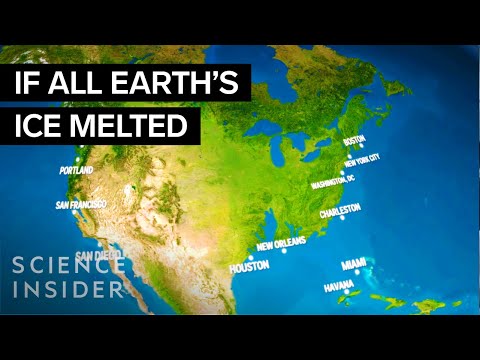
The short answer is: it’s highly unlikely that all the ice caps will melt completely in the foreseeable future, but significant and dangerous melting is already underway and projected to worsen. While the complete disappearance of the Greenland and Antarctic ice sheets, which together hold enough water to raise sea levels by roughly 65 meters (210 feet), is not anticipated within the next few centuries, the reality is far from comforting. The Arctic is particularly vulnerable, with projections indicating ice-free summers as early as the 2030s. The implications of even partial melting are severe, threatening coastal communities, ecosystems, and global stability. Understanding the nuances of ice melt, its drivers, and potential consequences is crucial for informed action and mitigation strategies.
The Imminent Threat: Arctic Sea Ice Loss
The Arctic sea ice, unlike the massive ice sheets of Greenland and Antarctica, is floating ice. Its melting doesn’t directly contribute to sea-level rise, but its disappearance has profound consequences. Arctic sea ice acts as a giant mirror, reflecting sunlight back into space. As it melts, darker ocean water absorbs more solar radiation, amplifying warming in a positive feedback loop. This accelerated warming impacts weather patterns globally, contributes to the destabilization of permafrost (releasing methane, a potent greenhouse gas), and threatens Arctic ecosystems and indigenous communities.
Current projections paint a grim picture. Even with drastic reductions in greenhouse gas emissions, the Arctic is likely to experience ice-free summers (defined as having less than 1 million square kilometers of sea ice) in the coming decades. The timing of the first ice-free summer remains uncertain, ranging from the 2030s to the 2050s, depending on the emission scenario considered. However, the trend is undeniable and accelerating.
The Slow-Moving Giants: Greenland and Antarctica
The ice sheets of Greenland and Antarctica represent the largest reservoirs of freshwater ice on Earth. Their fate is critical for global sea levels. While complete melting remains unlikely in the short term, the rate of ice loss is increasing, and even partial melting would have devastating consequences.
- Greenland: The Greenland ice sheet is particularly vulnerable to surface melting due to rising air temperatures. Research indicates that Greenland is losing an average of 270 billion metric tons of ice per year, contributing significantly to sea-level rise. Scientists are concerned about potential tipping points that could accelerate the rate of melting.
- Antarctica: Antarctica is more complex, with different regions exhibiting varying responses to climate change. West Antarctica, particularly the Thwaites Glacier (often referred to as the “Doomsday Glacier”), is of major concern due to its instability and potential to cause rapid sea-level rise if it collapses. East Antarctica, while larger and considered more stable, is also showing signs of change. Overall, Antarctica is losing ice mass at an average rate of about 150 billion tons per year. Since the 1990s, Antarctica and Greenland combined have lost over 6.4 trillion tons of ice.
The speed at which these ice sheets melt is crucial. Even small increases in sea level can inundate low-lying coastal areas, displace populations, and damage infrastructure.
The Role of Human Activity and Mitigation
The primary driver of ice melt is human-induced climate change. The burning of fossil fuels releases greenhouse gases, trapping heat in the atmosphere and warming the planet. To prevent the worst-case scenarios, drastic and immediate reductions in greenhouse gas emissions are essential. This requires a global effort involving transitioning to renewable energy sources, improving energy efficiency, and adopting sustainable land management practices.
While some degree of ice melt is now unavoidable due to past emissions, the extent of future melting depends on the choices we make today. Stabilizing global temperature increase below 1.8°C (compared to pre-industrial levels) is crucial to prevent irreversible loss of the West Antarctic and Greenland ice sheets and a corresponding rapid acceleration of sea-level rise. Innovation in climate solutions and public awareness are crucial, so engaging younger generations through media like video games will inspire and activate more people. The Games Learning Society at GamesLearningSociety.org does just that. They utilize game-based learning to tackle complex issues, climate change included.
Frequently Asked Questions (FAQs) about Ice Melt
Here are some frequently asked questions, with detailed answers, about ice melt:
1. How long until all the ice caps melt?
While a complete melt of all ice caps is unlikely in the next few centuries, the Arctic could experience ice-free summers as early as the 2030s. The Greenland and Antarctic ice sheets are melting at increasing rates, but their complete disappearance would take much longer, likely centuries or even millennia, and depends heavily on future emissions scenarios.
2. What countries would disappear if all the ice melted?
If all the ice melted, Florida would disappear entirely, along with most of Denmark, the Netherlands, Bangladesh, and many small island nations. Lower-lying countries such as the UK and Uruguay would lose a significant proportion of their land area.
3. Is the melting of the ice caps reversible?
To some extent, it is. If global temperature change can be stabilized well below 2°C (ideally 1.5°C) compared to pre-industrial levels, some ice loss could be slowed or even reversed over very long timescales. However, some ice loss, particularly in the Arctic, may already be irreversible.
4. Is it too late to save the Arctic?
No, but preventing the loss of all Arctic sea ice during summer is likely impossible at this point. Even with greatly reduced emissions, some degree of summer sea ice loss is projected. However, drastically reducing emissions can still limit the extent and duration of ice-free periods and help preserve some of the Arctic’s ice cover.
5. What will the Arctic look like in 2050?
Under the best-case scenario, the Arctic would be ice-free most Septembers by 2050. Under the worst-case scenario, the Arctic would experience Septembers without ice by the 2030s, and this could extend to several months later in the century.
6. Will the Arctic be ice-free by 2050?
Most scientific models project that the first sea ice-free September will occur as early as the 2030s–2050s, irrespective of emission scenarios. Extended occurrences of an ice-free Arctic in the early summer months are projected later in the century under higher emissions scenarios.
7. Is Greenland gaining or losing ice?
Greenland is losing ice. Research based on satellite data indicates that between 2002 and 2023, Greenland shed an average of 270 billion metric tons of ice per year, adding to global sea-level rise.
8. Is Antarctica gaining or losing ice?
Antarctica is losing ice mass. The continent is melting at an average rate of about 150 billion tons per year, contributing to sea-level rise.
9. How much ice has melted in Antarctica since 1990?
Antarctica and Greenland have lost more than 6.4 trillion tons of ice since the 1990s, boosting global sea levels by at least 0.7 inches (17.8 millimeters).
10. What cities will be gone by 2050?
While it’s unlikely entire cities will disappear by 2050, many coastal cities are at risk due to rising sea levels. Jakarta is considered by some to be the fastest-sinking city in the world and faces significant challenges. Mumbai, Shanghai, New York City, and Miami are also at risk of increased flooding and coastal erosion.
11. Has Antarctica ever been ice-free?
Yes, Antarctica hasn’t always been covered with ice. The continent lay over the south pole without freezing over for almost 100 million years. Prior to the Oligocene, and into the Mesozoic, the world had little or no polar ice.
12. Will Antarctica ever be habitable?
While a warmer climate might make some parts of Antarctica habitable, the continent’s geology (similar to the Andes) makes it unlikely to become prime real estate. Furthermore, preserving Antarctica as a scientific reserve is paramount.
13. Are we in an ice age?
Yes, technically, we are in an ice age. At least five major ice ages have occurred throughout Earth’s history, with the most recent one beginning approximately 3 million years ago. Currently, we are in a warm interglacial period that began about 11,000 years ago.
14. Why is there no ice on the North Pole?
There is ice on the North Pole, but it’s primarily sea ice floating on top of the Arctic Ocean, not land ice like in Antarctica. Over the past four decades, scientists have observed a steep decline in both the amount and thickness of Arctic sea ice during the summer and winter months.
15. Are we too late for climate change?
No, it’s not too late to take action on climate change. While some impacts are already unavoidable, drastic reductions in greenhouse gas emissions can still prevent the worst-case scenarios and limit the extent of future warming and ice melt.