Does Dutch Betray Arthur in RDR2? A Deep Dive into Loyalty, Ideals, and Downfall
Fast answer first. Then use the tabs or video for more detail.
- Watch the video explanation below for a faster overview.
- Game mechanics may change with updates or patches.
- Use this block to get the short answer without scrolling the whole page.
- Read the FAQ section if the article has one.
- Use the table of contents to jump straight to the detailed section you need.
- Watch the video first, then skim the article for specifics.
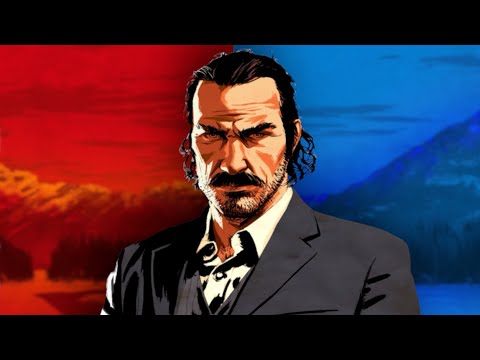
Yes, Dutch van der Linde undeniably betrays Arthur Morgan in Red Dead Redemption 2. While the betrayal isn’t always explicit or intentional in the beginning, it escalates significantly throughout the game, culminating in a complete abandonment of Arthur’s loyalty and the gang’s original ideals. This betrayal is multifaceted, encompassing moral failings, manipulation, prioritizing his own ego and vision over the well-being of his followers, and ultimately, leaving Arthur to die. It’s a tragic downfall driven by fear, paranoia, and a desperate clinging to a fading dream.
The Seeds of Doubt: Early Signs of Dutch’s Deterioration
The seeds of Dutch’s betrayal are sown early in the game. While initially portrayed as a charismatic leader with a vision of freedom and self-sufficiency, subtle cracks begin to appear. He becomes increasingly erratic, prone to impulsive decisions that jeopardize the gang. He consistently rationalizes his actions, even when they lead to disastrous consequences, convincing himself and his followers that he always has a plan. This is the first, perhaps unintentional, step on the road to betraying Arthur: a betrayal of the gang’s shared values in favor of his own increasingly delusional vision.
Consider the Blackwater heist. While the details are intentionally vague, it’s clear that Dutch’s actions led to its failure and the subsequent flight. Instead of taking responsibility, he doubles down, blaming others and clinging to the idea that he was wronged. This sets a precedent for future actions, where Dutch avoids accountability and manipulates situations to maintain his image as a benevolent leader.
Furthermore, Dutch’s reliance on individuals like Micah Bell becomes increasingly alarming to Arthur. Micah’s violent tendencies and manipulative nature are obvious to Arthur, yet Dutch defends and trusts him implicitly, even when faced with overwhelming evidence of Micah’s deceit. This unwavering trust in Micah, a clear antagonist to Arthur and many other gang members, is a pivotal point in Dutch’s betrayal. It shows a fundamental breakdown in his judgment and his inability to discern loyalty from opportunism.
The Moral Rot: Escalating Betrayals and Abandonment
As the game progresses, Dutch’s actions become increasingly morally reprehensible. He manipulates and uses people for his own ends, often sacrificing their well-being for the sake of his plan. The Saint Denis bank robbery is a prime example of this. Despite Arthur’s concerns and the clear risks involved, Dutch pushes forward, driven by greed and a desire to prove his superiority. The robbery goes horribly wrong, resulting in the deaths of several gang members and further fracturing the group.
Following the Saint Denis debacle, Dutch’s behavior becomes even more erratic and unpredictable. He becomes increasingly paranoid, convinced that everyone is out to get him. He lashes out at those who question his authority, alienating loyal members like Arthur and John. This paranoia is fueled by Micah’s constant whispering and manipulation, further solidifying Micah’s position as Dutch’s closest confidante.
The ultimate betrayal comes in the final chapters of the game. When Arthur confronts Dutch about Micah’s treachery, Dutch refuses to believe him, siding with Micah despite Arthur’s years of loyalty and unwavering service. He chooses to believe Micah’s lies over Arthur’s truth, effectively abandoning Arthur and sealing his fate.
Moreover, Dutch leaves Arthur behind to die during the final showdown with Micah. He rides away, leaving Arthur to fight for his life against overwhelming odds. This is the ultimate act of betrayal, a complete abandonment of a man who had dedicated his life to the gang and to Dutch himself. Dutch prioritizes his own survival and his warped vision of freedom over the life of his most loyal follower.
The Aftermath: Dutch’s Final Betrayal in the Epilogue
Even after Arthur’s death, Dutch’s betrayal continues to haunt the epilogue. In the final encounter with John Marston, Dutch appears again, seemingly reformed. However, his actions speak louder than his words. He silently allows John to kill Micah, but refuses to explain his reasons or acknowledge his past mistakes. He simply walks away, leaving John and his family to rebuild their lives.
This final act is perhaps the most subtle yet profound betrayal of all. Dutch refuses to confront his past, to acknowledge the pain and suffering he caused, or to offer any form of redemption. He remains trapped in his own delusion, unable to accept responsibility for his actions. This leaves John, and the player, with a sense of unresolved grief and a lingering question: could Dutch have been saved?
Dutch’s actions are a tragic illustration of how power, ego, and fear can corrupt even the most well-intentioned individuals. His betrayal of Arthur and the Van der Linde gang serves as a cautionary tale about the dangers of blind faith and the importance of critical thinking. The story of Dutch’s downfall is a core theme in the game, and its ending is one that will stay with players long after the credits roll.
Understanding these narratives and character motivations is crucial for appreciating the depth of storytelling in video games. The Games Learning Society (GamesLearningSociety.org) promotes the study of games and their impact on learning and culture, emphasizing how these rich interactive experiences can offer profound insights into human behavior and societal dynamics.
Frequently Asked Questions (FAQs)
Here are 15 frequently asked questions about Dutch’s betrayal in Red Dead Redemption 2:
-
Was Dutch always a bad person, or did something change him? While Dutch initially appears charismatic and well-intentioned, the seeds of his downfall were present from the beginning. His ego, his unwillingness to accept responsibility, and his need to control situations all contributed to his eventual betrayal. The stresses of being constantly on the run and the influence of Micah Bell accelerated his descent.
-
How much of Dutch’s betrayal was intentional? In the early stages, much of Dutch’s behavior could be attributed to misguided intentions and poor judgment. However, as the game progresses, his actions become increasingly calculated and self-serving, suggesting a more conscious betrayal of his own principles and the well-being of his gang.
-
What role did Micah Bell play in Dutch’s betrayal? Micah was a catalyst for Dutch’s downfall. He exploited Dutch’s weaknesses, fueled his paranoia, and manipulated him into making increasingly reckless decisions. Micah’s constant whispering and influence over Dutch created a wedge between Dutch and the more loyal members of the gang, particularly Arthur and John.
-
Why did Dutch trust Micah over Arthur? Dutch’s trust in Micah is one of the most perplexing aspects of the game. Some theories suggest that Dutch saw a reflection of his own ambition and ruthlessness in Micah, while others believe that Micah simply manipulated Dutch more effectively than Arthur could. Regardless, Dutch’s misplaced trust in Micah was a critical factor in his betrayal of Arthur.
-
Could Arthur have done anything to prevent Dutch’s downfall? Arthur tried repeatedly to reason with Dutch and to warn him about Micah’s treachery. However, Dutch’s ego and paranoia made him resistant to any dissenting opinions. Ultimately, Arthur’s efforts were futile, as Dutch was too far gone to be saved.
-
Was Dutch in love with Mary Linton? The relationship between Dutch and Mary Linton is complex and ambiguous. While there was clearly a connection between them, it’s unclear whether Dutch was truly in love with her or if she was simply a symbol of a life he could never have. Regardless, their relationship highlights Dutch’s internal conflicts and his inability to commit to genuine connection.
-
Why did Dutch kill Cornwall? Dutch’s decision to kill Cornwall was driven by a combination of factors, including his desire for revenge, his belief that he was fighting against oppression, and his ego. He wanted to prove that he was a force to be reckoned with and that he would not be intimidated by powerful figures like Cornwall.
-
Did Dutch ever regret his actions? The game leaves this question open to interpretation. In the epilogue, Dutch seems to have retreated from the world, suggesting a possible sense of remorse. However, he never explicitly acknowledges his mistakes or offers any form of apology, leaving his true feelings ambiguous.
-
What was Dutch’s “plan” that he kept talking about? Dutch’s “plan” was a vague and ever-shifting concept that he used to justify his actions. It was a combination of idealism, greed, and delusion, fueled by his belief that he could outsmart the authorities and create a better life for himself and his gang. The specifics of the plan were never clearly defined, as it was more of a justification for his actions than a concrete strategy.
-
How did Hosea’s death affect Dutch? Hosea’s death was a significant blow to Dutch. Hosea was Dutch’s closest confidante and served as a moderating influence on his more impulsive tendencies. With Hosea gone, Dutch was more susceptible to Micah’s manipulation and his own darker impulses.
-
What is the significance of Dutch’s final encounter with John Marston in RDR1? Dutch’s suicide in Red Dead Redemption 1 is a culmination of his downfall. He realizes that his way of life is over and that he has no place in the modern world. His final words, “We can’t fight change,” suggest a grudging acceptance of his own failure.
-
Did Dutch ever truly care about the members of his gang? While Dutch likely started with genuine affection and concern for his gang members, his ego and paranoia ultimately overshadowed those feelings. He began to see them as tools to be used for his own purposes, rather than as individuals with their own needs and desires.
-
Is Dutch a villain or a tragic hero? Dutch is a complex character who embodies elements of both a villain and a tragic hero. He is ultimately responsible for his own downfall, but his story is also one of lost ideals and the corrupting influence of power. He’s a flawed character whose descent resonates with players.
-
How does RDR2 portray the theme of loyalty? RDR2 explores the theme of loyalty in multifaceted ways. It examines the complexities of loyalty to a person, an ideal, and a way of life. The contrast between Arthur’s unwavering loyalty and Dutch’s increasingly self-serving actions highlights the importance of integrity and critical thinking.
-
What lessons can be learned from Dutch’s story? Dutch’s story serves as a cautionary tale about the dangers of blind faith, the corrupting influence of power, and the importance of staying true to one’s own values. It also highlights the fragility of human relationships and the devastating consequences of betrayal.