Stalemate in Chess: Draw or Loss?
Fast answer first. Then use the tabs or video for more detail.
- Watch the video explanation below for a faster overview.
- Game mechanics may change with updates or patches.
- Use this block to get the short answer without scrolling the whole page.
- Read the FAQ section if the article has one.
- Use the table of contents to jump straight to the detailed section you need.
- Watch the video first, then skim the article for specifics.
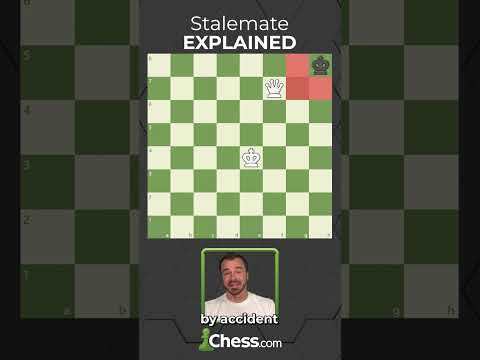
In the world of chess, every move matters, and the ultimate goal is to checkmate the opponent’s king. However, sometimes a game reaches a point where neither player can achieve a checkmate, leading to a draw. One of the most intriguing types of draws is a stalemate.
Is a stalemate considered a loss in chess? No. A stalemate is considered a draw in chess, not a loss. It occurs when the player whose turn it is to move has no legal moves available, and their king is not in check. In this scenario, the game ends immediately, with each player receiving half a point. Understanding stalemate is crucial, as it can be a valuable defensive resource for a player in an inferior position.
The Nuances of Stalemate
Stalemate isn’t just a simple draw; it’s a tactical opportunity. Recognizing when a stalemate is possible can save a game that would otherwise be lost. The power to force a stalemate demonstrates a deep understanding of chess principles and endgame strategies.
Why Stalemate Isn’t a Loss
To understand why stalemate is a draw, it’s important to consider the fundamental objectives in chess: to checkmate the opponent. Stalemate doesn’t meet these objectives. The player is not in check, and can’t make any legal moves. Therefore, a stalemate position doesn’t result in a victory for the other player.
The Strategic Importance of Stalemate
Stalemate can be a life-saver, particularly in the endgame. If a player finds themself with limited pieces, a trapped king, and a significant material disadvantage, seeking a stalemate position can be the only way to salvage a draw. By carefully maneuvering pieces to restrict the opponent’s options, one can force a stalemate and avoid a certain loss.
Common Stalemate Scenarios
Stalemates can occur in various ways. Often, they involve a king trapped on the edge of the board with limited mobility, surrounded by its own pieces. Another common scenario is when a player has only a king left, and the opponent inadvertently blocks all possible moves, creating a stalemate position. Recognizing these common scenarios can help players both avoid stalemating their opponent and capitalize on stalemate opportunities when they arise.
Frequently Asked Questions (FAQs) About Stalemate in Chess
Here are some frequently asked questions to further clarify the intricacies of stalemate in chess:
1. What exactly defines a stalemate in chess?
A stalemate is a situation in chess where the player whose turn it is to move is not in check, but has no legal move to make. If such a position arises, the game immediately ends in a draw.
2. Is stalemate a good or bad outcome for a chess player?
It depends on the situation. For a player who is losing, stalemate is a good outcome because it allows them to draw the game instead of losing. For a player who is winning, stalemate is a bad outcome because it prevents them from securing a victory.
3. Can a stalemate be forced in chess?
Yes, a stalemate can be forced. A player in a losing position may strategically maneuver their pieces to create a situation where the opponent has no legal moves, resulting in a stalemate.
4. Does stalemate affect chess ratings?
Yes, stalemate does affect chess ratings. Drawing against a lower-rated player typically results in a slight decrease in rating points, while drawing against a higher-rated player can lead to a gain in rating points.
5. Is stalemate considered cheating?
No, stalemate is not considered cheating. It is a legitimate outcome recognized by the rules of chess. Intentionally setting up a stalemate position is a valid strategic maneuver, not a violation of the rules.
6. Can you stalemate with only a king left on the board?
Yes, you can stalemate with only a king left on the board. If the king is not in check but has no legal squares to move to, a stalemate occurs.
7. What is the difference between stalemate and checkmate?
Checkmate is when the king is in check and has no legal moves to escape the check, resulting in a loss for the player whose king is checkmated. Stalemate is when the king is not in check but has no legal moves to make, resulting in a draw.
8. Why isn’t stalemate considered a win for the player who creates it?
Stalemate is not considered a win because it does not fulfill the main objective of chess: to checkmate the opponent’s king. In a stalemate, the king is not in check, so the game ends in a draw.
9. Is there any strategy to avoid stalemating your opponent when you’re winning?
Yes, there are strategies to avoid stalemating your opponent when you’re winning. You should always consider the possible moves your opponent can make before making a move. Also, you need to maintain open paths and squares for the opponent’s king to move. Be careful not to restrict the movement of the opponent’s king inadvertently, especially when it’s on the edge of the board.
10. How common is stalemate in professional chess games?
Stalemate is relatively rare in high-level professional chess games because players at that level are highly skilled at avoiding such situations. However, it can still occur, especially in complex endgames.
11. What is the historical perspective on the stalemate rule in chess?
Historically, the stalemate rule has been viewed differently across various times and places. At some points, stalemate was considered a win for the player creating it, while at other times it was seen as a lesser win or even a loss. Over time, the consensus shifted to recognizing it as a draw, which is the current standard.
12. Can a pawn promote to create a stalemate?
Yes, a pawn can promote to create a stalemate. If promoting the pawn results in the opponent having no legal moves while not being in check, it leads to a stalemate.
13. How does the 50-move rule relate to stalemate?
The 50-move rule states that a player can claim a draw if no capture has been made and no pawn has been moved in the last 50 moves. While this is a different way to achieve a draw, it’s unrelated to stalemate, which is about the position on the board, not the move history.
14. In chess variants, is stalemate always a draw?
Not always. In some chess variants, the rules for stalemate may differ. For example, in some variants, stalemate may be considered a win for the player who creates it, or some other outcome.
15. Where can I learn more about advanced chess strategies, including stalemate tactics?
You can learn more about advanced chess strategies from various resources, including chess books, online courses, chess coaching, and by analyzing games of grandmasters. Additionally, organizations like the Games Learning Society offer insights into strategic thinking applicable to chess and beyond, bridging the gap between gameplay and broader cognitive skills. Visit GamesLearningSociety.org to explore the intersection of games and learning.
Conclusion
Stalemate is a unique and strategically important aspect of chess. While it’s not a loss, it can be a game-saving resource or a missed opportunity, depending on the circumstances. Understanding the conditions that lead to stalemate, and how to either force or avoid them, is a critical skill for any chess player looking to improve their game. By learning the ins and outs of stalemate, you can significantly enhance your tactical awareness and strategic decision-making on the chessboard.