Is Portal a Half-Life Spin-Off? Unraveling the Connections
Fast answer first. Then use the tabs or video for more detail.
- Watch the video explanation below for a faster overview.
- Game mechanics may change with updates or patches.
- Use this block to get the short answer without scrolling the whole page.
- Read the FAQ section if the article has one.
- Use the table of contents to jump straight to the detailed section you need.
- Watch the video first, then skim the article for specifics.
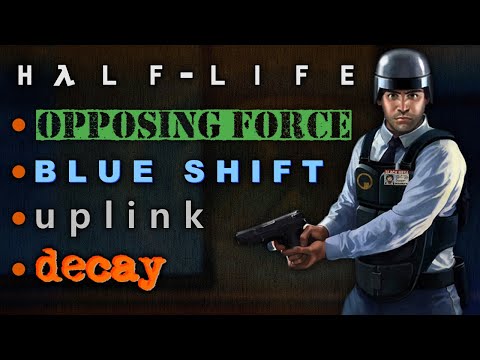
Yes, Portal is undeniably connected to the Half-Life universe, though the nature of that connection is perhaps more nuanced than a simple “spin-off” label suggests. While both series exist within the same shared fictional world established by Valve Corporation, they offer distinct gameplay experiences and narratives. Think of it as two branches of the same tree, sharing roots but growing in different directions. Portal can be considered as a puzzle-platform game series set in the Half-Life universe.
A Shared Universe: The Foundation of the Connection
The most direct link is the established shared universe, often referred to as the HL/P universe. This means characters, technologies, and even certain events can exist and influence both Half-Life and Portal storylines. While Gordon Freeman isn’t wielding a portal gun, and Chell isn’t battling the Combine, the underlying world infrastructure – and the shadowy corporate power of Aperture Science – binds them together. The existence of Aperture Science in both series is a prime example of this connection.
Aperture Science: The Tangible Link
Aperture Science, the facility where much of the Portal series takes place, is not just a background detail; it’s an active player in the universe’s history. Hints and in-game lore suggest a competitive, and at times collaborative, relationship between Aperture and Black Mesa, the research facility central to the events of Half-Life. This rivalry provides a crucial bridge between the two franchises, offering glimpses into the wider world beyond Gordon Freeman’s immediate struggles and Chell’s testing chambers.
From Mod to Standalone: The Development History
The initial conception of Portal also sheds light on its relationship to Half-Life. Originally conceived as an extensive mod for Half-Life 2, Portal utilized the same Source engine and its physics-based system to craft its innovative puzzle mechanics. This origin story reinforces the idea that Portal was born from the Half-Life universe, rather than being wholly independent. This is also an example of how game development evolves and how new mechanics or storylines can originate from previous works. The Games Learning Society website provides insights into the intersection of game design and education, which can be extremely helpful when looking at these links.
Canonical Ambiguity: Valve’s Stance
Despite the clear connections, Valve has remained deliberately vague about the absolute canon of the HL/P universe. This ambiguity allows for creative freedom and prevents either series from being overly constrained by the other’s narrative. However, the consistent references and shared elements make it difficult to dismiss the clear intent that they inhabit the same reality. The statements from Half-Life series writer Marc Laidlaw support this idea. This ambiguity is also a testament to Valve’s long-term strategy and the fact that fans’ interpretation can be as important as what’s specifically written.
The Narrative Threads: Crossover Potential
While direct character crossovers are rare, the narrative possibilities are vast. Speculation about Chell’s origins, Aperture Science’s experiments, and the potential implications of portal technology for the Combine invasion continues to fuel fan theories and creative works. The beauty of the shared universe lies in these unanswered questions and the potential for future stories to further intertwine the Half-Life and Portal narratives.
More Than a Spin-Off: A Unique Identity
Ultimately, while acknowledging the connections, it’s crucial to recognize that Portal has evolved into its own distinct entity. Its focus on innovative puzzle gameplay, dark humor, and compelling characters sets it apart from the action-oriented, narrative-driven focus of Half-Life. Portal is not simply a rehash of Half-Life themes; it’s a unique and groundbreaking game that has earned its place as a classic in its own right.
In conclusion, Portal is more accurately described as a sister series within the Half-Life universe rather than a traditional spin-off. It shares a foundational world and historical connections but offers a fundamentally different gaming experience.
Frequently Asked Questions (FAQs) About the Half-Life and Portal Connection
Here are 15 frequently asked questions to further explore the relationship between Portal and Half-Life:
Is Portal connected to Half-Life?
Yes, Portal and Half-Life are set in the same universe, sharing a history, certain technologies, and organizations like Aperture Science. This is often referred to as the HL/P universe.
Was Portal originally a Half-Life mod?
Yes, Portal was initially developed as an extensive mod for Half-Life 2, leveraging the Source engine and its physics system.
Is Portal canon to Half-Life?
Valve has never explicitly defined the official canon of the HL/P universe. The canon is largely undefined by Valve. Half-Life series writer Marc Laidlaw stated that the issue of canon is “something the fans came up with.”
What game is Portal based on?
The core gameplay of Portal is based on the game Narbacular Drop, with many of the developers from Narbacular Drop joining Valve to create Portal.
What was Portal based off of?
Portal was based off of a similar concept from the game Narbacular Drop. This concept involved the creation of portals, which was then used to solve puzzles in Portal.
Is Portal a feminist game?
Some critics argue that Portal presents feminist themes, particularly through its female protagonist, Chell, who is portrayed as intelligent and resourceful, challenging traditional gender roles in gaming.
Why was Half-Life 3 cancelled?
Valve abandoned episodic development for Half-Life due to a lack of a unifying idea for Episode Three and their transition to the Source 2 engine.
What does GLaDOS stand for?
GLaDOS stands for Genetic Lifeform and Disk Operating System. She is a fictional character from the video game series Portal.
Are Portal and HL2 in the same universe?
Yes, Portal, Portal 2, Half-Life, Half-Life 2, and Half-Life: Alyx all take place in the same universe. This shared universe is what connects the narratives of these games.
Who is the G-Man?
The G-Man is a mysterious and recurring character in the Half-Life series. His motives and identity remain largely unexplained.
Why did Portal 2 remove blood?
Portal 2 removed blood to lower the rating from T to E10 to broaden the audience and increase sales.
Why was Portal 3 cancelled?
The biggest obstacle preventing Portal 3 is Valve’s internal resource allocation, as they are a relatively small company with many projects in development.
Was GLaDOS in Half-Life?
While GLaDOS isn’t a character in Half-Life, Ellen McLain, the voice actress for GLaDOS, also provided the voice of the Overwatch Voice in Half-Life 2 and its episodes.
Does Portal 1 have blood?
Yes, Portal 1 has blood, which is a key reason why it received a T (Teen) rating, compared to Portal 2’s E10+ rating.
Is Chell Caroline’s daughter?
The theory that Chell is Caroline’s daughter is a popular fan theory, suggesting that Chell’s presence at Aperture Laboratories since a young age is due to her familial connection with Caroline, who later becomes GLaDOS.
Delving into the connections between games like Portal and Half-Life offers valuable insights into game development, storytelling, and world-building. For further exploration of these concepts, consider visiting the GamesLearningSociety.org website.