Why is America Called America? The Story Behind a Name
Fast answer first. Then use the tabs or video for more detail.
- Watch the video explanation below for a faster overview.
- Game mechanics may change with updates or patches.
- Use this block to get the short answer without scrolling the whole page.
- Read the FAQ section if the article has one.
- Use the table of contents to jump straight to the detailed section you need.
- Watch the video first, then skim the article for specifics.
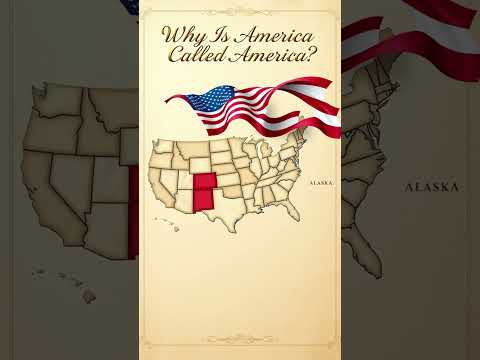
The name “America” originates from Amerigo Vespucci, an Italian explorer and cartographer. While Christopher Columbus is famed for his voyages across the Atlantic in 1492, it was Vespucci who, through his subsequent expeditions and detailed writings, convincingly articulated that the lands Columbus had reached were not part of Asia, but a new continent altogether. A German cartographer, Martin Waldseemüller, recognizing Vespucci’s contribution, named the newly charted landmass “America” in his 1507 world map, Universalis Cosmographia, a decision that stuck and shaped the geographical nomenclature we use today.
The Evolution of a Continent’s Identity
The naming of America is a complex tapestry woven with threads of exploration, misinterpretation, and the nascent field of cartography. It’s a story of evolving understanding, from initial assumptions to a groundbreaking realization that irrevocably altered the world’s geographical consciousness.
Columbus’s Misconception
Christopher Columbus, driven by the ambition to discover a westward route to the Indies, landed on several Caribbean islands. He firmly believed he had reached the East Indies (Asia), hence his labeling of the native inhabitants as “Indians.” This initial misidentification highlights the prevailing geographical understanding (or lack thereof) at the time.
Vespucci’s Groundbreaking Insight
Amerigo Vespucci, through his voyages in the late 15th and early 16th centuries, began to suspect that these lands were not part of Asia. He explored the eastern coast of South America extensively, documenting its flora, fauna, and the customs of the indigenous peoples. His detailed accounts, particularly his Mundus Novus (“New World”) letter, convinced many that this was a separate, previously unknown continent.
Waldseemüller’s Enduring Legacy
Martin Waldseemüller, a German cartographer, was creating a new world map at a time when information about the newly “discovered” lands was rapidly emerging. Influenced by Vespucci’s writings, and mistakenly attributing the initial discovery to him, Waldseemüller decided to honor Vespucci by naming the southern portion of the new landmass “America,” the feminized Latin form of Americus. While Waldseemüller later realized his error regarding the “discovery,” the name had already gained traction and continued to spread through subsequent maps and publications. This shows that the name “America” came about thanks to cartography.
Frequently Asked Questions (FAQs)
Q1: Why isn’t America called Columbia, after Christopher Columbus?
While Columbus is undoubtedly a pivotal figure in the European exploration of the Americas, the name “America” was chosen in honor of Amerigo Vespucci. There was certainly precedent for naming territories after explorers, but Waldseemüller chose to acknowledge Vespucci’s recognition of a new continent.
Q2: Who actually discovered America before Columbus?
There is compelling evidence that the Vikings, led by Leif Erikson, reached North America around the year 1000 AD, establishing a settlement in what is now Newfoundland, Canada. Indigenous populations, of course, inhabited the Americas for thousands of years before any European contact.
Q3: Why are Native Americans called “Indians”?
This misnomer stems from Christopher Columbus’s mistaken belief that he had reached the East Indies (Asia). He therefore referred to the indigenous peoples he encountered as “Indians,” a term that unfortunately persisted despite the geographical error.
Q4: What did the Native Americans call America before European contact?
Many Native American cultures referred to North America as Turtle Island, a name rooted in their creation mythologies. Different tribes had their own variations of the story of Turtle Island and how it came to be.
Q5: Who lived in the Americas first?
The first inhabitants of the Americas were the Clovis people, who are believed to have migrated from Asia across the Bering Land Bridge approximately 13,000 years ago. Their culture is characterized by distinctive stone and bone tools.
Q6: Did the Chinese discover America before Columbus?
The theory that a Chinese fleet, led by Zheng He, reached the Americas in the 15th century is promoted by a few scholars and amateur historians, but lacks widespread historical support and conclusive evidence.
Q7: What does “Amerigo” mean?
“Amerigo” is an Italian name derived from the Old German name “Heimrich,” meaning “home ruler.”
Q8: When did the name “United States of America” come into use?
The name “United States of America” was adopted by the Second Continental Congress on September 9, 1776, replacing the previous designation “United Colonies.”
Q9: Was Vespucci the first European to reach the Americas?
No, Norse sailors and explorers, notably Leif Erikson, predate the voyages of Columbus and Vespucci.
Q10: Why isn’t all of the Americas named after Vespucci?
The name “America” was initially applied to South America, as that was the region Vespucci explored most extensively and convincingly described as a new continent. Over time, the name was extended to include North America as well.
Q11: What was America called before 1492?
Before European contact, the various regions of the Americas were known by their indigenous names, reflecting the diverse cultures and languages of the native populations. For example, Mesoamerica described an area modern-day Mexico, most of Central America, and the southwestern United States.
Q12: Did Africans discover America before Columbus?
Some theories suggest that West Africans may have sailed to the Americas before Columbus, but evidence remains circumstantial and contested. Mainstream historians still credit the Vikings as the first Europeans to set foot on the continent.
Q13: Where did humans first live in America?
The Clovis culture, named after a 13,500-year-old site in New Mexico, is considered by many archaeologists to be the first human culture in the Americas. This indicates that humans lived in New Mexico around 13,500 years ago.
Q14: How did the natives get to America?
The dominant theory posits that the first inhabitants of the Americas migrated from Asia across the Bering Land Bridge, a landmass that existed during the last Ice Age, connecting Siberia and Alaska.
Q15: How is the naming of America related to education and learning?
The story of the naming of America highlights the importance of critical thinking, evaluating evidence, and understanding historical context. It also illustrates how misinterpretations and evolving knowledge can shape our understanding of the world. Learning more about history provides context and understanding of the name we all know today. To explore ways that games can enhance this and other types of learning, visit the Games Learning Society at GamesLearningSociety.org.
In conclusion, the name “America” is a testament to Amerigo Vespucci’s insightful observations and the cartographic efforts of Martin Waldseemüller. The name stuck in part due to the power of printing as maps became more prevalent. While rooted in historical circumstances and a degree of misattribution, it has become an enduring symbol for an entire continent and the nations within it.